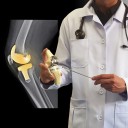
When is knee replacement surgery recommended?

- What is a knee replacement?
- Types of knee prosthesis
- When is a knee replacement necessary?
- Alternatives to knee replacement
- What does knee replacement surgery consist of?
- Duration of a knee prosthesis
- Bibliography
- Source information
- Frequent Questions

Come to Spain for your surgery or treatment
We manage everything from start to finish
Knee replacement surgery, also known as knee arthroplasty, is a surgery that involves replacing damaged, worn or diseased knee tissues, specifically the cartilage and subchondral bone with an artificial joint.
Most patients who undergo this procedure are between the ages of 60 and 80, although any adult can be considered a candidate.
Once the joint is replaced with a prosthesis, it usually lasts for more than 20 years, especially if the new knee is properly cared for and not put under constant stress.
What is a knee replacement?
The knee prosthesis is made up of two main parts: one is attached to the lower part of the femur and the other is attached to the upper part of the tibia.
But how are they attached to the bone? Well, both metal components, usually made of cobalt-chromium alloys, are fixed to the bone mechanically or by direct fixation, or by means of surgical cement.
Between the two metal components, an intermediate piece of polyethylene is placed, a kind of very resistant "plastic" that allows the two components to slide over each other during knee movements.
Types of knee prosthesis
The choice of the type of prosthesis depends on whether osteoarthritis affects only part of the knee or the entire knee. Thus, it is not always necessary to replace the entire knee, but sometimes it is sufficient to replace the part of the joint that is damaged.

There are three types of knee replacements:
- Unicompartmental prosthesis: allows replacement of only the part of the knee that is damaged. They are indicated for young patients with osteoarthritis affecting one of the two sides of the knee.
- Total prosthesis: these are the most common today. The entire joint surface is replaced with metal components that are usually fixed to the bone with a special cement. This prosthesis is the most suitable when, in addition to the existence of osteoarthritis, the ligaments that support the knee are not in good condition to carry out their function correctly.
- Revision prosthesis: in this case, the components of an existing prosthesis are replaced or partially or totally removed with new implants.
Regarding the materials of which knee prostheses are usually composed, they usually have metal and plastic parts, although other options have emerged, such as those made entirely of metal or ceramic and those that complement the ceramic and plastic.
When is a knee replacement necessary?
Knee replacement is a surgical option to be considered as a possible solution when the disease or trauma affects the quality of life, as well as the extent to which it prevents the most common daily activities, either due to pain or limited movement.
Reduced mobility and pain even at rest are symptoms that make a knee prosthesis necessary.
In addition to the aforementioned, the fact that previous treatments have not worked is also taken into account.
In fact, surgery is usually recommended when other treatments have already been carried out that have not reduced pain or improved mobility. Knee replacement is therefore recommended in the following situations:
- Severe pain, swelling and stiffness in the knee joint and reduced mobility.
- Pain that interferes with quality of life, sleep and daily tasks, such as shopping or going to the toilet, are difficult or impossible.
- Feeling depressed because of pain and lack of mobility
- Inability to work or have a normal social life.
On the other hand, it is important to note that advanced osteoarthritis is one of the reasons for deciding to have knee replacement surgery.
Alternatives to knee replacement
Although it is true that when the joint is badly damaged, the only effective solution is the replacement of the joint with a knee prosthesis, there are certain alternatives that, in numerous cases, have proven to be effective:
- Arthroscopic debridement: the instrument (arthroscope) is inserted into the knee, which is then washed with saline solution to clean out any remaining bone or cartilage.
- Osteotomy: during an open surgery, the tibia bone is cut and realigned so that the weight is no longer focused on the damaged part of the knee.
- Mosaicplasty: during this surgical intervention, healthy, hard cartilage plugs are transferred, along with some underlying bone from another part of the knee, to repair the damaged surface.
Closely related to alternatives to knee replacement, we think it is important for you to be aware of some of the causes of knee joint deterioration:
- Age
- Obesity
- High impact sports
- Type of work
What does knee replacement surgery consist of?
Knee replacement surgery consists of replacing the damaged parts of the joint with two components that are fixed to the patient's bone with a special antibiotic-laden cement. A high-density polyethylene is placed between them, which gives the components mobility, promotes gliding and distributes the weight loads.
The knee replacement surgery lasts between 60 - 90 minutes.
It is also possible to fix the prosthesis without cement, but it has been proven that cement allows a better fixation. It can also be loaded with antibiotics, thus reducing the infection rate by up to 70%. The cementation technique is always essential to achieve a good long-term result.

Knee arthroplasty (prosthesis) takes about two hours and is performed under full anaesthesia. As it is generally performed on elderly people, it is necessary to evaluate the medication being taken in order to suspend those drugs that may interfere with the normal course of the intervention, such as anticoagulants, and to take into account the associated pathologies in each case.
Recovery after knee replacement surgery
After knee replacement surgery, the patient will be able to walk again within 24 - 48 hours, except in cases where pain or complications prevent walking.
In addition, due to the high complexity of the intervention, it is important to acquire an exercise plan for complete recovery after your surgery (approximately 3 to 4 months).
Duration of a knee prosthesis
Knee replacements are implants that are placed in people between the ages of 55 and 65, since they last for more than 20 years, as long as they are properly cared for. A recent report found that only 2% of knee replacement surgeries require a second surgery within five years of the initial surgery.
But what factors seem to influence the longevity of knee replacements?
- Patient age. Younger patients tend to be more active. Thus, patients under the age of 50 are likely to have to undergo revision surgery.
- Daily activity. Some activities may not be appropriate for people with knee replacements. While these activities may not be painful or difficult, they may be putting excessive stress on the prosthesis, causing the parts to wear out more quickly.
- Weight. The heavier an individual weighs, the more stress is placed on the prosthetic components. Maintaining a normal body weight is vitally important when it comes to joint replacement.
- Avoiding complications. This may sound obvious, but there are some specific medical conditions that can lead to complications affecting joint replacement.

Do you need knee replacement surgery in Spain?
Request a free and immediate appointment with our specialists
Bibliography
- OrthoInfo. (2012, octubre). Reemplazo total de rodilla (Total Knee Replacement) - OrthoInfo - AAOS. https://orthoinfo.aaos.org/es/treatment/reemplazo-total-de-rodilla-total-knee-replacement
- Arthritis Foundation. (s. f.). Cirugía de la rodilla. Recuperado 2020, de https://espanol.arthritis.org/espanol/tratamientos/cirugia/cirugia-rodilla/
- Medline Plus. (2020, 7 mayo). Reemplazo de la articulación de la rodilla. https://medlineplus.gov/spanish/ency/article/002974.htm
Come to Spain for your surgery or treatment
We manage everything from start to finish
Dr. Antonio Rebollo Marina
Médico Asistencial en Centro Médico Caser
Nº colegiado: 282834715

Medical disclaimer: All the published content in Operarme is intended to disseminate reliable medical information to the general public, and is reviewed by healthcare professionals. In any case should this information be used to perform a diagnosis, indicate a treatment, or replace the medical assessment of a professional in a face to face consultation. Find more information in the links below:
Frequent Questions
-
Knee replacement surgery lasts between 60 to 90 minutes.
-
Under normal conditions, a patient is able to walk again 24 - 48 hours after the operation and completes full recovery within 3 - 4 months after the prosthesis is implanted.
-
As long as pain and movement do not limit your quality of life, your specialist may recommend one of the following alternatives:
- Arthroscopic debridement
- Osteotomy
- Mosaicplasty
- Read more
-
Yes, these symptoms are usually typical of someone who needs a knee prosthesis. However, it is up to the medical specialist to diagnose the need for a prosthesis.