Varicose veins: complications and symptoms


Come to Spain for your surgery or treatment
We manage everything from start to finish
- Varicose vein surgery is often performed for both aesthetic and medical reasons and is caused by circulation problems in the legs.
- The main complications of varicose veins are tired legs, oedema, swelling, cramps, itching and skin pigmentation.
- Other more serious problems resulting from varicose veins are varicothrombosis, phlebitis, haemorrhages or venous ulcers.
What are varicose veins?
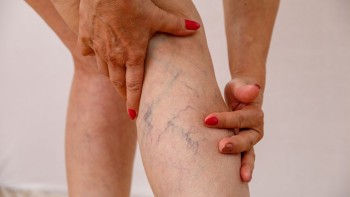
Varicose veins are a well-known medical problem, although they tend to affect mainly women. They appear gradually and are caused by circulation problems in the legs due to excess weight, pregnancy, jobs that require a lot of time on your feet or constant exposure to heat sources.
The reasons for carrying out a varicose vein surgery (saphenectomy or complete phleboextraction) can be both medical and aesthetic, as one of the best known and most visible symptoms of varicose veins is skin pigmentation.
Do you need varicose vein surgery?
Request a free and immediate appointment with our specialists in vascular surgery
In addition to this pigmentation, there are other quite common symptoms that derive from varicose veins, such as tired legs, oedemas, swelling, cramps or itching. These symptoms are quite bothersome, so the most commonly used option to solve them is varicose vein surgery.
In addition to these problems, there are other much more medically relevant symptoms that imply the need for the patient to undergo varicose vein surgery (saphenectomy or complete phleboextraction).
Varicothrombosis
It is the formation of clots in the veins of the legs causing difficulties for the correct flow of blood. It usually occurs in large varicose veins in which the blood flows slowly and ends up accumulating in the area.

This problem has a number of characteristic symptoms:
- Redness of the area where the varicose veins are located.
- Pain along the area where the varicose vein is located and visible to the naked eye.
- Swelling in the affected area.
Varicothrombosis should not be confused with deep vein thrombosis, as the clots that form due to varicothrombosis are very small and remain in the superficial area of the varicose veins, which does not make them life-threatening unlike deep vein thrombosis that requires urgent treatment.
Treatment of this complication of varicose veins can be done with the use of compression stockings and painkillers for discomfort and pain, and varicose vein surgery can be scheduled to solve the problem, especially if the clots are of considerable size or there is any sign of infection.
Phlebitis
It is a problem derived from varicothrombosis and consists of inflammation of the veins. It can be considered a complication of varicothrombosis and can be superficial, if it occurs in a vein on the surface, or deep if it is a vein in the tissues beneath the skin:
- Deep vein thrombophlebitis: This is a serious complication that must be treated immediately. It consists of the formation of a clot in the deep veins and must be treated quickly.
- Superficial thrombosis: This occurs in the superficial veins and the prognosis is favourable. In any case, varicose vein problems must be diagnosed by specialists and a complementary test called Eco-Doppler is usually necessary.
On the other hand, phlebitis may or may not cause symptoms. If they do occur, these symptoms may be:
- Pain in the area.
- Reddening of the area.
- Perception of bulging of the affected vein.
- Excess sensitivity.
Do you need varicose vein surgery?
Request a free and immediate appointment with our specialists in vascular surgery
Bleeding from varicose veins
Varicorragia consists of bleeding from varicose veins close to the skin, i.e. those that are perceived as lumps in the superficial area of the leg. This haemorrhage is caused by a bump or graze in the area that breaks the skin and causes significant bleeding, although not excessively serious, which can be quite frightening for the patient and those close to them.
This occurs when thrombosed varicose veins cannot withstand the pressure and the vein ruptures.
In these cases, stopping the bleeding by putting pressure on the bleeding site and placing a stocking is sufficient, although it is best to see a specialist to check the case.
Venous ulcers

This is the most unpopular complication of varicose veins. Venous ulcers occur around the ankles and present a rather uncomfortable symptom picture, mainly because of the pain, as well as the fact that they become infected on a regular basis.
It is a sore on the leg that can become seriously complicated.
Although it is an important and very visual complication, it is rare that both the patient's life and leg are in danger. In the event that a light-coloured fluid is felt to be coming out of the skin in the area, it is important to see a doctor for early treatment to avoid complications.
The main cause of the appearance of varicose veins is usually the inflammation of the internal and external saphenous veins, so to solve them it will be necessary to remove them. To do this, the best option is the Varicose Vein surgery (Saphenectomy or complete phleboextraction).
Do you need varicose vein surgery?
Request a free and immediate appointment with our specialists in vascular surgery
Come to Spain for your surgery or treatment
We manage everything from start to finish
Medical disclaimer: All the published content in Operarme is intended to disseminate reliable medical information to the general public, and is reviewed by healthcare professionals. In any case should this information be used to perform a diagnosis, indicate a treatment, or replace the medical assessment of a professional in a face to face consultation. Find more information in the links below: