Ruptured medial collateral ligament of the knee
- How is the knee configured?
- What is the medial collateral ligament of the knee and how is it injured?
- Types of medial collateral knee ligament injuries
- How is a medial collateral ligament injury of the knee diagnosed and how is it treated?

Come to Spain for your surgery or treatment
We manage everything from start to finish
- There are 4 important ligaments in the knee joint and the medial lateral ligament is one of them.
- In many cases, when the medial lateral ligament is torn, another ligament in the joint is also injured.
- Depending on the severity of the torn medial collateral ligament, conservative treatment or surgical treatment can be performed.
How is the knee configured?
The knee is one of the most important joints in the human body as it is the joint that allows standing and movement of both lower limbs.

Do you need cruciate ligaments surgery?
Request a free and immediate appointment with our specialists in Traumatology
In brief, we can describe the anatomy of the knee joint and its components as follows: it is composed of 3 different types of bones (upper femur, lower tibia and patella which covers the front of the knee joint), 2 fibrocartilage structures called menisci and 4 strong ligaments: anterior cruciate ligament, posterior cruciate ligament, internal lateral ligament and external lateral ligament.
Between the anterior structures and the cruciate ligaments is the knee joint that supports most of the weight of the body.

What is the medial collateral ligament of the knee and how is it injured?
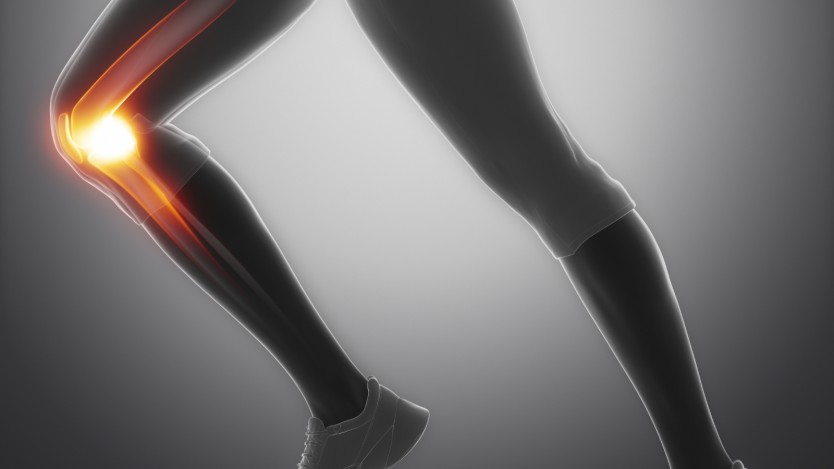
The medial lateral collateral ligament of the knee or medial collateral ligament is responsible for maintaining the stability of the knee on the medial or inner side of the knee. This ligament connects the tibia to the femur on the inner portion of the knee, partially preventing the tibia from sliding over the femur and preventing the knee from sliding inward, aided in this case by the anterior cruciate ligament.
Generally any ligament or meniscus in the knee can be affected in two ways, either by a traumatic mechanism or by a degenerative mechanism.
An increase in the prevalence of partial or total ruptures of the ligament and meniscal structures of the knee is currently being observed, mainly due to the increase in the population involved in sporting activities.
If we are talking about the medial collateral ligament of the knee, it is usual that there is a joint injury to other ligamentous structures of the knee, especially the anterior cruciate ligament, as both bear the tensional load of the knee in terms of external rotation and internal displacement of the knee.
In a very high percentage of situations, injury to the medial collateral ligament of the knee is caused by excessive inward displacement of the knee, which from a medical point of view is defined as "excessive valgus".

When this situation of internal displacement of the knee in excess or valgus occurs, the patient usually notices a characteristic popping sound, and immediately there is swelling of the knee with the presence of moderate to severe pain. As explained above, a high percentage of situations involving an injury to the medial collateral ligament of the knee also result in a rupture of the anterior cruciate ligament.
Types of medial collateral knee ligament injuries
In general, injuries to the ligamentous structures of the knee, including the medial collateral ligament, are classified according to the severity of the damage sustained by the components. With this in mind, we can classify the injury to the medial collateral ligament of the knee into three different grades:
- Grade 1 or mild: in this type of injury to the internal lateral ligament of the knee, there is a partial rupture of fibres of the ligament that causes occasional pain on examination, the stability of the knee is usually preserved, there is not usually a large component of joint effusion and it has a good evolution with a low rate of recurrence or possibility of re-injury.
- Grade 2 or moderate: In this grade of injury to the medial lateral ligament of the knee, there is a complete rupture of the deeper fibres of the ligament with a partial rupture of the superficial fibres. Pain is more severe, swelling and effusion are more evident than in the previous grade, there is moderate instability on physical examination and the risk of recurrence is increased compared to the previous grade. The percentage of ligamentous and meniscal structures damaged in conjunction with the medial lateral ligament is usually low.
- Grade 3 or severe: in this grade of injury to the medial lateral ligament of the knee, there is a complete rupture of the damaged ligament. Pain is generalised, as is the inability to stand upright, and there is joint effusion and haematoma adjacent to the injury. Instability is significant on physical examination and the risk of recurrence and injury adjacent to and consequent to the medial lateral knee ligament injury is frequent.
How is a medial collateral ligament injury of the knee diagnosed and how is it treated?
Injury to the medial lateral ligament of the knee is usually diagnosed on the basis of the mechanism of injury and physical examination. Exploratory manoeuvres by the physician or orthopaedic surgeon can locate and diagnose with a high degree of certainty the extent of the injury and whether there are associated ligamentous or meniscal structures.
Subsequent to the examination, a knee X-ray and magnetic resonance imaging (MRI) provide additional and complementary information that allows confirmation of the injury and provides additional information that allows the specialist to indicate a specific and individualised type of treatment.
It is generally understood that grade 1 injuries can be treated conservatively with relative rest, a knee brace if the specialist recommends it, and rehabilitation sessions as early as possible.
The aim of conservative treatment is to allow partial regeneration of the damaged structure and to consolidate the surrounding structures in order to strengthen the stability and function of the damaged ligament and muscle strengthening of the knee joint.

In grade 2 and/or 3 injuries, it is advisable to individualise the patient and analyse their specific characteristics when it comes to choosing or opting for conservative treatment and then surgery, definitive conservative treatment or immediate surgical treatment. In grade 2 injuries, conservative treatment is usually chosen initially, postponing the decision for surgery if the results of early rehabilitation are inconclusive.
In general, it is extrapolated that injuries to the medial lateral ligament associated with the anterior cruciate ligament usually require conservative treatment of the medial lateral ligament first by muscle and ligament strengthening and later repair of the anterior cruciate ligament by surgical intervention.
Surgical intervention usually involves direct repair and reattachment to the bone in acute cases and a bone graft if the intervention is delayed.

Do you need cruciate ligaments surgery?
Request a free and immediate appointment with our specialists in Traumatology
Come to Spain for your surgery or treatment
We manage everything from start to finish
Medical disclaimer: All the published content in Operarme is intended to disseminate reliable medical information to the general public, and is reviewed by healthcare professionals. In any case should this information be used to perform a diagnosis, indicate a treatment, or replace the medical assessment of a professional in a face to face consultation. Find more information in the links below: