What remedies are there for haemorrhoids?
- What are haemorrhoids?
- Home remedies
- Pharmacological treatment
- Surgical interventions
- Bibliography
- Frequent Questions

Come to Spain for your surgery or treatment
We manage everything from start to finish
What are haemorrhoids?
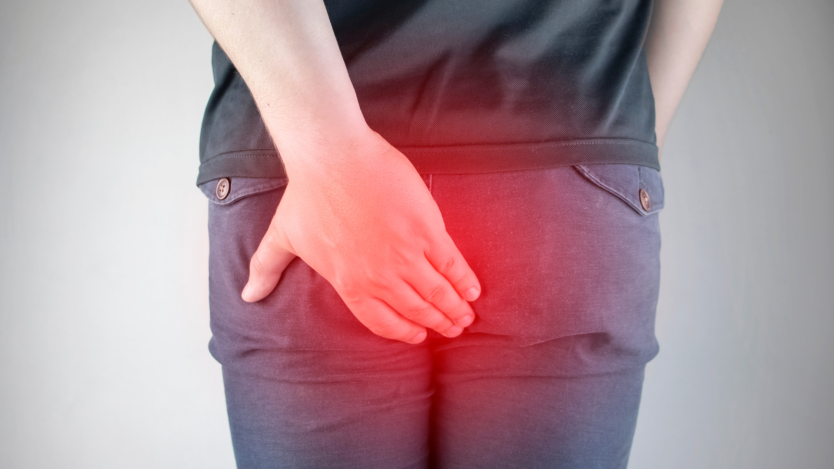
Haemorrhoids or piles are swollen veins located in the anus and lower rectum. This type of condition can develop inside the rectum, referred to as internal haemorrhoids, or under the skin around the anus, defined as external haemorrhoids.

Do you need haemorrhoids surgery?
Request a free and immediate appointment with our specialists in General Surgery
The development of haemorrhoids may be due to increased pressure in the lower rectum, the most common causes being:
- Heavy lifting.
- Excessive straining during bowel movements.
- Sitting for long periods on the toilet.
- Chronic diarrhoea or constipation
- Obesity
- Pregnancy
- Anal intercourse
- Eating a low-fibre diet.

The symptoms of piles generally depend on the type of haemorrhoid, the most common being:
- Itching or irritation in the anal area.
- Pain or discomfort.
- Swelling around the anus.
- Bleeding.
- Formation of a hard lump near the anus.
Here are some tips to prevent and reduce the symptoms of haemorrhoids.
Home remedies
You can often relieve mild pain, swelling and inflammation of haemorrhoids with home treatments.
- High-fibre diet. Eat more fruits, vegetables and whole grains. Doing so softens the stool and increases its bulk; this will help you avoid straining, which can worsen the symptoms of existing haemorrhoids. Add fibre to your diet progressively to avoid gas problems.
- Sitz baths. Soak the anal area in warm water for 10 to 15 minutes two or three times a day.
- Take oral painkillers. You can use these drugs temporarily to relieve your discomfort.
With these treatments, the symptoms of haemorrhoids may disappear within a week. If you do not get relief, or if the pain intensifies, it is best to consult a specialist for further treatment.
Pharmacological treatment
If your haemorrhoids are only causing mild discomfort, your specialist may recommend using over-the-counter creams, ointments, suppositories or pads. These products contain ingredients such as witch hazel, or hydrocortisone and lidocaine, which can temporarily relieve pain and itching.
Some tablets such as Paracetamol and Ibuprofen can be used to relieve the pain caused by haemorrhoids.
In addition to this, other medicines containing diosmin and hesperidin as active ingredients can also be used on prescription, because they increase venous tone, improve blood circulation and reduce swelling and inflammation.

External haemorrhoids usually clear up after following these treatments, disappearing after 2 or 3 days.
However, in severe cases where there is no sign of improvement, surgery may be necessary.
Haemorrhoid ointments should only be used on medical advice, although they can be bought over the counter. They help to reduce the size of the haemorrhoid and relieve pain in a few minutes and should be applied 2-4 times a day, as long as pain and discomfort exist.
You should also note that it is not recommended to use a steroid cream for more than a week, unless instructed by your doctor, as it can thin the skin.
Surgical interventions
Minimally invasive procedures
In cases of persistent bleeding or painful haemorrhoids, specialists may recommend minimally invasive procedures. These treatments can be performed in your doctor's office or other outpatient setting and usually do not require anaesthesia.
- Rubber band ligation. The doctor places one or two small elastic bands around the base of an internal haemorrhoid to cut off its circulation. The haemorrhoid weakens and falls off within a week.
Haemorrhoidal bands can be uncomfortable and cause bleeding, which may begin two to four days after the procedure, but is rarely serious and can resolve immediately and without hospitalisation.
- Injection (sclerotherapy). This involves injecting a chemical solution into the haemorrhoid tissue to shrink it. Although injection is painless, it may be less effective than rubber band ligation.
- Coagulation (infrared, laser or bipolar). Coagulation techniques use laser or infrared light or heat. They cause small, bleeding haemorrhoids to harden and dry out. This type of procedure usually has no side effects and causes little discomfort.

Haemorrhoid removal surgery
When the other procedures have not been successful or if you have large or complex haemorrhoids (grade III and IV), the definitive solution is surgery:
Removal of haemorrhoids (haemorrhoidectomy).
During a conventional haemorrhoid surgery, the surgeon removes the excess tissue causing the bleeding. The surgery can be performed under regional anaesthesia or general anaesthesia.
This procedure lasts 30 to 90 minutes, depending on the complexity of each case. It also requires a 24-hour hospital stay to check the success of the surgery and ensure a speedy recovery.
Haemorrhoidectomy is the most complete and effective way to treat severe or recurrent haemorrhoids.
To reduce postoperative discomfort, your specialist will give you guidelines to follow such as, for example, sitz baths, taking painkillers and a diet rich in fibre. Generally, recovery is complete 10-15 days after surgery.
Stapling of haemorrhoids
Stapled haemorrhoidopexy is intended to block blood flow to the haemorrhoidal tissue. This treatment is normally only indicated for internal haemorrhoids.
Unlike haemorrhoidectomy, stapling involves a less painful recovery and an earlier recovery. However, compared to haemorrhoidectomy, stapling has been associated with a higher risk of recurrence and rectal prolapse, which is a complication where part of the rectum protrudes from the anus.
Whatever your case, the first step is always to seek professional diagnosis, either in the first instance from your general practitioner or from a specialist in coloproctology.

Do you need haemorrhoids surgery?
Request a free and immediate appointment with our specialists in General Surgery
Bibliography
- De Conte Vila, O., & Batlle Edo, C. (2017). Hemorroides. Clínica y tratamiento. Farmacia Profesional. Economía y Gestión, 17(11), 60-65. https://www.elsevier.es/es-revista-farmacia-profesional-3-pdf-13056236
- Dres. Palacios/de la Portilla. (2011, enero). Guía rápida sobre manejo de la patología hemorroidal. Unidad de Coloproctología. Hospital Universitario Virgen del Rocío Sevilla. http://www.ucpsevilla.es/files/proto/PATOLOGIA%20HEMORROIDAL.pdf
- Auspicia Sociedad Cubana de Coloproctología. (2011, noviembre). Consenso de Hemorroides Agudas. https://files.sld.cu/coloproctologia/files/2011/05/consenso-nacional-de-hemorroides-agudas-2011.pdf
Come to Spain for your surgery or treatment
We manage everything from start to finish
Medical disclaimer: All the published content in Operarme is intended to disseminate reliable medical information to the general public, and is reviewed by healthcare professionals. In any case should this information be used to perform a diagnosis, indicate a treatment, or replace the medical assessment of a professional in a face to face consultation. Find more information in the links below:
Frequent Questions
-
Haemorrhoids are collections of swollen tissues and veins. They can appear inside or outside the anus.
The causes for the development of haemorrhoids are usually:
- Chronic constipation and diarrhoea.
- Heavy lifting.
- Pregnancy.
- Excessive straining during bowel movements.
-
An acute attack of haemorrhoids usually lasts 4 - 7 days. If it lasts longer or the symptoms do not improve after a week, it is essential to see a doctor.
-
The treatment to follow to eliminate haemorrhoids will depend on the symptoms of each patient. In mild cases, the following is recommended:
- Eat a diet rich in fibre and drink plenty of fluids.
- Avoid alcoholic beverages and spicy or very spicy foods.
- Avoid sitting on the toilet for long periods of time.
- Clean the anal area with aloe vera wipes.
- Read more
For patients with moderate symptoms, the following is recommended:
- Use of laxatives, always under medical prescription, without abusing the time and quantity indicated by the specialist.
- Use of suppositories and ointments to relieve itching and reduce inflammation. Do not use them for more than 5-7 days.
- Use of sitz baths.
- Use of venotonic medication to reduce oedema and bleeding.
- Read more
-
Haemorrhoid surgery is recommended when bleeding occurs and when they affect the patient's life. Other symptoms to be taken into account are: pain, swelling and the severity of the symptoms. Read more