Meniscus surgery, what do I need to know?

- Why opt for meniscus surgery?
- Causes leading to meniscus surgery
- Symptoms of meniscus injury
- What else do you need to know about meniscus repair treatments?
- In general terms, how does meniscus surgery work step by step?
- Request a free assessment consultation

Come to Spain for your surgery or treatment
We manage everything from start to finish
Why opt for meniscus surgery?
- Knee arthroscopy is a technique used for different traumatic injuries of the joint, such as meniscus tears.
- Meniscus arthroscopy surgery lasts only 30 to 60 minutes, is completed quickly and involves minimal invasion of the area to be treated.
- After the meniscus surgery, pain, knee locking and swelling disappear and full recovery is complete after a few months.
If you are reading this article, it is probably because you or someone close to you is going through a difficult time caused by a meniscus injury, limiting their movements and living with worsening discomfort.
Below you can find general information about this condition and how it can be solved. Don't miss any detail to be informed and to be able to make the decision that best suits your case.
Following a meniscus injury, especially in older patients, the specialist may opt for non-surgical treatment in the first instance. However, some patients do not respond to this type of treatment, called "RICE" - rest, ice, compression and elevation - to treat the problem, but often what happens is that the symptoms persist and the discomfort can get worse.
In these cases it is advisable to go much further and have an MRI scan to confirm whether there is a significant meniscal or ligament injury. If this is the case, it is necessary to resort to knee arthroscopy to solve the problem.
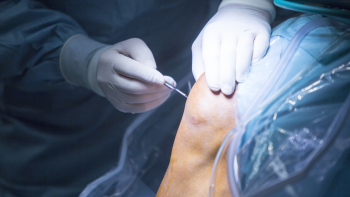
Arthroscopic surgery has become one of the most common surgical procedures performed by trauma specialists to eliminate the discomfort, pain and other symptoms caused by a torn or injured meniscus. The great advantage of this procedure is that it provides a clear, sharp view of the inside of the patient's knee without the need for open surgery.
After surgery, the surgeon will place a compression bandage over the area that will allow you to walk with your operated leg supported, as well as to perform flexion and extension movements of the knee.
In the following section you can find more information about the causes of a meniscus injury or tear, the main reasons why meniscus surgery is performed to solve the situation and thus eliminate the annoying symptoms.
If you are thinking of undergoing an arthroscopic meniscus surgery and would like to have it done through Operarme, you can meet one of our meniscus injury specialists in a face-to-face consultation by clicking below:

Do you need meniscus surgery?
Request a free and immediate appointment with our specialists in traumatology
Causes leading to meniscus surgery
In order to understand why meniscal injuries occur, it is first necessary to differentiate between three groups of sufferers, mainly classified by the health of the meniscus, which is directly related to the age of the patients:
- Meniscus injury in young patients: this is an injury typical of athletes who are characterised by a meniscus containing young chondrocytes, which gives them elastic properties that an old meniscus does not have.
- Meniscus injuries in older patients: these are usually menisci with a degenerative process that has been present for a long time, so they only need minimal trauma to rupture, causing permanent discomfort with few symptoms, which is why many patients resort to anti-inflammatory drugs. In these cases, the meniscus usually tears at the back of the underside of the medial meniscus, which is one of the most common causes of knee pain, especially in women. Note that meniscal injuries are more common in degenerative menisci than in young athletes.
- Meniscal injuries in patients with microtrauma: these are cases in patients who have injuries due to their working posture, because they spend a large part of their time with their knee flexed. Although this is not a healthy meniscus, it could be included as such as it is not considered a meniscus with a degenerative process.

The manner in which a traumatic meniscal tear occurs also differs according to the health of the meniscus:
- In the case of previously healthy menisci, tears usually occur in professionals such as footballers, tennis players and plumbers, as these are individuals who work a lot with the knee in maximum flexion, causing microtrauma to the meniscus on a continuous basis. The injury in these cases usually occurs due to a lack of coordination between the flexion and extension and rotation movements, which causes the meniscus to tear on the posterior aspect, or in some cases a disinsertion of the meniscus, also known as a parameniscus injury.
- In the case of compression, the meniscal tear will be vertical and slightly oblique. In this case, the so-called "bucket-handle tear" occurs, which is characterised by the detachment of an area of the meniscus and subsequent displacement to the centre of the joint, causing a blockage in the knee and the consequent impossibility of flexing or extending the knee. If the injury occurs in the peripheral zone of the meniscus, the injury will be very painful but with the possibility of healing.
- In the case of injuries to previously degenerated menisci, the tear occurs horizontally. In these cases, the menisci are much less elastic than healthy menisci, so a simple twisting movement with the knee bent can cause a meniscal tear through shearing (forces that make the layers of the meniscus slide over each other). It can occur in any situation, even when turning over in bed. It is worth mentioning that the latter injury is more likely to occur in women than in men.
As you can imagine, this type of meniscus injury or meniscus tear has a variety of symptoms, most of which are very uncomfortable and prolonged.
To help you differentiate between them all, below is a breakdown of the most common signs of injury. Remember, if you detect any of them, the best thing to do is to see a specialist. No one better than an expert is able to detect the problem and, of course, advise you on the treatment you need.
Symptoms of meniscus injury
Among the various symptoms associated with meniscal injuries, common denominators tend to be found in all of them. These are:
- Localised pain in the damaged joint: this is a continuous, oppressive pain that becomes increasingly uncomfortable as the pressure on the meniscus increases. Pain also increases as the joint is pushed to its maximum limit of motion.
- Lack of mobility: although functional impotence is not normally absolute, there is difficulty in moving the knee, stiffness and a reduced range of motion.
- Inflammation: taking into account that, meniscal injuries are often accompanied by injuries to ligaments, tendons, joint capsule, etc.; it is possible that oedema or liquid collection may appear, so although it is a common symptom of meniscal problems, it is important not to confuse it with other reasons other than a meniscal injury, as there are many adjacent structures that can trigger this symptom.
On the other hand, when a meniscal tear occurs, a kind of crunching sound is felt at the moment of injury. As the menisci have a poor blood supply, a meniscus tear does not usually cause visible bruising in the affected area.
As we mentioned at the beginning of this article, all the information given here is of a general nature and should not be seen as a diagnosis or choice of treatment. First of all, you should always consult a specialist directly, as they are the only ones who can examine the area and determine the type of problem that may affect you and how to solve it.
What else do you need to know about meniscus repair treatments?
Before confirming the injury or meniscus tear, it is important to see a specialist to evaluate the symptoms and obtain an early diagnosis, as there are other pathologies that generate very similar symptoms and can be confused.
This diagnosis is made taking into account your medical history, i.e. the symptoms you present, in addition to the face-to-face examination by the specialist. To confirm the diagnosis, imaging tests are carried out, consisting of an X-ray and an MRI, to determine the location, the type of lesion and whether there are other associated lesions.
Treatment of a meniscus injury can be conservative or surgical, by knee arthroscopy (partial meniscectomy or meniscal suture).
This depends on whether the symptoms cease with physical measures such as rehabilitation with physiotherapy or anti-inflammatory drugs, or whether they become chronic and require surgery. In addition, the patient's age, activity and type of meniscal tear must be known.
But not all meniscal tears require surgery. There is a group of injuries that, due to their size and location, have the potential to heal without the need for surgery.
In addition, there are patients with advanced osteoarthritis, i.e. with a lot of wear and tear on the joint, in which the breakage occurs in the context of a global deterioration of all the structures of the joint. In these cases, non-surgical treatment is preferred as the first line of therapy, and if this fails, there are other specific surgical alternatives for this condition, such as knee prostheses, which are chosen in cases in which there is also osteoarthritis.
Recovery time
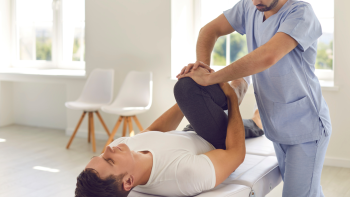
After arthroscopic meniscus surgery, it is absolutely necessary to undergo a rehabilitation process, this being a determining factor in reducing recovery time to a minimum and guaranteeing the success of the procedure.
Therefore, you should bear in mind that when you start rehabilitation, either by doing the exercises indicated by the surgeon or by seeing a physiotherapist, it is important that you follow their instructions and do not lose muscle mass in your leg, in this way you will improve the blood supply to the joint and strengthen the knee to prevent the meniscus from suffering the full weight of the body in the area.
If you follow all the steps and do the exercises correctly, it is normal for you to recover within a few weeks after a partial meniscectomy or within 3 to 4 months after a meniscal suture, fully recovering the functionality of the joint.
You can find more information on this link.
Anaesthesia for meniscus surgery
One of the aspects that always worries all patients about surgical procedures is the type of anaesthesia to be used during the surgery.
According to this question, the type of anaesthesia used for meniscus surgery by arthroscopy is usually spinal or regional anaesthesia. However, there are some cases in which other types of anaesthesia are used, such as general anaesthesia.
If you would like more information on the types of anaesthesia that can be used during meniscus surgery, you can read this article: What is anaesthesia for meniscus surgery?
Cost of the surgery
As far as the cost is concerned, in the case of carrying out the operation through Operarme, the all-inclusive price is 4.190 €.
As we have indicated, it includes everything, anaesthesiologist fees, medical fees, the use of top quality instruments, preoperative, hospital stay, medical complications insurance... Everything necessary for the surgical process to be a success.
If you would like to find out more about what the surgery includes through Operarme or for more information about knee arthroscopy surgery for meniscus injuries, you can contact us or visit the link below:
>>>>> Meniscus surgery by arthroscopy, cost, duration, and step by step <<<<<
Duration of surgery
As we have already mentioned, the duration of the meniscus operation is between 30 and 60 minutes, although it is possible that the duration may be longer or shorter depending on the particularities of each case.
Hospital stay
Although it is a minimally invasive and relatively simple surgery, you will usually stay in hospital for one night after surgery. This is because you will need to rest properly in hospital, well monitored in case of any setback, and you will also be helped and told how to take care of the wound and some exercises that will help your rehabilitation.

In general terms, how does meniscus surgery work step by step?
Before starting to discuss the step-by-step of the surgery, we recommend that you visit this article: Recommendations prior to meniscus surgery by arthroscopy. It will complete the information in this article.
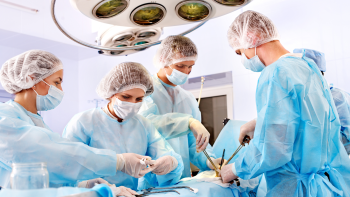
On the day of the surgery and after being admitted to hospital (if you are the patient), you will be taken to the operating theatre where the meniscus operation will be performed.
There you will meet the surgeon, the anaesthetist and one or two members of the nursing team. The anaesthetist will then measure your vital signs and administer the anaesthetic.
Once the anaesthesia has taken effect and you are on the table, the arthroscopic meniscus surgery will begin:
- The surgeon will first shave the knee area, if necessary, and then apply an antiseptic solution to minimise the possibility of infection.
- He or she will then make an incision in the joint through which a saline solution will be introduced to increase the joint space and remove any cloudy fluid that may be present, thus improving the surgeon's visibility through the arthroscope.
- The next step is the introduction of the arthroscope through any of the other 2 or 3 incisions (all of them small) that have been made in the knee area.
- With the arthroscope, the specialist will inspect the inside of the knee to confirm the meniscus injury and make sure there is no other injury to the ligaments or bone. After making sure of this, he or she will proceed with the meniscus surgery.
- Through the remaining incisions, the surgeon will insert the surgical instruments needed to repair the meniscus. This meniscus repair can be performed using two different techniques, depending on the characteristics of the patient and the severity of the injury:
-
- Partial meniscectomy: This technique for performing a meniscus operation consists of removing the free part of the meniscus that is detached due to the meniscus tear. Total meniscectomy is no longer performed because it causes premature osteoarthritis.
- Meniscal suture: This is the most recommended technique for meniscus surgery. It consists of suturing the damaged part of the meniscus. It is the most common choice for young people and athletes, as it has very good long-term results.
- After repairing the meniscus with the chosen technique, the surgeon will check again that there is no damage to the other elements of the knee that could have been caused during the intervention.
- After making sure of this, the surgeon will remove all the surgical instruments from the joint as well as the fluid introduced at the beginning of the operation.
- Finally, the incisions will be sutured and a bandage or dressing will be applied to the area, and the arthroscopic meniscus operation will be completed.
After the intervention and still in the operating theatre, the anaesthetist will wake you up and you will remain in the operating theatre until you are able to speak and move spontaneously. You will then be taken to the recovery room where you will recover completely.
The duration of the meniscus surgery by arthroscopy is between 30 and 60 minutes, depending on your particularities and the severity of the injury.
Request a free assessment consultation
If you are thinking of having surgery but don't know which doctor or hospital to go to, at Operarme we make things easier for you by providing you with a free surgical assessment consultation.
This way you can meet our Specialist in Traumatology and Orthopaedic Surgery in your city, tell him about your case, have him review your reports and medical tests, confirm that you require the intervention, and together you can decide to solve your pain and lack of mobility once and for all.
If you need more information about how we work or the specialist surgeon we work with in your city, you can contact our patient service team through our contact form, indicating your email address and telephone number, as well as by calling +34 91 141 33 56 if you consider it appropriate.
On the other hand, if you are sure you want to meet one of our knee specialists, you can click below and request a free surgical assessment consultation in a couple of steps by clicking on the following image:

Do you need meniscus repair surgery?
Request a free and immediate appointment with our specialists in traumatology
Come to Spain for your surgery or treatment
We manage everything from start to finish
Medical disclaimer: All the published content in Operarme is intended to disseminate reliable medical information to the general public, and is reviewed by healthcare professionals. In any case should this information be used to perform a diagnosis, indicate a treatment, or replace the medical assessment of a professional in a face to face consultation. Find more information in the links below: