Internal Meniscus Tear: Causes, Symptoms and Treatments

- Anatomy of the Meniscus
- Causes of an Internal Meniscus Tear
- Symptoms of an Internal Meniscus Tear
- How is an internal meniscus tear treated?

Come to Spain for your surgery or treatment
We manage everything from start to finish
- Internal meniscal tears are usually treated surgically in young patients who are active in sports.
- Internal meniscal tears can be caused by trauma or degenerative causes.
- The pain of an internal meniscal tear is due to irritation of the surrounding structures, not the tear itself.
Anatomy of the Meniscus
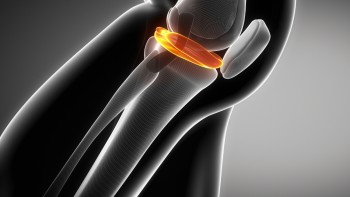
The knee is the largest joint in our body. Each knee has two menisci located between the thigh bone (femur) and the shinbone (tibia). One is located on the inside of the knee, called the medial meniscus or inner meniscus, and the other, the lateral meniscus or outer meniscus, is on the outside of the knee.
Both menisci are fibrocartilaginous structures, i.e. elastic cushions. Their function is to cushion the friction between the joint surfaces, to stabilise and accommodate the bone surfaces, and to distribute forces and synovial fluid.
During knee movement, the menisci move: when the knee is flexed, the menisci move backwards, while during extension they move forwards.
The medial or inner meniscus is crescentic in shape while the lateral or outer meniscus is more circular. The inner meniscus is wider and thinner at the back than at the front, while the outer meniscus is more uniform in width.

The menisci lack vessels and nerves, only their peripheral zone, the outer third has vascularisation and innervation. The inner two thirds are avascular and aneural with no healing capacity.
As the inner two thirds have no nerves or pain receptors, injury to this part of the meniscus only causes pain when the injured surface is irregular and irritates the other structures of the knee.
The outer part of the meniscus, which has vascularisation, has the ability to regenerate, which is why during meniscal repair an attempt is made to preserve this area and the tissue is sutured rather than removed.
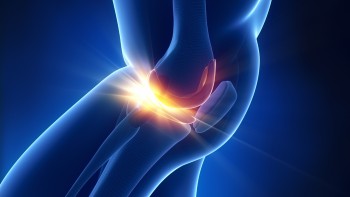
A tear in the meniscus produces irregular surfaces that irritate the joint causing pain, inflammation, stiffness and joint locking.
The medial or inner meniscus is more vulnerable to injury than the lateral meniscus. The medial meniscus is injured 5-7 times more than the lateral meniscus because it supports 60-70% of body weight and inserts into the deep portion of the medial collateral ligament, which decreases its mobility and favours its entrapment by the femoral condyle.

Do you need meniscus surgery?
Request a free and immediate appointment with our specialists in traumatology
Causes of an Internal Meniscus Tear
Regarding the causes of an internal meniscus injury, it is necessary to differentiate between injuries in young people, in older patients and in workers who work with the knee flexed.
The menisci of young people are usually very elastic and resilient, which is why injuries often occur during sport as a result of severe trauma with twisting of the knee.
A typical injury is when the footballer is with the leg fixed to the ground and in flexion - at this point the meniscus is behind and pinched - then if the leg is rotated, the meniscus is compressed and ruptures on its posterior aspect.
A vertical tear occurs starting at the posterior horn of the inner meniscus. If this injury progresses forward it can cause a bucket-handle tear. This type of tear causes an abrupt inability to flex or extend the knee.
Meniscal injuries in older people are the consequence of previous degenerative processes.
The meniscus weakens over the years, loses strength, flexibility and elasticity, and becomes dehydrated. Consequently, the injuries do not require a high intensity traumatism. Normally the trauma is minimal, giving very little symptomatology, but the discomfort is permanent. Usually the posterior portion of the underside of the inner meniscus is injured.
Most injuries in people over 30 years of age tend to be horizontal. The typical movement is turning over in bed.
The knee is extended, the weight of the leg is supported to turn, the foot is fixed and the knee cannot rotate. This movement causes a horizontal injury starting at the posterior horn of the inner meniscus and its undersurface. Typical trauma can occur when rising from a squatting position.
People who work with the knee flexed, due to the posture, the internal meniscus suffers micro-traumas. The tear occurs when the knee is extended without external rotation.
Symptoms of an Internal Meniscus Tear
The symptoms are different in young people suffering a severe trauma and in middle-aged people with a degenerative fracture.
In young people the main symptoms are pain, joint locking, balance and stability failure and crunching. The patient refers to severe trauma. The pain is felt on the inner side of the knee, bearing in mind that the medial meniscus inserts into the deep portion of the medial collateral ligament. Joint locking is more common in 'bucket-handle' type injuries.
Knee swelling (hydrarthrosis) appears within 24 hours after injury. This helps to differentiate the pathology from ligament rupture or osteochondral fracture where joint swelling is instantaneous (hydrarthros or hemarthros).
Internal meniscus tears in middle-aged people occur when kneeling down and then trying to get up, turning over in bed, getting up from a chair. The patient has intermittent pain that will require painkillers for months. As in most cases the posterior horn of the internal meniscus is injured, the pain is felt in the postero-medial region of the knee. The affected knee becomes very tired and loses strength by the end of the afternoon.
During the physical examination, the doctor may perform manoeuvres to provoke crunching and pain. With the help of these manoeuvres, the site of the injury can be easily diagnosed.
If the Founie's sign is positive, a meniscal tear is present. During this test, the knee is placed in mid flexion and the foot is brought into external or internal rotation. If crunching and pain occur in internal rotation this refers to a medial meniscus injury and conversely when pain and crunching occur in external rotation this refers to a lateral meniscus injury.
During the McMurray test the knee is placed in hyperflexion. When the knee is moved from hyperflexion to flexion, a crunching sound accompanied by pain is noted. If the crunch and pain occur on slight deflection, the lesion is in the posterior horn of the inner meniscus.
If the symptoms take longer to appear, the lesion is in the medial portion of the medial meniscus.
The Apley test is very useful both for the diagnosis of ligament and capsule tears and for identifying meniscal injuries. During this test the patient is placed in the prone position with the knee flexed 90 degrees. The physician rotates the tibia over the femur and applies axial traction and compression.
If pain occurs during traction, this indicates a joint capsule injury or ligament injury. If pressure and internal rotation causes pain, the lateral meniscus is injured, and conversely, pain with pressure and external rotation indicates an injury to the medial meniscus.
During the Steinmann test the patient is seated on the edge of the examination table with the knee hanging at 90 degrees flexion or is lying face up on the examination table and the physician holds the knee in 90 degrees flexion.
Rotations of the tibia are performed medially and laterally. If the patient feels pain in the internal joint interlining with external rotation, the medial meniscus is injured, and if the pain appears in the external joint interlining with internal rotation, the lateral meniscus is damaged.

How is an internal meniscus tear treated?
The main goal of treatment is to reduce the pain and swelling of the joint, but it must also be aimed at restoring the functionality and mobility of the knee. Treatment can be conservative or surgical depending on several factors that must be assessed by a specialist.

If the tear is small and can regenerate itself and there is no joint blockage, conservative treatment is appropriate.
Conservative treatment includes physiotherapy, anti-inflammatory and analgesic drugs, supplements based on collagen, hyaluronic acid, chondroitin, glucosamine, MSM, or if necessary infiltration of the knee area.
The typical candidate for conservative treatment is a patient over 50 years of age or older, who reports long-standing pain without a clear traumatic history. The pain is not accompanied by joint locking or effusion. The patient has only interlinear pain without clicking or categorical meniscal signs.
Usually the X-ray shows signs of osteoarthritis and the MRI confirms the degenerative type of meniscal tear. Surgical treatment is not recommended in these cases, as it may even worsen the symptoms and progression of the disease.
Surgical treatment of an internal meniscus tear is indicated if the patient is young, athletic, has limited knee movement or blockage or stability problems and cannot regain his or her level of activity with conservative treatment. The procedure is performed by arthroscopy, a minimally invasive procedure. Surgery may include partial meniscectomy or meniscal suturing.
Meniscectomy is performed on lesions in the avascular zone of the meniscus, i.e. in the central zone where there is no blood supply and there is no possibility of regeneration. Suturing of the meniscus is performed in the peripheral area of the meniscus where there is a possibility of regeneration due to vascularisation.
During arthroscopy, small incisions are made in the knee and a small camera is inserted.
Other special instruments are inserted to remove the damaged portion of the meniscus or to suture it. In most cases, the operation is performed under epidural anaesthesia.
If you are considering surgery, request a free surgical assessment consultation with one of our trauma specialists by clicking below:

Do you need surgical repair for an internal meniscus tear?
Request a free and immediate appointment with our specialists in Traumatology
Come to Spain for your surgery or treatment
We manage everything from start to finish
Medical disclaimer: All the published content in Operarme is intended to disseminate reliable medical information to the general public, and is reviewed by healthcare professionals. In any case should this information be used to perform a diagnosis, indicate a treatment, or replace the medical assessment of a professional in a face to face consultation. Find more information in the links below: