Meniscopathy: what it is, causes and treatment
- What is meniscopathy?
- Causes for meniscopathy
- Symptoms of meniscopathy
- How is a meniscopathy diagnosed?
- Treatment for meniscopathy
- Bibliography
- Source information
- Frequent Questions

Come to Spain for your surgery or treatment
We manage everything from start to finish
What is meniscopathy?
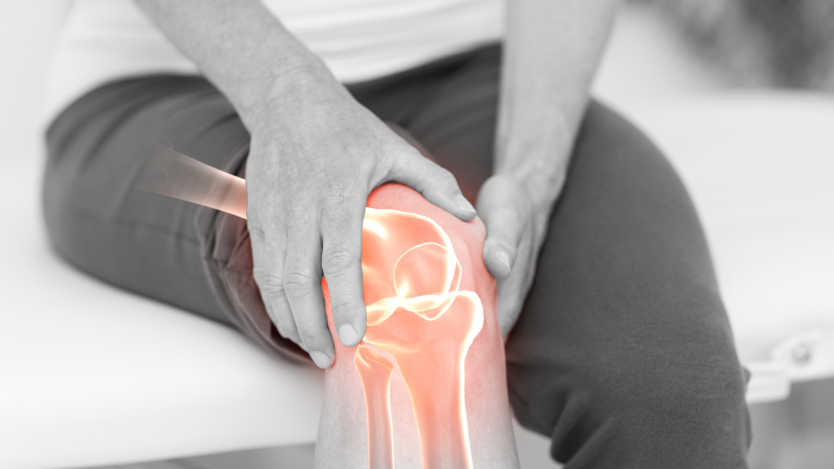
This is an injury to the meniscus of the knee that is usually accompanied by pain or discomfort in the joint area.
Meniscopathy is one of the most common knee injuries.
Meniscopathy is a common injury both in athletes and in people with certain jobs that require some physical exertion and stress the joint.
This type of injury can be traumatic or degenerative, depending largely on the age of the patients who suffer a tear. In the case of traumatic ruptures, the highest incidence rate is in men between 21 and 30 years of age, occurring mainly during sporting activities.
In the case of degenerative meniscopathies, the incidence is highest in people between the ages of 40 and 70. When meniscopathy occurs, there may be an associated injury such as torn ligaments or injuries to the tibial plateau.
The solution to a meniscopathy can be carried out following various treatments depending on its severity, but below we will learn more about meniscopathies, the types, symptoms, diagnosis, etc.

Do you have a meniscopathy?
Request a free and immediate appointment with our specialists in traumatology and get a surgery date
Causes for meniscopathy
First of all, it is important to understand the normal movement of the knee in order to understand how meniscopathies or meniscal injuries occur.
Knee flexion is accompanied by a slight internal rotation of the tibia over the femur and extension is accompanied by a slight external rotation of the tibia over the femur.

At maximum knee flexion, the posterior portions of the menisci are compressed. Sudden extension of the knee can therefore cause the posterior horn of the meniscus to become trapped and suffer a longitudinal tear.
On the other hand, extension of the knee in a position of external rotation of the femur over the tibia can cause a transverse or oblique tear.
Thus, the causes are very varied and depend mainly on the age and state of health of the affected person, among them we find:
- Degenerative: as we age, the menisci become dry and dehydrated until, almost naturally, they end up tearing during any movement we make.
- Traumatic: due to high pressure or crushing (if we do not bend our knees when landing after a jump), with a violent rotation of the knee (any change of direction while walking or running), a sudden hyperextension of the knee.
- Mechanical: the knee may malfunction due to some deformity or small malfunction such as excessive rotation, hyperextension, altered Q angle, etc. Therefore, a malfunctioning knee (after some time) will lead to a meniscal injury.
Symptoms of meniscopathy
When a meniscus tear occurs, depending on the severity of the meniscopathy, the patient may suffer some of the symptoms mentioned below.
These symptoms will be key both in the diagnosis of the problem and in the choice of one or other treatment to repair the meniscopathy.
The symptoms are usually the same in all meniscopathies, the main variable being their intensity:
- Intense pain in the knee area: In addition to the snapping/crunching that is felt when the tear occurs, meniscopathy often continues with the onset of a sharp pain in the area, increasing in intensity when weight is put on the leg or pressure is applied to the area.
- Joint effusion.
- Mechanical locking: After the time of injury, the patient is unable to fully extend the knee.
- Discomfort in the knee when turning, twisting or squatting.
How is a meniscopathy diagnosed?
The diagnosis of meniscopathy or meniscus injury must be made by a doctor specialising in traumatology. This diagnosis is made following two important steps, such as an interview with the patient and a physical examination, in addition to the use of complementary tests such as an MRI or a diagnostic arthroscopy.
Complementary tests for the diagnosis of meniscopathy are usually used in cases where the doctor suspects that other elements of the knee may be affected.
To find out if there is an injury and how serious it is, the doctor will feel the joint line of the knee, the area between the femur and the tibia, and then perform any of these tests:
- McMurray test: to detect clicks that determine a meniscal tear.
- Apley test: in a certain position and by exerting pressure on the key points, it is used to check for pain in the knee.
- Steinmann/Steinmann II test: by rotating the tibia inwards and outwards, it can be used to check whether or not there is a meniscal tear.
In addition to all this, complementary examinations may be carried out to determine the extent of the injury or if there are other types of problems such as ligament injuries or bone damage, such as:
- X-ray, which allows us to determine whether there is bone damage.
- MRI, which at a glance allows the specialist to differentiate between a healthy meniscus and a torn one.
- Arthro-CT, which is used in cases where there has been a meniscus operation.
Treatment for meniscopathy
After diagnosing the meniscopathy, determining the type of meniscal tear that has occurred, conservative treatment or surgical treatment can be chosen. In the case of opting for surgical treatment, the type of approach will be decided, which may be by arthroscopy (the most commonly used and recommended) or by open surgery.
The choice of one surgical process or the other must always be made based on the characteristics of the patient's case:
- Type of meniscal tear
- Patient's age
- Lifestyle
- Associated injuries
- Patient's general health status
In any case and whatever decision is made regarding the type of surgery performed, the main objective in meniscal repair is to preserve as much meniscal tissue as possible.
Conservative treatment
Conservative treatment of meniscopathy is usually used in cases of a parameniscal lesion. This type of meniscopathy affects the peripheral part of the meniscus, which is vascularised, i.e. it has a blood supply.
This quality is what allows this tear to regenerate on its own, as the blood, as in any wound that we can make in our body, allows it to heal and regenerate.
In this case, in addition to rest, physiotherapy and anti-inflammatory drugs, hyaluronic acid and plasma rich in growth factors can be used. The latter treatment consists of the infiltration of a platelet concentrate of high biological value obtained from the patient. This speeds up recovery because it reduces inflammation and stimulates regeneration.
On the other hand, in the event that the meniscopathy occurs in the central (inner) part of the meniscus, as it is an area without blood supply, it is usually necessary to carry out surgical treatment to repair the meniscus by performing a partial meniscectomy.
Surgical treatment of meniscopathy
First, the patient is placed in the position indicated by the surgeon and anaesthesia is administered.
- Once the anaesthesia has taken effect, the doctor will disinfect the knee area, where the incisions that will be used to introduce the arthroscope and the rest of the necessary instruments will be made.
- He will then make 2 or 3 mini-incisions in the joint area, to first inject a saline solution through a cannula into the area so that it remains wide and clean enough during surgery for the surgeon to be able to see through the arthroscope with total clarity. This improves the surgeon's manoeuvrability and visibility and reduces the chance of damaging other elements of the knee.
- The next step is to insert the arthroscope through one of the incisions and see the inside of the knee live.

An arthroscope is a tool consisting of a tiny camera on the end connected to a monitor via fibre optics, allowing the surgeon to see inside and repair the meniscus.
- Meniscal repair can be performed by suturing or removal of the damaged part of the meniscus.
- Both meniscal suturing and meniscectomy are performed by inserting surgical instruments through the incisions made at the start of the surgery, with the doctor observing the inside of the meniscus through the monitor connected to the arthroscope.
- Once the meniscus tear has been repaired, the surgeon will remove the arthroscope along with the rest of the instruments, drain the liquid from inside the knee and suture the small incisions made.
If the tear is in the vascular area of the meniscus, the surgeon will try to preserve as much tissue as possible by suturing it.
The duration of meniscus surgery ranges from approximately 30 to 90 minutes.
However, the surgical time will depend on the severity of the injury and the different factors explained in this article.
If you are suffering from the discomfort and pain caused by a meniscus injury, and you want to solve these symptoms and limitations as soon as possible, you can click on the image below to request a surgical assessment consultation with our specialists in traumatology.

Do you need surgery to repair a meniscopathy?
Request a free and immediate appointment with our specialists in Traumatology
Bibliography
- (2012, 1 octubre). Desgarros de los meniscus (Meniscus Tears). Recuperado de https://orthoinfo.aaos.org/es/diseases--conditions/desgarros-de-los-meniscus-meniscus-tears
- Álvarez López, A., Ricardo Soto-Carrasco, S., & De la Caridad García Lorenzo, Y. (2018, 25 mayo). Lesiones degenerativas del menisco. Recuperado de http://scielo.sld.cu/scielo.php?script=sci_arttext&pid=S0864-215X2018000100002&lng=pt&nrm=iso
- Busto Villarreal, J. M., Liberato González, I., & Vargas Sánchez, G. (2019, 1 marzo). Lesiones meniscales. Recuperado de https://www.medigraphic.com/pdfs/orthotips/ot-2009/ot091d.pdf
Come to Spain for your surgery or treatment
We manage everything from start to finish
Dr. Antonio Rebollo Marina
Médico Asistencial en Centro Médico Caser
Nº colegiado: 282834715

Medical disclaimer: All the published content in Operarme is intended to disseminate reliable medical information to the general public, and is reviewed by healthcare professionals. In any case should this information be used to perform a diagnosis, indicate a treatment, or replace the medical assessment of a professional in a face to face consultation. Find more information in the links below:
Frequent Questions
-
Some of the most common symptoms of meniscopathy are:
- Pain
- Locking in the knee
- Joint effusion
-
No, it will always depend on the type of tear. The specialist will recommend surgery from the outset mainly when the knee is locked or the tear cannot heal on its own.
However, if conservative treatment has not been effective, it is advisable to resort to surgical treatment.
-
The meniscus surgery is performed with the arthroscope, a minimally invasive technique.
Depending on the cause and the cartilage tissue affected, a meniscal suture or a partial removal of the meniscus (partial meniscectomy) is performed.