How long does bunion (hallux valgus) surgery take?

- Hallux valgus (bunion) correction
- Time before entering the operating theatre
- Surgeon's experience
- Hallux valgus (bunion) deformity
- Complicated hallux valgus: hammertoes or claw toes
- Time in hospital after hallux valgus surgery
- Are you thinking about bunion surgery?

Come to Spain for your surgery or treatment
We manage everything from start to finish
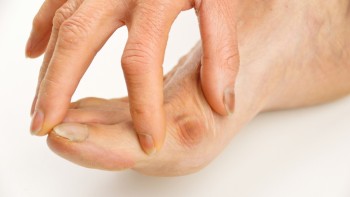
- Bunion surgery corrects hallux valgus, the deviation of the first metatarsal inwards and of the big toe towards the other toes.
- Bunion surgery takes 30 to 90 minutes, depending on several factors we explain below.
- Bunion surgery is usually a day case or involves one night in hospital, so the hospital stay is short.
Hallux valgus (bunion) correction
There are many surgical techniques to correct hallux valgus, which causes the inflamed bump we know as a bunion. Broadly, we can distinguish between surgery with osteotomy, in which the bone is cut and fixed with osteosynthesis material (screws), and surgery without osteotomy, which does not require it.

Do you need bunion surgery?
Request a free appointment with no waiting time with one of our specialists
The choice mainly depends on the severity of the deviation and the surgeon's judgement. It is best not to wait until the deviation is very severe, as it can lead to complications such as claw toes or hammertoes, which need more complex and therefore longer surgery.
The duration of surgery is, along with recovery and anaesthesia, one of the things patients considering bunion surgery are most interested in.
Bunion (hallux valgus) surgery takes approximately 30 to 90 minutes, and several factors affect both the duration of the operation and the time spent in hospital before and after. Here they are:
Time before entering the operating theatre
The patient usually arrives at the hospital about an hour before surgery to hand in the documents at admission. They then wait briefly in a room until called and change into surgical clothes before entering the operating theatre.
In the operating theatre, the patient is positioned on the table as the surgeon indicates and the bunion correction begins.
Surgeon's experience
Although most specialists in Traumatology and Orthopaedic Surgery can operate on hallux valgus, the more experience they have, the faster and better they will perform the operation.

However, other factors carry more weight in the duration of the operation, such as the severity of the deformity, which we discuss below:
Hallux valgus (bunion) deformity
As mentioned, the inflammation of the tissue on the inner side of the foot that forms the bunion is due to the big toe deviating towards the other toes. In mild cases the correction can be done without osteotomy or screws, although it always depends on the case; in moderate or severe cases an osteotomy (cutting the first metatarsal) is usually needed to return the bone to its position and fix it with screws.
Surgery with osteotomy may take a little longer, although the difference is not great.
The operation takes noticeably longer when the patient (more often a woman) has waited too long and has developed claw toes or hammertoes.
Complicated hallux valgus: hammertoes or claw toes
As explained in our article on claw toes and hammertoes, these are toe deformities that can develop as a complication of hallux valgus: the toes bend into a hammer or claw shape.
To correct them, as well as the hallux valgus, the surgeon must work on the tendons, joints or bones of those toes, which makes the operation longer, although the type of anaesthesia, for example, is usually the same.

Once the operation is over, there is a short wait before going home. We explain it below:
Time in hospital after hallux valgus surgery
After the operation, the patient can go home the same day or the next day. Before discharge, the doctor or nursing team explains:
- Home care: wound hygiene and not straining the foot during the first few days.
- Check-up: there is usually a check-up after a couple of weeks, normally booked before discharge.
- Footwear: a post-operative shoe is recommended for walking while protecting the correction.
- Painkillers: oral painkillers are usually prescribed to control postoperative pain.
Once this is done and the patient is discharged, they can leave the hospital.
Are you thinking about bunion surgery?
If you are thinking about private bunion surgery, remember that at Operarme you can have a surgical assessment consultation with one of our specialists in Traumatology and Orthopaedic Surgery, to meet them and discuss the best option for you. You can request it below:

Do you need bunion surgery?
Request a free appointment with no waiting time with one of our specialists
Come to Spain for your surgery or treatment
We manage everything from start to finish
Medical disclaimer: All the published content in Operarme is intended to disseminate reliable medical information to the general public, and is reviewed by healthcare professionals. In any case should this information be used to perform a diagnosis, indicate a treatment, or replace the medical assessment of a professional in a face to face consultation. Find more information in the links below: