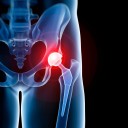
Hip surgery in the elderly - what to expect?
- What to expect in the preoperative phase of hip replacement surgery?
- What should you expect immediately after hip replacement surgery?
- What should you expect from recovery at home after hip surgery?
- What can you expect from hip surgery at Operarme?

Come to Spain for your surgery or treatment
We manage everything from start to finish
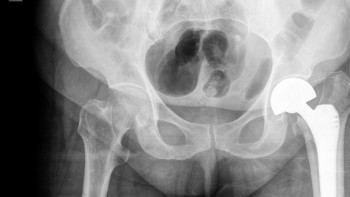
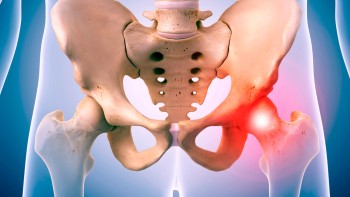
- Hip replacement is one of the most common surgeries performed on elderly patients each year, mainly due to deterioration of the hip joints.
- It is estimated that 1 in 3 cases of the population over 65 years of age require the implantation of a hip prosthesis.
- This surgical intervention has a high success rate in patients over 65 years of age, which implies a rapid recovery of their quality of life.
What to expect in the preoperative phase of hip replacement surgery?
At Operarme we offer our patients a surgical assessment consultation with our specialists in Traumatology and Orthopaedic Surgery, in which they assess and confirm with the surgeon whether they are eligible for a hip replacement surgery.

Assess your hip problem with our surgeon
Request a free and immediate surgical consultation with our specialist in Traumatology and Orthopaedic Surgery.
After the consultation with the specialist, once the patient confirms that he or she wants to go ahead with the surgical process, the next step is to carry out tests to determine the patient's state of health and viability with a view to entering the operating theatre.
What should you expect and take into account in the preoperative phase?
The pre-operative phase is the mandatory phase prior to all surgery, in particular major surgery requiring hospitalisation, to check the general state of health of the patient, and to assess and consider any possible risks that may arise during the surgical procedure.
Especially in the case of older patients, specialists need to ensure that factors such as cardiac problems or chronic diseases, such as diabetes, will not affect the application of general anaesthesia or lead to medical complications during the surgery itself.
Different tests are carried out to make a comprehensive diagnosis:
- Blood analysis: a complete blood analysis is carried out to rule out any type of infection.
- Electrocardiogram: this test checks the patient's cardiovascular status, a very important factor to take into account so that the anaesthesiologist and surgeon can work safely.
- Chest x-ray: in this test, it is observed whether the trachea is well aligned and also if there are any possible risks of infection.
For the tests to be carried out, our Operarme patient service team informs the patient in advance of the preparation that must be taken into account on the day of the pre-operative:
- Attend on an empty stomach: this is the most important indication, the patient must come to the preoperative appointment without having eaten or drunk for the previous 8 hours.
- Necessary documentation: the patient must provide the necessary documentation to carry out the preoperative tests at the hospital. The Operarme team will send the documents to the patient in the days prior to the pre-operative appointment.
What should you expect immediately after hip replacement surgery?
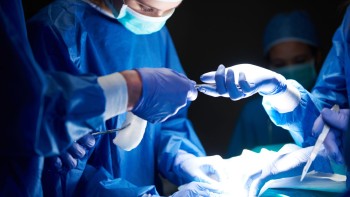
After the surgery is completed, the patient is transferred to a recovery room where their vital signs are monitored, and where they remain until the effects of the anaesthesia have worn off.
Once the effects of the anaesthesia have worn off, you may experience pain and discomfort in the operated area. In this case, the medical team will give you painkillers to relieve the pain.
The results of major surgery such as hip replacement need to be monitored during the days following the operation to confirm that everything has gone well. For this reason, the patient stays in hospital for 4 to 5 days after hip replacement surgery.

You can read more detailed information about hospital admission times, recovery times at home, or how long you have to wait to return to sport in our article: Recovery time after hip replacement surgery.
Admission time after hip replacement surgery is 4-5 days.
During the days following the surgery, you must follow the instructions of the medical staff to gradually begin to regain mobility. In the 4-5 days following surgery, the patient should get up and walk with the help of a walker or crutches, and always with the help and supervision of the hospital's medical team.
It is very important to start taking these first steps after surgery, in order to avoid a possible case of muscle atrophy, especially in cases of older adults.
Before leaving the hospital to go home, the medical staff gives the patient the discharge report with instructions to follow at home for post-operative care and full recovery.
Here's what to expect during the recovery phase at home, and the instructions and advice you should follow to complete your recovery and regain your quality of life as soon as possible.
What should you expect from recovery at home after hip surgery?
Once you are settled at home, you should start planning your recovery routine according to the hospital team's instructions.
The two most important parts of this post-operative process are wound care, and regaining early mobility with the help of crutches.
The hospital will recommend you to keep the hip incision area clean to prevent any infection. Generally for wound care, you do not have to go to the hospital or health centre every day, you can do it comfortably at home following step by step the instructions given to you at the hospital before you were discharged.
When you take a shower, it is very important that you take care not to get the wound and the bandage covering it wet: it must always remain dry until the incision closes by itself.
In addition, it is always essential to take the prescribed medication and to follow with caution the time between each medication, and of course, to consult a specialist in the event of an emergency due to an accident or continuous pain.
In the postoperative phase of hip replacement surgery in elderly patients, it is important to regain hip movement and exercise at home.
Regardless of the option recommended by the surgeon for your case, physical exercise and rehabilitation are essential for a correct recovery of hip functionality. Here is some of the advice most recommended by specialists for older people.
Depending on the patient's particular case and age, the specialist may recommend exercises at home and, on other occasions, rehabilitation sessions at the clinic with a physiotherapist.

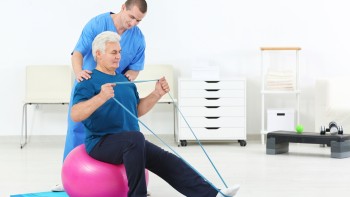
Recommended home exercises for older patients
- Passive movement: It is recommended to first perform passive movements to maintain hip mobility; these consist of moving your legs forward, backward and to the sides in a gentle and not abrupt manner, always leaning on a stable support.
- Push-ups and leg lifts: you must first lie on your back to perform the push-ups, sliding your heel towards your buttocks. You should hold this position for a few seconds and then slowly straighten your leg. Another exercise would be to lift one leg a few centimetres off the ground, hold the position and then slowly lower it.
- Hip abduction with an elastic band: with the help of an elastic band placed around your ankles, you should try to keep one foot parallel to the ground and lift it sideways as far as you can. Again, lower your leg slowly.
- Assisted walking: After a few days, after practising several exercises, you can start walking slowly, always with the help of a support such as a walker or crutches. You should always start with short, slow steps and gradually increase the distance as you improve over the days.
Finally, the only remaining step in the recovery phase is to return for a consultation with the surgeon who operated on you so that he or she can assess your improvement and progress.
This consultation usually takes place one month after the surgery, but it may vary in some cases, in which the patient must come 15 days after the surgery.
The hospital team will inform you of your post-surgical consultation appointment in the discharge report given to you on the day you go home.
What can you expect from hip surgery at Operarme?
At Operarme we offer our patients the security and peace of mind they need when facing an operation of this magnitude. For this reason, we put at your disposal our Patient Service team, who will accompany you step by step during the process, and to whom you can go whenever you need to resolve any doubts.
We also offer a fixed price with all the services included that are required to carry out the hip replacement surgery.
Here is a summary of the advantages we offer our patients:
- Booking and use of operating theatre.
- Single room with accompanying bed.
- Meals and hospitality for the patient.
- Complete pre-operative care.
- Post-operative visits.
- Fees for doctors, anaesthetists and nursing staff.
- Surgical material necessary for the operation.
- Hip prosthesis from top quality companies.
- Anaesthesia, haemotherapy-transfusions, recovery room bookings, etc.
- Medical complications insurance.
- Transfer service. Consult the conditions of the transfer service here.
If you would like to request more information or an appointment with our specialists, please click on the image below:

Do you need hip replacement surgery?
Request a free and immediate appointment with our specialists
Come to Spain for your surgery or treatment
We manage everything from start to finish
Medical disclaimer: All the published content in Operarme is intended to disseminate reliable medical information to the general public, and is reviewed by healthcare professionals. In any case should this information be used to perform a diagnosis, indicate a treatment, or replace the medical assessment of a professional in a face to face consultation. Find more information in the links below: