Haemorrhoid pain: what it's like and how to relieve it
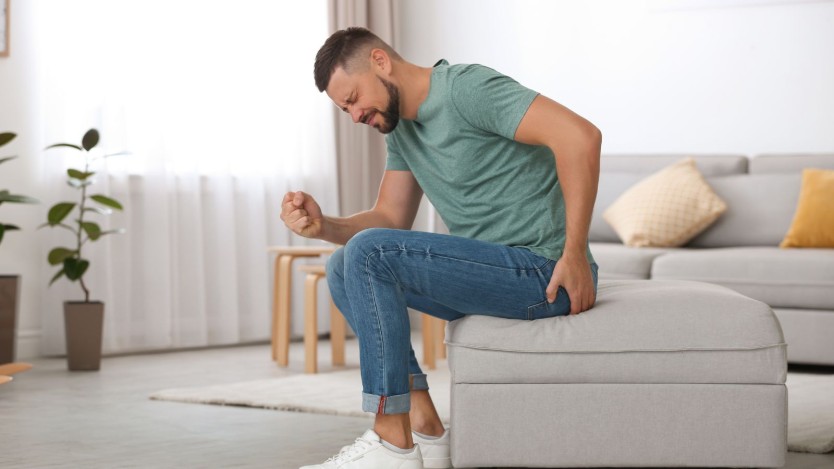
- What are haemorrhoids?
- Causes of haemorrhoidal pain
- How to relieve haemorrhoid pain?
- Bibliography
- Source information
- Frequent Questions

Come to Spain for your surgery or treatment
We manage everything from start to finish
What are haemorrhoids?
Haemorrhoids are small varicose veins caused by the accumulation of venous blood in one or more of the venous plexuses that nourish the rectum in its final portion and the anus of all human beings.

Do you need haemorrhoids surgery?
Request a free and immediate appointment with our specialists in General surgery
Haemorrhoids are swollen veins in the anus and lower rectum, similar to varicose veins.
These dilated or enlarged venous plexuses can cause a well known clinical condition known as haemorrhoid pain, commonly known as piles.
This process of haemorrhoid pain occurs when these varicose veins, popularly known as piles, prolapse outside the anus when straining during defecation or when patients suffer from episodes of chronic constipation.
Causes of haemorrhoidal pain
The pain of haemorrhoids or piles appears when one of these haemorrhoids comes out of the anus and gets "trapped" outside, making it impossible or difficult to return to the inside of the anal canal or anus.
This compression or trapping that causes the pain of haemorrhoids or piles is caused by a contraction of the internal sphincter of the anus.
The internal anal sphincter is a muscle that is located inside the anus, surrounding it, and is responsible for allowing or not the evacuation of faeces.
It is a muscle with smooth muscle cells, which means that it is involuntary and therefore not consciously controlled by people.
This means that an episode of pain, such as the appearance of a large haemorrhoid, reacts by producing an involuntary contraction of the muscle and at the same time causing greater compression of the haemorrhoid, which will increase in size, causing more pain and preventing it from shrinking on its own.
Haemorrhoids are caused by chronic constipation and diarrhoea, heavy lifting, pregnancy or excessive straining during defecation.
The pain of piles is therefore worse and more intense the longer the haemorrhoid remains prolapsed and compressed on the outside of the anus by the internal sphincter. The pain is usually worse during defecation and in the moments after defecation. In chronic haemorrhoids or piles, the pain becomes a sensation of heaviness that accompanies the patient throughout the day. In acute moments of pain, the pain is characterised by a lancinating sensation, as if needles were being stuck in, and may prevent the evacuation of faeces if the haemorrhoidal pain is very acute.

A complication that can occur in any patient with long-standing haemorrhoids or piles is thrombosed haemorrhoids. This type of complication of haemorrhoids or piles is characterised by intense pain in the anal region and very enlarged, congestive and purplish-coloured haemorrhoids or piles.
This is caused by the formation of clots or thrombi inside the haemorrhoid or piles due to an accumulation of venous blood due to a large compression of the internal sphincter over a prolonged period of time.
This type of pain of thrombosed haemorrhoids is similar to the usual pain of haemorrhoids, although much more intense, and does not change over time.
The resolution of this type of haemorrhoidal crisis is usually the reintroduction of the thrombosed haemorrhoid into the anus or the incision of the mucosa of the haemorrhoid plus the manual removal of the thrombi that cause this type of pathology.
How to relieve haemorrhoid pain?
Some of the guidelines recommended to alleviate the pain caused by haemorrhoids are home procedures as well as taking anti-inflammatory medication. However, if these do not work, the other possibility of eliminating the discomfort is surgical treatment. Below you will find all the information on these remedies:
Reintroduction of haemorrhoids
The treatment of habitual haemorrhoid pain is resolved by reintroduction or reduction of the haemorrhoid inside the anus, in the anal canal. This manoeuvre is likely to occur spontaneously if the haemorrhoid process is classified as one of the first two grades of haemorrhoids. On the other hand, if we suffer from grade 3 or 4 haemorrhoids or piles, this spontaneous reduction is not possible and a manual manoeuvre will be necessary to reintroduce them into the anus.
The explanation for the need to reduce haemorrhoids when they cause pain is simple because, as we have explained above, compression of the internal sphincter is both cause and consequence of a prolapsed haemorrhoid.
If we eliminate the compression of this sphincter by introducing the haemorrhoid or piles inside the anus, we will be able to re-establish normal venous circulation, reducing its size and, consequently, the pain and congestion that causes it.

Pharmacological treatment
The use of common analgesics such as paracetamol or certain anti-inflammatory drugs will facilitate the manual reduction manoeuvre and, in the case of grades 1 and 2, enable us to endure the spontaneous reduction during the hours that the episode of haemorrhoid prolapse lasts.
Home routines
It is possible that some home remedies such as sitz baths with warm water 3 or 4 times a day for a maximum of 10 minutes each time and control of constipation by eating foods rich in fibre and moderate physical exercise as well as abundant but controlled water intake may relieve the pain or sensation of heaviness of prolapsed haemorrhoids and as a secondary characteristic may reduce the frequency of the appearance of these haemorrhoidal crises.

Do you need Haemorrhoids surgery?
Request a free and immediate appointment with our specialists in General surgery
Surgical treatment
In short, although during this text we have talked about solutions to alleviate the pain of haemorrhoids, it is important to highlight that the only therapeutic intervention that guarantees the resolution of the pain of haemorrhoids or piles, as well as the pathology of haemorrhoids or piles itself, is surgical intervention for their removal.
This operation is known as open or closed haemorrhoidectomy depending on the type of surgical technique used.
This type of intervention is complex due to the working area available to the surgeon, although in the long term it guarantees in the vast majority of cases the complete resolution of haemorrhoids, especially in comparison with all those therapeutic interventions that seek to alleviate and control the symptoms of piles but which do not have any effect on resolving their cause.
Here you can find out more about the different treatments:
- Haemorrhoid surgery (removal) | 2.490 €
- Haemorrhoid surgery with laser | €3,490
Bibliography
- Alonso-Coello, P., Marzo-Castillejo, M., José Mascort, J., José Hervás, A., Manuel Viña, L., Antonio Ferrús, J., Ferrándiz, J., López-Rivas, L., Rigau, D., Solà, I., Bonfill, X., & Maria Piqué, J. (2008). Guía de práctica clínica sobre el manejo de las hemorroides y la fisura anal (actualización 2007). Gastroenterología y Hepatología, 31(10), 668-681. https://doi.org/10.1016/s0210-5705(08)75815-1
- (2010). Consenso de Hemorroides. Revista Mexicana de Coloproctología, 16(1 a 3), 4-14. https://www.medigraphic.com/pdfs/proctologia/c-2010/c101-3a.pdf
Come to Spain for your surgery or treatment
We manage everything from start to finish
Dr. Antonio Rebollo Marina
Médico Asistencial en Centro Médico Caser
Nº colegiado: 282834715

Medical disclaimer: All the published content in Operarme is intended to disseminate reliable medical information to the general public, and is reviewed by healthcare professionals. In any case should this information be used to perform a diagnosis, indicate a treatment, or replace the medical assessment of a professional in a face to face consultation. Find more information in the links below:
Frequent Questions
-
Internal haemorrhoids generally do not cause pain, but tend to bleed. External haemorrhoids can cause pain, which intensifies or persists depending on how far along they are. Read more
-
Mild symptoms can often be relieved without surgery. With non-surgical treatment, pain and swelling usually subside within a week. For advanced haemorrhoids, surgery is the definitive treatment. Read more
-
Recovery time after haemorrhoid surgery can vary depending on the surgery technique performed. Generally, after 10-15 days it is possible to make a full recovery and return to normal daily activities. Read more