Bleeding during bowel movements: What it is, Causes and Treatment
- What is bleeding from defecation?
- Causes of bleeding during defecation
- Types of bleeding during defecation
- How to solve bleeding during a bowel movement?

Come to Spain for your surgery or treatment
We manage everything from start to finish
- Bleeding during defecation is a common symptom, and although it causes considerable alarm, it is most often due to a minor condition.
- Blood in the stool should not be dismissed as, although unusual, it may be a symptom of a more serious condition.
- The colour of the blood in the stool, light or dark, will indicate the origin of the lesion, the lower or upper part of the digestive tract and the source of the bleeding.
What is bleeding from defecation?
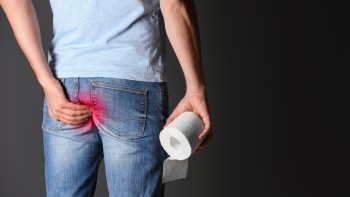
When we talk about bleeding during defecation or faecal haemorrhage, we are referring to blood stains on the toilet paper after passing stool or on the underwear.
Normally, blood is also seen in the faeces, so that in some cases the water in the toilet bowl is stained with the characteristic red colour of blood.
Bleeding during defecation should not be underestimated, as it may be a symptom of a more serious pathology, such as colorectal cancer, although it is not the most common.
Any bleeding during defecation should be treated by a doctor, so that the specialist can determine the cause and indicate the appropriate treatment.

Do you need a specialist to diagnose your case?
Purchase your medical voucher easily under Operarme's guarantees and select your nearest hospital.
When the blood loss is red or fresh, in isolation, we speak of rectorrhagia. The origin is usually in the descending colon or rectum. It is usually due to an anal injury or haemorrhoids.
Hematochezia is bright red rectal bleeding mixed with stool, suggesting that the cause is from the large intestine or rectum.
When the faeces are dark, almost black, shiny and sticky, we speak of melena, caused by lesions of the upper digestive tract.

Depending on the colour of the blood in the stool, it will indicate in which area of the digestive tract the bleeding is occurring.
Thus, if the blood is dark in colour, the bleeding may be developing in the upper part of the digestive tract, and if the blood is light red, in the lower part of the digestive tract.
Causes of bleeding during defecation
In most cases, the presence of blood in the stool is a symptom of minor pathologies that may be irritating the area during bowel movements.
It can also be a consequence of pushing too hard during defective activity, an ulcer or tumour in the intestines, the appearance of haemorrhoids, etc.
In any case, it is important to note that defecating liquid blood may also indicate a more serious pathology, so it is important that your doctor assesses your case and determines the exact cause of the bleeding from the anus.
Thus, the origin of bleeding during defecation is very varied, with the main pathologies that cause it being the following:
Haemorrhoids
Haemorrhoids are caused by inflammation of the veins in the rectum (internal haemorrhoids) or anus (external haemorrhoids).
Haemorrhoids cause bright red blood in the stool, which usually appears after defecation.
The specific cause of this anal lesion is unknown, but it is often related to constipation, diarrhoea, obesity, overexertion, pregnancy, etc.

When we suffer from haemorrhoids, the bleeding is usually seen on the toilet paper when we clean ourselves after defecating, in the slight blood stains that appear on our underwear, in small blood stains mixed with the faeces or in the reddish colour that we see in the toilet water after defecating.
Depending on their severity, they can be classified as follows:
- Grade 1 haemorrhoids: Haemorrhoids are in the anal canal and do not come out. They produce small bleedings when defecating.
- Grade 2 haemorrhoids: The haemorrhoids may come out when you defecate, but they return spontaneously to the inside of the anal canal. They cause blood in the stool and itching.
- Grade 3 haemorrhoids: Haemorrhoids come out and get trapped outside, sometimes they can be reintroduced with a bit of toilet paper by hand. They cause bleeding from the anus and more pain than in the previous cases.
- Grade 4 haemorrhoids: The haemorrhoids are on the outside and cannot be reintroduced manually. They cause severe discomfort, and it is very likely to defecate liquid blood.
Anal fissure
An anal fissure is a tear or partial rupture of the mucosa lining the anus. This mucosal tissue surrounding the anus is a much weaker tissue than the surrounding skin. This tissue is red or purplish in colour and is easily broken.
Anal fissure causes slight bleeding when defecating and also causes pain when defecating hard bundles.
This is due to contraction of the sphincter muscle as the body's defensive response to the passage of faeces, which causes the crack to enlarge causing the pain and bleeding.
Anal fissures are classified according to their origin as follows:
Primary anal fissure
This is a small lesion or group of lesions in the mucosa of the anus. They can be caused by:
- Constipation. If it is prolonged over time it causes damage to the mucosa that covers the rectum and anus and causes the fissure.
- Frequent diarrhoea. Its contents can chemically burn the anal mucosa and cause fissure.
- Anal sex. The micro-traumas that occur during anal sex can cause a small lesion in the mucosa and cause fissure.
Secondary anal fissure
It is the consequence of a systemic disease of the digestive tract. Although rare, these diseases can be:
- Inflammatory bowel diseases (IBD) such as Crohn's disease and Ulcerative Colitis.
- Intestinal tuberculosis
- Sexually transmitted diseases, most commonly syphilis. In these diseases the intestinal mucosa becomes more fragile and can cause anal fissure.

Anal abscess
There are glands in the anal canal that lubricate the faeces to make it easier to pass when we defecate. These glands can become blocked by excess mucus and, with the presence of germs, cause an infection. The pocket of pus that forms is called an anal abscess.
An anal abscess causes great discomfort when defecating and causes slight bleeding in the faeces due to the pressure of the faeces on the abscess.
Deep anal abscesses can be caused by intestinal diseases such as Crohn's disease and diverticulitis.
Sometimes anal abscesses can occur in babies and children who wear nappies and have a previous anal fissure, which becomes infected due to frequent contact with faeces and urine.
In one third of cases, anal abscesses lead to anal fistulas.
Anal fistula
A fistula is a communication between an external opening, in the skin of the anus, and an internal opening, inside the anus or rectum. The connecting passage is known as the fistulous tract.
This type of anal pathology is caused by infection of the anal gland located in the anus.
In 90 % of cases, anal fistula is caused by infection of the anal glands and their subsequent formation into an anal abscess with pus.
Anal fistulas caused by anal abscess are primary fistulas.
However, there are other fistulas (10%) whose origin may be Crohn's disease, sexually transmitted diseases, anal sex, cancer, diabetes, sequelae of radiotherapy treatments, diverticula, in these cases we will speak of secondary fistulas.
Secondary anal fistulas tend to be more common in men aged 30-50 years.

Do you need anal fistula surgery?
Request a free and immediate appointment with our specialists
Diverticulosis
Diverticulosis are small pouches in the walls of the colon or large intestine. This anal pathology is quite common (50%) in people over 60 years of age.
Although the exact cause is unknown, diverticulosis is associated with a low-fibre diet leading to constipation and hard stools.
In most cases, people with diverticulosis do not have any symptoms. Otherwise, the most common symptoms are mild cramping, abdominal bloating or constipation.
Straining during defecation increases the pressure on the colon or bowel and pouches may form in the walls of the bowel.
In the worst cases, diverticulosis will cause bleeding during bowel movements.
It is usually a disease that can be treated with antibiotics and painkillers, as well as a liquid diet. However, in severe cases it may require hospitalisation and/or surgery.
Inflammatory bowel disease (IBD)
Inflammatory bowel disease (IBD) is a chronic disease, caused by inflammation in some part of the digestive tract.
Among inflammatory bowel diseases, there are two types: Crohn's disease and ulcerative colitis. Although there are many similarities between them, there are important differences:
Crohn's disease
Crohn's disease can affect any part of the digestive tract, from the mouth to the anus.
Crohn's disease causes diarrhoea, which may have blood or mucus in the stool.
In addition, with this type of disease there is a high risk of fistulas, kidney stones and gallstones leading to colic.

Ulcerative colitis
Ulcerative colitis is an inflammation that occurs in the large intestine and causes ulcers affecting the inner wall of the colon.
The initial symptoms of ulcerative colitis are abdominal pain and diarrhoea with blood in the stool.
Ulcers
Ulcers are wounds in the wall of the stomach, or duodenum, caused by acids that facilitate the digestion of food and damage the mucosa of the intestine or duodenum.
The most characteristic symptom is abdominal pain, or heartburn.
When bleeding is caused by an ulcer, the stool may be dark in colour, like tar, due to the breakdown of blood in the digestive tract.
Polyps / Colorectal cancer
Polyps are benign tumours that can be found along the entire digestive tract, although they are most common in the colon. They are also called adenomas.
There are several types of polyps:
- Tubular polyp: protruding into the lumen of the colon.
- Villous adenoma: flat and prone to malignancy
- Hyperplastic polyp: rarely or never develop into cancer
- Serrated polyp: less common, but may develop into cancer over time
Polyps are generally benign, although those larger than 1cm are at increased risk of cancer and can lead to colorectal cancer.
Polyps are more common in older people with a family history of colon cancer.
Polyps do not usually present symptoms, but when they do appear, blood in the stool and changes in the stool are common.
Types of bleeding during defecation
Bleeding during defecation is usually discovered by the appearance of blood stains on the underwear, by defecating liquid blood and, consequently, by observing the red colour of the toilet paper after defecation.
Furthermore, depending on the colour of the blood, this pathology can be very revealing. The colour of the blood can indicate the origin and source of the blood and thus reveal the cause of the bleeding during defecation.
However, it is up to the doctor to determine the disease or cause of the bleeding in the stool.
Do you need a specialist to diagnose your case?
Purchase your medical voucher easily under Operarme's guarantees and select your nearest hospital.
Thus, the colour of the blood can indicate where the bleeding is occurring.
- Defecating bright red liquid blood on toilet paper only: This is the mildest type of bleeding from the anus. It usually indicates that the bleeding is occurring at the opening of the rectum (anus).
The two most common causes of this type of bleeding in the stool are haemorrhoids and anal fissures.
- Defecation of bright red liquid blood on the surface of the stool: This indicates that the stool bleeding is occurring in or near the anus. This may be caused by haemorrhoids or anal fissures.
- Passing liquid blood that mixes with stool: This type of bleeding during a bowel movement may mean that there is a disease or problem in the rectum or small intestine, such as cancer, colon polyps, diverticulosis or ulcerative colitis.

However, as we have been telling you throughout the article, a doctor will be able to determine the cause of the bleeding in the stool.
- Passing liquid blood mixed with diarrhoea: This may be a sign of a more serious infection in the colon.
- Black or very dark stools: This type of stool may be a sign of more serious bleeding in the stomach or oesophagus.
When blood passes through the intestine into the rectum, it can give the stool a blackish or tarry colour. Stomach acids break down the blood and turn it black.
The severity of rectal bleeding is classified as follows:
- Drops, spots, streaks: blood on the toilet paper or a few drops in the toilet; streaks or drops of blood on the surface of the stool.
- Mild: more than a few drops or streaks of blood on the stool and toilet paper.
- Moderate: passing liquid blood, finding small clots, or even passing blood without faeces which, in any case, turns the toilet water red.
- Severe: large clots, intermittent or constant bleeding.
How to solve bleeding during a bowel movement?
Bleeding when defecating is a symptom of a specific anal pathology.
As you have read, depending on the colour of the blood, we can determine the origin of the bleeding, as well as the way in which it presents itself, which will indicate the reason why it may be occurring.
In most cases, a healthy lifestyle, including diet, lifestyle habits and physical activity, is necessary to avoid bleeding during defecation. However, when the cause of the blood in the stool is a more serious pathology, surgery is necessary.
However, it will be the doctor who will determine the severity of the disease, as well as the appropriate treatment to solve it.
More specifically, below you will find the possible indications for the different pathologies mentioned above:
Haemorrhoids
The best thing to do for haemorrhoids is prevention, but if you suffer from them, the solution will depend on the degree to which you suffer from them.
Below we will look at the possible treatments:
Conservative treatment
This is generally applied in cases of grade I and grade II haemorrhoids and consists of the following:
- A diet rich in fibre (rich in fruit and vegetables), which facilitates bowel movements and reduces pressure on the haemorrhoidal veins.
- Drinking plenty of fluids to improve stool fluidity.
- Use of wet wipes for cleansing after defecation, which reduces rubbing against the haemorrhoids.
- Sitz baths in the shower or bidet with lukewarm water, especially after bowel movements.
- Lead an active life to promote intestinal transit and blood circulation.
- Ointments / ointments available in pharmacies reduce the itching and inflammation of haemorrhoids.
Surgical treatment
When pain and bleeding cannot be alleviated with conservative treatment, surgical treatment must be used. This is a simple and fairly common operation with very good results.
Haemorrhoid surgery is carried out after consultation with a doctor specialising in General and Digestive Surgery and with the patient's approval.
The surgical technique will be determined by the surgeon's criteria in each case.
This procedure lasts between 90 and 120 minutes depending on the case.
Depending on the type of technique used, the patient will have to stay in hospital overnight or may even be discharged the same day.
Full recovery from the haemorrhoid operation will not exceed 10-15 days.
If you are thinking of solving your haemorrhoid problem with surgical treatment, you should know that Operarme offers you a free surgical assessment consultation with one of our specialists.
Do you need haemorrhoids surgery?
Request a free and immediate appointment with our specialists in General surgery
Anal fissure
The treatment to repair an anal fissure will depend on the cause of the fissure, i.e. whether it is a primary or secondary anal fissure.
The treatments used are:
Conservative treatment
The most common anal fissures in healthy individuals are primary fissures, for which conservative treatment is usually used. This treatment consists of minimising trauma to the anal canal injured by the passage of faeces, following the indications given by the doctor, such as:
- A diet rich in fibre makes the faeces more fluid, improving their passage and reducing the rubbing of the faeces in the anus. In this way, the fissure does not rub and thus closes on its own.
- Sitz baths with warm water. This relaxes the contraction of the internal sphincter, preventing the constipation that worsens the fissure.
- Use of ointments containing anti-inflammatory and local anaesthetics, which lubricate the fissure and reduce trauma.
Surgical treatment: Sphincterotomy
If conservative treatment fails to achieve the desired improvement, the other possible option is anal fissure surgery.
This intervention aims to relax the hypertonicity of the sphincters so that the fissure can recover on its own.
The anal fissure treatment procedure takes 15 to 20 minutes and the hospital stay is usually about 24 hours.
This is a safe and effective surgery; in fact, the recurrence of fissures is low.

Anal abscess
Anal abscesses are caused by accumulation of pus in the rectum or anus.
The glands responsible for lubricating the anal canal can become blocked due to an excess of mucus in the area, leading to the accumulation of germs in the area, their infection and the subsequent formation of an anal abscess.
Antibiotics are rarely sufficient for treatment.
The definitive treatment is surgery to achieve total emptying of the pus in the abscess.
Detecting the anal abscess and emptying it can prevent the formation of anal fistulas in 50% of cases.
Surgery consists of opening the abscess and draining the pus it contains. It is performed under local anaesthesia and conscious sedation.
The surgery is usually performed on an outpatient basis, so the patient goes home the same day. Only if the abscess is very deep will the patient be hospitalised for a little longer until the pus is completely eliminated.
After the surgery, sitz baths with warm water should be taken to reduce pain and inflammation, facilitating drainage of the abscess.
As we pointed out, when the patient takes too long to undergo treatment, it can be complicated by the formation of a fistula.
Anal fistula
Once the fistula and the fistulous tract have been diagnosed and studied, the doctor specialising in general surgery and coloproctology will indicate the treatment to be followed.
The only definitive treatment for the elimination of fistulas is surgery. However, as in all surgical interventions, it must be ensured that there is no infection. If there is an infection, the patient must receive antibiotic treatment to eliminate it before the intervention.
The surgical procedures used are:
- Fistulotomy: This is performed on the simplest fistulas, which are usually the most common. It consists of cutting the skin and part of the sphincter muscle to create an open groove, curing the fistula from the inside out.
- Fistulectomy: Used when fistulas are more complex. In these cases it may sometimes be necessary to restore the sphincters. This intervention involves total resection of the fistulous tract.
Anal fistula surgery lasts between 30 and 90 minutes, depending on the type of operation.
Diverticulosis
Most of the time, diverticulosis has no symptoms, but occasionally you may experience cramping in the lower abdomen.
Once diagnosed by the doctor, treatment will be recommended and can be carried out at home. Generally speaking, it consists of rest, a liquid diet for a few days and gradually increasing its consistency, taking painkillers to relieve pain and antibiotics in the event of infection.
Once you have recovered from diverticulosis, it is important to eat a diet rich in fibre to avoid a recurrence of the disease.
When complicated by inflammation and infection of the diverticula, symptoms are usually more severe and can manifest with fever, nausea or vomiting, gas, tenderness in the abdomen on the lower left side. In some cases surgery is necessary.
Inflammatory bowel disease (IBD)
Inflammatory bowel disease (IBD) is a chronic disease whose symptoms come and go over time, and can be mild or severe. This happens in the two most common types: Crohn's disease and Ulcerative Colitis.
Treatment will try to suppress the inflammation causing the symptoms.
Depending on the symptoms and their intensity, the doctor will recommend the type of medication to follow based on anti-inflammatory drugs, antibiotics, analgesics, etc.
The best way to alleviate symptoms is to lead a healthy lifestyle:
- Limit or avoid caffeine, alcohol, carbonated beverages.
- Regular exercise
- Avoiding stress
Hospitalisation for intravenous fluids or surgery is required only in severe cases.
Ulcers
The most common cause of ulcers is infection with Helicobacter pylori bacteria and also the frequent use of aspirin and ibuprofen.
- Treatment is based on the intake of acid-reducing drugs in the stomach or antibiotics to kill Helicobacter pylori.
- Antacids and milk often relieve symptoms temporarily.
Stress and spicy foods make ulcers worse.
- Alcohol and smoking should be avoided.
- If left untreated, the ulcer gets worse.
- Only when the ulcer does not heal with treatment, surgery is used.
Polyps / Colorectal Cancer
Another cause of bleeding during defecation are colorectal polyps. These should be closely monitored as they pose a higher risk of developing into a more serious disease, such as colon cancer.
Colorectal polyps should be removed because of the risk of malignancy:
- Polyps are commonly removed at colonoscopy.
- Because of their risk of recurrence, repeated colonoscopies are necessary over time.
- When polyps become cancerous or very large, the doctor usually advises a colectomy, which consists of removing the area of the colon with polyps.
With regard to preventive treatment, to avoid the formation of polyps, the following is recommended:
- A diet low in fat and rich in fruit and vegetables.
- Do not smoke or drink alcohol in excess
- Maintain body weight
- Regular exercise
It is possible that you suffer from bleeding when you defecate so, if so, we advise you to leave your case in the hands of a good specialist to determine the severity of your case and advise you on the appropriate treatment.
Contact us on +34 91 141 33 56 and our Patient Service Team will inform you of the consultations and doctors available in your city, so that you can book it right away.
You can also leave your contact details in the following contact form and a member of our patient service team will contact you as soon as possible.
Do you need haemorrhoids surgery?
Request a free and immediate appointment with our specialists in General surgery
Come to Spain for your surgery or treatment
We manage everything from start to finish
Medical disclaimer: All the published content in Operarme is intended to disseminate reliable medical information to the general public, and is reviewed by healthcare professionals. In any case should this information be used to perform a diagnosis, indicate a treatment, or replace the medical assessment of a professional in a face to face consultation. Find more information in the links below: