
IUD insertion (contraceptive method)
in Écija
- Hospital stay: Outpatient treatment
- Duration of treatment: 5 - 10 minutes
- IUD device: Not included
- IUD device prescription: Not included. Contact our Patient Service team for more information.

What is included?
-
Gynaecological consultation and ultrasound for performing the treatment
Includes the gynaecological consultation where the device insertion procedure is performed, and a gynaecological ultrasound.
-
Outpatient stay
It is an outpatient medical treatment, meaning the patient can walk back home immediately after the procedure.
-
Insertion of IUD device
Includes the medical fees and the IUD insertion procedure performed by the gynaecology specialist.
-
IUD device not included in the price
The IUD device is not included in the fixed price of this treatment, only the insertion procedure.
The IUD must be purchased at the pharmacy by presenting the medical prescription given to the patient by the gynaecologist during an assessment consultation.
If you have not previously attended an assessment consultation with a gynaecology specialist and do not have your prescription, at Operarme we offer a Gynaecology Consultation service with ultrasound included so that our gynaecologists can assess your case and prescribe the device. Click here to request it.
What do our patients think?

La experiencia ha sido muy satisfactoria. La atención recibida del...
Total Hip Replacement
Traumatology Team of Viamed Santa Elena
Hospital Viamed Santa Elena
Muy satisfactoria
Total Knee Replacement
Traumatology Team of HSJD Córdoba
Hospital San Juan de Dios
Mi experiencia fue muy buena, desde el primer momento me...
Abdominal Myomectomy (Uterine Fibroids Removal)
Equipo de Ginecología de la Clínica Santa Isabel
Clínica HLA Santa Isabel
Yo tenía total confianza en la cirugía de Dr Valverde...
Total Hip Replacement
Dr. Francisco Valverde Cámara
Hospital Dr. Gálvez
Un servicio excelente tanto de la organización de la operación...
Abdominal Hysterectomy
Equipo de Ginecología de la Clínica Santa Isabel
Clínica HLA Santa Isabel
Experiencia excelente. Rapidez tanto en la gestión como en la...
Phimosis Surgery in Spain
Equipo de Urología de la Clínica Santa Isabel
Clínica HLA Santa Isabel
En general todo el proceso fue muy bien, pero noté...
Hydrocele repair surgery
Dr. Carles Xavier Raventós Busquets
Clínica Ntra. Sra. del Remei
Desde el primer contacto con "operarme.es" hasta las comprobaciones que...
Carpal Tunnel Syndrome surgery
Dr. Rafael Llombart Ais
La Salud Hospital
Information of IUD insertion (contraceptive method) in Écija
- Everything about the IUD contraceptive method
- Why is the procedure performed?
- What should I consider before attending the appointment for the IUD insertion?
- Why is the IUD device inserted? Step by step
- How is the intrauterine device (IUD) removed?
- Request an appointment for the IUD insertion at the Clínica San Juan Écija with Operarme

Come to Spain for your surgery or treatment
We manage everything from start to finish
-
Everything about the IUD contraceptive method
An intrauterine device (IUD) is a long-acting contraceptive method consisting of a small, T-shaped instrument made of flexible plastic that is inserted into the uterus via the vagina.
The objective of the IUD insertion is to prevent pregnancy by stopping sperm from reaching the egg.
Despite being a long-acting contraceptive method, this treatment is completely reversible, and patients regain their fertility whenever they decide to have it removed from the uterus.
The IUD device has an effectiveness rate of over 99%.
Types of IUD device
Mainly, we can find two types of IUD device, where the difference lies in the material and the mechanism used to prevent the fertilisation of the egg:
- Copper IUD: coated in pure copper, it produces a mild inflammatory reaction in the uterus to hinder the mobility and survival of sperm, meaning they fail to reach and fertilise the egg. This type of IUD is hormone-free and lasts approximately 5 to 10 years. Its main advantage is that its contraceptive method begins to work at the moment of its insertion into the uterus; its main disadvantage is increased bleeding and painful periods during the first few months.
- Hormonal IUD: it contains hormones, specifically a progestin called levonorgestrel. This type of IUD releases this progestin in small amounts to thicken the cervical mucus and thus prevent the passage of sperm. This type of device lasts approximately 3 to 8 years, and once placed in the uterus, it usually takes about 7 days to become effective, so it cannot be used as emergency contraception, unlike the copper IUD. As for its main advantage, it reduces pain and bleeding during periods, and in some cases, menstruation disappears completely. Its main disadvantage is that during the first few months, there may be cases of irregular bleeding and breast tenderness.
The decision to insert one device or another lies with the gynaecology specialist, who takes into account different factors regarding the patient, such as: their menstrual pattern, whether they have diagnosed gynaecological diseases, possible contraindications to using the copper IUD or the hormonal IUD due to its material and/or mechanism, and in some cases, the patient's preference may be considered.
-
Why is the procedure performed?
It is mainly recommended for its over 99% effectiveness as a contraceptive method; on the other hand, it is also often recommended for women who suffer from heavy and painful menstrual periods.
It is also a good contraceptive option for those women who do not want to or cannot take the contraceptive pill.
This contraceptive treatment stands out for its high effectiveness and long duration and, above all, for being easily reversible.
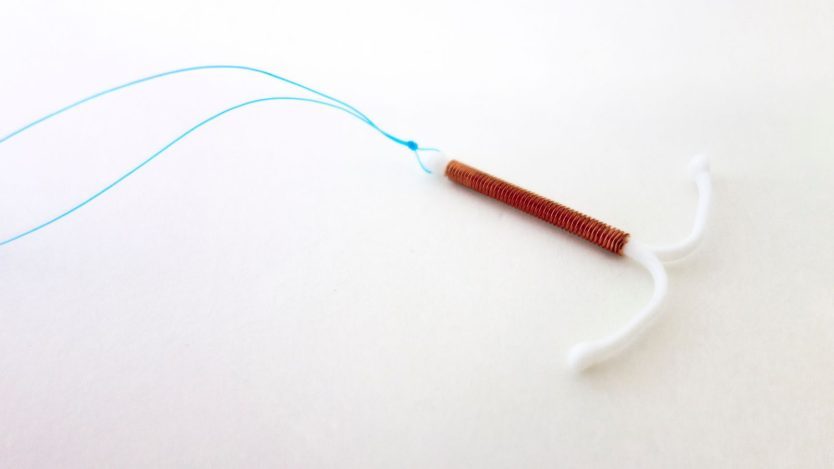
When is an IUD inserted?
- It can be inserted at any time during the menstrual cycle, but it is advisable to do so during menstruation.
- It can be inserted following a vaginal delivery, miscarriage or induced abortion.
- It can also be inserted during breastfeeding.
- The IUD can also be inserted as emergency contraception, provided it is done within 5 days of unprotected sexual intercourse.

Looking for an effective, safe and convenient contraceptive method? The IUD could be your best option
Book your appointment now with one of our gynaecology specialists and schedule your IUD insertion quickly and easily.
Purchase service -
What should I consider before attending the appointment for the IUD insertion?
Before the day of the appointment for the IUD insertion, you should consider the following recommendations to be prepared for the consultation:
- It is important to remember that the IUD device is not included in the fixed price of this medical procedure, and that you must purchase it at the pharmacy with your medical prescription before the day of the appointment.
- Likewise, you must ensure that you purchase the IUD model prescribed by the gynaecologist and do not acquire another model or brand.
- Do not open the box containing the IUD, which comes protected and sealed to guarantee its absolute sterility.
- The IUD does not require refrigeration, but it is important to keep it at room temperature and not expose it to high temperatures or direct sunlight. Store it in a cool, dry place until the day of the appointment.
- Do not forget to take it with you on the day of the appointment, as otherwise the medical procedure cannot be performed.
- It is advisable to take an analgesic 1 hour before the appointment to help counteract the pain from cramps during the insertion of the device.
-
Why is the IUD device inserted? Step by step
On the agreed day with the Clínica San Juan Écija| for the IUD insertion, you attend the gynaecology consultation where the procedure will be performed:
- Before starting, you are provided with a gown and asked to lie comfortably on a gynaecological examination table. the Clínica San Juan Écija first carries out a visual and manual examination of the vagina and uterus.
- They then proceed to place the speculum to keep the vagina open and clearly visualise the cervix.
- After completing the examination, the specialist cleans the cervix with an antiseptic solution to disinfect it.
- A uterine sound, a measuring instrument called a hysterometer, is introduced to help the gynaecologist measure the size and depth of the uterus.
- Following the examination and measurement of the cervix, the IUD device is inserted into the uterus. The IUD is introduced using an applicator tube that helps slide the instrument through the cervix; once inside, the arms of the device deploy so that it sits in a T-shape at the top of the uterus. The applicator tube is then removed.
- Finally, the IUD guide threads that hang outside the vagina after the insertion of the device are cut. The specialist leaves about 2 centimetres of thread protruding from the cervix so that the device can be removed when the time comes. With this final step, the speculum is removed.
- The gynaecologist performs a gynaecological ultrasound to confirm that the IUD is in the correct position. Once everything is verified to be in order, the procedure finishes.
During the IUD insertion process, you may experience a sharp but brief pain, like a cramp similar to those suffered during periods.
In some cases, the gynaecologist may apply a local anaesthetic to the cervix, and in other cases, they recommend taking an analgesic before coming to the hospital for the treatment.The insertion procedure for an IUD device lasts approximately between 5 and 10 minutes.
-
How is the intrauterine device (IUD) removed?
The removal of the IUD device is a simple and quick process:
- Once you are prepared on the examination table, the specialist first places the speculum to keep the vagina open.
- The specialist locates the threads attached to the device that were left protruding from the cervix.
- They proceed to remove the IUD by gripping the threads with forceps and gently pulling them.
- The IUD folds up and slides out through the cervix.
The entire removal procedure takes no longer than 1 minute. It is normal to feel mild discomfort during the device extraction procedure.
If you would like to know more about the IUD removal process and its price, click here.

-
Request an appointment for the IUD insertion at the Clínica San Juan Écija with Operarme
The price of the IUD insertion with Operarme is 130 € and includes the following services for performing the procedure:
- Medical fees.
- Outpatient stay.
- Surgical material required for the medical procedure.
- Gynaecological consultation for performing the procedure.
- Gynaecological ultrasound.
- Insertion of the IUD device.
- IUD device not included in the price.
If you are considering having an IUD inserted as a contraceptive method, at Operarme we make it easy for you to purchase and schedule your appointment with one of our gynaecology specialists. You only need to follow these steps:
- Click on the "Purchase service" button.
- Complete the fields and make the payment for the treatment.
- You will receive a purchase confirmation email with your medical voucher and invoice attached.
- Our Patient Service team will contact you by phone to confirm your details and schedule your appointment for the insertion.
Do not hesitate to contact our Patient Service team by calling at +34 91 141 33 56 or by leaving a message on our contact form if you need assistance or have any questions. Our team will be delighted to help you with anything you need.
You can purchase your voucher for the IUD insertion at the Clínica San Juan Écija by clicking on the following banner:


Come to Spain for your surgery or treatment
We manage everything from start to finish
130 €
Step by step
-
You purchase the voucher for the IUD insertion with the Specialist.
-
You receive the information in your email.
-
We will call you to confirm the date of the insertion day.
-
You attend the consultation and undergo the procedure.
What do our patients think?
Frequent Questions
-
How painful is it to get an IUD?
The insertion of the IUD can be a painful moment of the procedure; the sensation of pain is similar to the cramps typically experienced during menstruation.
Even so, you should not worry, as specialists may recommend taking an analgesic 1 hour before going to the insertion appointment, or in some cases if the gynaecologist deems it necessary, local anaesthesia can be applied to the cervix.
Read more.
-
What should I not do after getting an IUD?
After the IUD insertion, you can carry out your daily activities without any problem. However, you should keep the following precautions in mind during the first few days:
- Do not introduce anything into the vagina during the first 48 hours: you cannot have sexual intercourse with vaginal penetration, insert objects into the vagina (tampons, menstrual cups), use vaginal douches, or apply vaginal creams.
- Avoid taking baths, using swimming pools, hot tubs, or any activity that involves immersion baths for at least the first 48 hours.
- Do not pull on the IUD threads.
- In case you feel discomfort or pain during the first few days, do not engage in heavy physical exertion.
- Do not ignore symptoms such as high fever, severe abdominal or pelvic pain, foul-smelling vaginal discharge, or very heavy bleeding, and see a doctor immediately.
-
When is the best time to get an IUD?
The best time to get an IUD is at any point during your menstrual cycle, but it is particularly ideal during your period.
Additionally, as long as there is absolute certainty that you are not pregnant, it can be inserted after childbirth or following a miscarriage.
Read more.
-
After the IUD insertion, when can I have sexual intercourse?
You can resume sexual intercourse with vaginal penetration 48 hours after the IUD insertion.
It is important to keep the following precautions in mind, depending on the type of IUD that has been inserted:
- If you have a copper IUD inserted, you do not need to worry as its contraceptive effect is immediate after insertion.
- In the case of a hormonal IUD, you must keep in mind that its contraceptive effect is not immediate and takes 7 days from insertion to protect you as a contraceptive.
Read more.
IUD insertion (contraceptive method)
- Hospital stay: Outpatient treatment
- Duration of treatment: 5 - 10 minutes
- IUD device: Not included
- IUD device prescription: Not included. Contact our Patient Service team for more information.