Why is a hip replacement necessary?
- What does hip replacement surgery consist of?
- Reasons why you may need a hip prosthesis
- When is surgery recommended?
- What does hip replacement surgery consist of?
- Cost of hip replacement surgery
- Bibliography
- Source information
- Frequent Questions

Come to Spain for your surgery or treatment
We manage everything from start to finish
What does hip replacement surgery consist of?
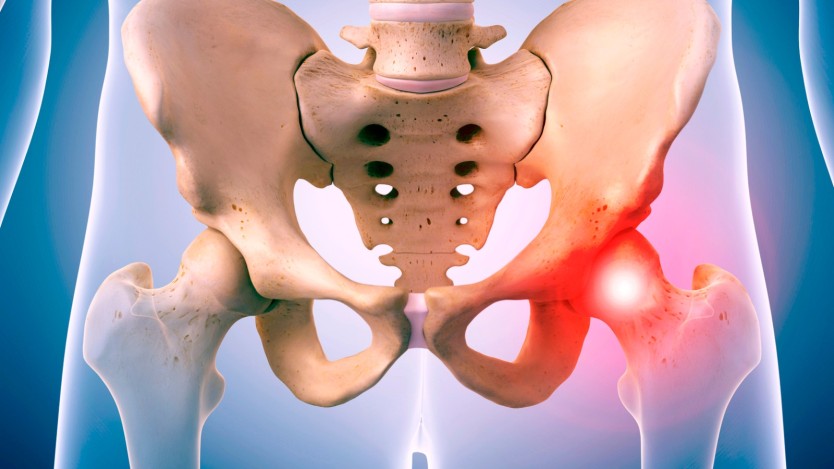
- Hip replacement surgery is performed as a result of arthritic conditions such as osteoarthritis or severe fractures in the joint.
- A hip replacement can last from 15 to 30 years.
- Recovery from surgery is progressive, with full recovery after 6 months.
Hip replacement surgery is a necessary treatment when joint impairment or joint disease limits daily activities and compromises quality of life.
The most common reasons for which patients usually come to the orthopaedic and traumatology practice are pain caused by arthritic diseases or injuries and fractures.
Although these are the main causes for which surgery is usually performed, there are other circumstances for which it is performed, such as gout, bone dysplasia, a tear in the cartilage, etc.
Therefore, the specialist will take into account the severity of the symptoms you present and the degree to which they limit and impair your quality of life in order to recommend, or not, the replacement of the joint with a hip prosthesis.

Do you need hip replacement surgery in Spain?
Request a free and immediate appointment with our specialists in Orthopaedic surgery
Reasons why you may need a hip prosthesis
The reasons why you may need a hip replacement range from a fracture of the joint to arthritic conditions that can severely impair quality of life.
The main cause of problems leading to the need for a hip replacement is osteoarthritis (Osteoarthritis).
Osteoarthritis is the degeneration of the joint causing a lot of pain and reducing the mobility of the joint.
In addition to osteoarthritis, there are several other types of arthritic diseases that can lead to the need for hip replacement surgery:
- Osteoarthritis. As we mentioned, osteoarthritis, also known as osteoarthritis, is a degenerative disease that occurs in the joints causing disintegration of the articular cartilage and the bone adjacent to the cartilage.
This disease occurs most commonly in middle-aged and older adults.
- Rheumatoid arthritis. This is a chronic disease that causes inflammation in the joint tissues. Its symptoms include severe pain, stiffness and even deformity.
The onset of this condition can occur at any age, but is more common in middle-aged women.
- Traumatic arthritis. It occurs as a result of injuries to the joint that have caused damage to the cartilage, resulting in inflammation, pain and limited mobility.
This medical condition is much more common in athletes due to the pressure they put on their joints.

In addition to these conditions, there are other causes that may lead to the need for hip replacement:
- Fractures or trauma
- Tears in the cartilage
- Haemophilia
- Gout
- Bone dysplasia (diseases that cause bone deformity)
- Avascular necrosis (bone cells, affected by disruption of the blood supply, die and the bone weakens)
When is surgery recommended?
Whether or not to recommend hip replacement is based on the patient's pain and disability. Although it is true that most patients who undergo this procedure are over 55 years of age, there are no age or weight characteristics to recommend or rule out surgery.
In order to recommend surgery, the specialist will take into account the symptoms and discomfort you present, assessing the degree to which they affect your daily life:
- Pain or stiffness in the joint that prevents you from carrying out day-to-day activities normally, such as:
- Sitting and getting up
- Climbing stairs
- Needing a point of support, such as a cane or walker
- Pain or discomfort during times of rest, even during the day.
- Excessive medication to reduce chronic inflammation.
- Ineffective relief from taking anti-inflammatory drugs and therapies.
Once a physical examination has been carried out and the results of the necessary diagnostic tests are available, the surgeon will assess whether a hip replacement is the best method to alleviate symptoms and improve mobility.
If you have the indicated diagnosis and medical approval and you would like to know the specialist's surgical assessment for undergoing surgery, you can request a free consultation through Operarme by calling at +34 91 141 33 56, or by filling in the contact form.

Do you need hip replacement surgery in Spain?
Request a free and immediate appointment with our specialists
What does hip replacement surgery consist of?
Hip replacement surgery, also known as total hip arthroplasty, involves the replacement of the joint with an artificial implant. The replacement may be total or partial, depending on the cause of the surgery and deterioration of the joint.
Thus, in the hip replacement operation, the damaged bone and cartilage are removed and replaced with other components:
- First, the damaged femoral head is removed and the metal stem is placed in the hollowed-out centre of the femur. This piece can be fixed with bone cement or press-fitted, as appropriate.
- The head is placed on top of the stem, replacing the damaged head of the femur.
- The damaged cartilage surface (socket or acetabulum) is removed and replaced with a metal acetabulum.
- Finally, a spacer is inserted between the head and the acetabulum to allow the prosthesis to glide smoothly.
The fitting of a hip prosthesis takes between 1 and 2 hours, depending on the type of prosthesis to be implanted and the particular condition of each patient.

After hip arthroplasty, you will stay in hospital for 4 to 5 days. During your stay, you will probably feel pain, but you will have the support and medical service that will provide you with medication to make your recovery and stay as painless as possible.
With regard to the post-operative stage, recovery after hip replacement surgery is usually rapid, although it will vary depending on the characteristics of each patient: age, bone quality, associated pathologies, type of prosthesis implanted, etc.
However, recovery will be progressive. Within 3 days after surgery, you will be able to walk with some support and, after 6 months, you will have fully recovered.
How long does a hip prosthesis last?
One of the most frequently asked questions in orthopaedic practices is how long hip replacements last. This is a subject that is of particular concern to young patients, i.e. those under 55 - 60 years of age.
Although there is no exact estimation, it is true that there are prosthesis models that have given results at 10, 25 and even 30 years.
The hip prosthesis generally lasts between 15 and 25 years.
However, with proper modification of activities and basic care, hip replacements can be maintained in good condition for many years without the need for implant revision.
Risks of hip replacement surgery
The rate of complications and risks associated with hip replacement surgery is low.
In fact, serious complications such as infection of the joint occur in only 2 % of cases. Heart attacks occur much less frequently still.
Thus, the complications that can arise during the intervention are related to:
- Wound or prosthesis infection.
- Blood clots. To prevent these, the specialist will prescribe medication and measures such as wearing compression stockings or doing certain exercises.
- Different leg length, although this is very rare.
- Dislocation: This is a complication that can arise during the first few months and occurs when the head comes out of the socket. It can usually be repositioned without surgery.
- Loosening and wear of the prosthesis. Prostheses may loosen or wear out over time. If this causes pain, additional surgery, known as revision surgery, will be necessary.
Cost of hip replacement surgery
The cost of hip replacement surgery with Operarme is €9,590.
As specialists in the management of surgical services, we include, in each of the surgeries, everything necessary to make the process as safe and comfortable as possible.
In addition, our company offers surgeries under fixed prices with all the services included.

It is important for you to know that hip replacement surgery, as with all other surgeries, includes a medical complications insurance (MCS) that covers all eventualities that may arise during surgery and up to 30 days after the hip arthroplasty.
If you would like more information about this, or to request an initial surgical assessment consultation, we remind you that you can do so by calling at +34 91 141 33 56, or by filling in the contact form.
Bibliography
- Agencia de Evaluación de Tecnologías Sanitarias de Andalucía (AETSA). (2016, diciembre). Artroplastia de cadera en pacientes con artrosis. Recuperado de https://www.aetsa.org/download/publicaciones/AETSA_2017_Artroplastia_cadera_DEF.pdf
- Orthoinfo. (2012, octubre). Reemplazo total de cadera (Total Hip Replacement). Recuperado de https://orthoinfo.aaos.org/es/treatment/reemplazo-total-de-cadera-total-hip-replacement/
Come to Spain for your surgery or treatment
We manage everything from start to finish
Dr. Antonio Rebollo Marina
Médico Asistencial en Centro Médico Caser
Nº colegiado: 282834715

Medical disclaimer: All the published content in Operarme is intended to disseminate reliable medical information to the general public, and is reviewed by healthcare professionals. In any case should this information be used to perform a diagnosis, indicate a treatment, or replace the medical assessment of a professional in a face to face consultation. Find more information in the links below:
Frequent Questions
-
How long does it take to recover from a hip replacement?
Recovery will be progressive.
Three days after surgery, you will be able to walk with a support leg.
Full recovery will be after 6 months.
-
How much does a hip replacement cost?
The price of hip replacement surgery is between €9,000 and €15,000.
The price with Operarme is €9,590: including all the necessary elements to ensure the success of the operation, from the days of hospitalisation to medical complications insurance.
-
How long does a hip replacement last?
Hip replacements last between 10 and 25 years, although there are some that have worked for up to 30 years.
-
What are the risks of hip surgery?
The risks of hip replacement are:
- Infection
- Blood clots
- Dislocation
- Loosening
- ...
However, the complication rate of hip arthroplasty is low, with serious complications occurring in only 2% of cases.