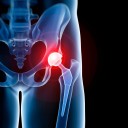
What is coxarthrosis of the hip? Causes and possible treatments

- Hip and its degeneration (Arthrosis or Coxarthrosis)
- What types of hip coxarthrosis can be found?
- What causes hip coxarthrosis?
- Symptoms of hip coxarthrosis
- Diagnosis of hip coxarthrosis
- Treatment of hip coxarthrosis

Come to Spain for your surgery or treatment
We manage everything from start to finish
Hip and its degeneration (Arthrosis or Coxarthrosis)
- Osteoarthritis is a degenerative disease affecting the joints. Coxarthrosis is osteoarthritis of the hip.
- When the disease is advanced, the symptoms suffered by the patient include pain and joint deformity that impede mobility.
- The best solution for patients with severe and generalised hip coxarthrosis is the implantation of a total prosthesis.
The hip is formed by the head of the femur bone and the socket of the pelvis, the union of which, by means of tendons, ligaments and other soft structures, forms the joint. In addition, the surface of these bones is covered by a tissue called cartilage, which together with synovial fluid (fluid secreted by the body into the joint capsule to promote mobility) significantly reduces the friction between the bones during movement to reduce deterioration as much as possible.
Degeneration of the hip due to osteoarthritis or coxarthrosis of the hip consists of the wear and tear of the cartilage that covers the femur and the acetabulum (the cavity in the pelvis where the head of the femur fits) due to friction or the patient's ageing. This degenerative disease arises mainly due to changes in the cells and structures that make up the cartilage (chondrocytes for the most part), mainly due to trauma, hormonal changes or different deficiencies that can lead to a reduction in the capacity to withstand the pressure suffered by the joint.

Do you need hip replacement surgery in Spain?
Request a free and immediate appointment with our specialists in Traumatology
In these cases, which is why being at an ideal weight is key to reducing coxarthrosis problems, the pressure exerted on the cartilage together with the increased thickness of the synovial fluid, which loses its properties due to the same hormonal changes and deficiencies as the cartilage, means a loss of elasticity, reduction in thickness and even in some cases its disappearance.
This will cause the bones to rub against each other, causing a progressive and more rapid deterioration and a considerable increase in pain and loss of mobility.
A common formation in many patients following hip coxarthrosis are bony protrusions called osteophytes. They are caused by the human body's attempt to regenerate the damaged bone due to cartilage loss, trying to fit the joint to limit mobility and thus prevent deterioration. The problem with this is that this regeneration takes place in the wrong way and the patient loses mobility and pain and deformity increase.

Nevertheless, to summarise, we can say that hip coxarthrosis is due to wear and tear of the cartilage that covers the bones that form the hip joint.
In terms of the prevalence of this disease, hip coxarthrosis affects more women than men, although nowadays more men suffer from it due to the progressive increase in life expectancy of the population.
What types of hip coxarthrosis can be found?
Based on the causes of the onset of coxarthrosis
There are several ways of classifying coxarthrosis of the hip, one of them being the distinction based on the causes that trigger its appearance:
- Primary hip coxarthrosis. We speak of primary coxarthrosis when there is no direct cause for the onset of osteoarthritis, which is why this degenerative disease is defined as a multifactorial pathology. This type of hip coxarthrosis is common in individuals over 60 years of age.
- Secondary hip coxarthrosis. The case of secondary hip osteoarthritis (remember that coxarthrosis is osteoarthritis of the hip) is so called when the appearance of osteoarthritis can be attributed to a specific cause, as for example in dysplastic hips which are an anatomical malformation from birth, causing the appearance of osteoarthritis in younger patients than in the case of primary osteoarthritis. Despite this, it is important to mention that even if a patient is affected by a problem that leads to osteoarthritis, its appearance is also subject to the factors that cause primary coxarthrosis.
Based on the severity of symptoms
On the other hand, this degenerative disease can also be classified on the basis of the severity of the symptoms and the impairment of the patient's quality of life they involve:
- Mild hip coxarthrosis. In this stage of osteoarthritis, the patient mainly notices pain, more accentuated in the inner thigh up to the knee (by chance it does not hurt in what we know as the hip), the pain being more occasional, perhaps when starting to move in the morning or after intense exercise over a long period of time. In addition, it is also possible that the patient may experience pain for a period of time and then it may take months before the pain is felt again.
- Moderate hip coxarthrosis. Cases of moderate hip coxarthrosis involve a greater continuity of pain than in cases of mild osteoarthritis. Patients begin to lose some joint mobility, partly because the pain prevents them from performing certain movements, while at the same time slight deformity and difficulty in moving around begin to be seen. In many cases, patients begin to suffer pain at night that prevents them from sleeping, and painkillers and injections are needed continuously to control the pain. It is difficult to draw the line between moderate and severe coxarthrosis as, due to the progression of the disease, this can vary in a relatively short time.

- Severe coxarthrosis of the hip. In cases of severe hip osteoarthritis, the patient feels a lot of pain, not only during movement but even at night, preventing him from sleeping or waking him up in the middle of the night. In addition to the pain, the deformity caused by coxarthrosis - as we have already mentioned, the body tries to "weld" the bones together to limit movement - reduces the patient's mobility and thus his or her ability to fend for him or herself and perform everyday tasks. This results in a loss of quality of life for the person and may eventually lead to other problems associated with sedentary lifestyles and even depression.
When hip coxarthrosis is so severe and conservative treatments of analgesia, infiltration and rehabilitation have been exhausted, the only and best option left is hip replacement surgery.
What causes hip coxarthrosis?
Hip coxarthrosis, as we have already mentioned, is multifactorial, although following the line of differentiation between primary and secondary, we can mention the following causes:
When hip coxarthrosis is primary, although no triggering cause can be found, there are a series of risk factors that can trigger its appearance, such as:
- Ageing: With ageing, ligamentous laxity (loose ligaments) increases, leading to decreased muscle strength, joint instability, reduced cartilage thickness, etc. In women, hip coxarthrosis is usually common after the age of 50.
- Obesity: As mentioned above, obesity is a crucial factor in the development of coxarthrosis. If the hip is overloaded, the pressure causes increased friction and stress on the joint, leading to premature wear and tear on the joint. In these cases, weight loss is vital in osteoarthritis patients and hip replacement patients.
- Continuous, high-performance sports practice: As with the knee, continuous elite sports practice can lead to premature cartilage loss and the need for a hip replacement surgery.
- Certain types of work: The daily overloading of the joint in jobs that require heavy lifting, as in the case of blue-collar workers, can lead to hip coxarthrosis due to the overloading to which it is subjected.
- Genetic causes: Hereditary factors are very common in this type of disease, and it is very likely that if a parent has suffered from coxarthrosis, their children will suffer from it.
On the other hand, when coxarthrosis of the hip is secondary, it is due to the fact that it is the consequence of some particular factor such as the following:
- Disorders of foetal development in the maternal uterus during pregnancy.
- Hip dysplasia.
- Sequelae of childhood or adolescent illnesses.
- Joint fractures.
- Rheumatic diseases
- Joint infections
- Vascular bone necrosis (insufficient blood flow to the femoral head).
- Dysmetria (inequality in the length of the lower limbs).
Symptoms of hip coxarthrosis
Patients with coxarthrosis of the hip suffer from pain, which increases when the patient walks or moves, joint deformity and eventually loss of mobility due to joint stiffness. In the case of pain, it increases until it is present even at rest.
Pain is the main symptom and tends to be mainly in the groyne area, the buttock area or the back of the thigh, although sometimes pain can also be experienced in the knee area. When coxarthrosis of the hip is more advanced, the patient may experience crunching when moving the joint and even loss of strength in the leg, and may even experience limping.

Another symptom of coxarthrosis of the hip is joint stiffness, which limits joint movement and usually occurs when the patient is at rest for a longer or shorter period of time and tries to resume movement. Despite this, the stiffness usually lasts only a few minutes. In addition to these symptoms, walking abnormalities or muscle atrophy are also symptoms of coxarthrosis of the hip.
Diagnosis of hip coxarthrosis
Knowing the patient's clinical history is essential for the specialist, in addition to an exhaustive medical interview about the symptoms and elements causing the pain. In addition, after the anamnesis (medical interview), the specialist will carry out a physical examination and request complementary examinations (X-rays, CAT scans, MRI, etc.).
The X-ray is taken of both hips on a single plate, which allows a comparison between the two hips to see if there is hip dysplasia or if there are signs of hip coxarthrosis.
In principle, an X-ray may be sufficient to diagnose hip coxarthrosis, however, the specialist may perform other complementary tests to determine the origin of the pain and certify that hip coxarthrosis is present.
Treatment of hip coxarthrosis
Initially, the patient's body weight must be controlled, as the heavier the patient weighs, the more pressure on the hip and the more wear and tear on the bones. Sometimes losing weight helps the patient to alleviate the symptoms to a great extent.
The doctor may also recommend aerobic exercise, i.e. cycling or swimming to maintain strength and mobility, especially in the muscles adjacent to the hip joint.
The specialist may also recommend taking drugs such as paracetamol, a pure analgesic that acts only against pain, or analgesics with an anti-inflammatory effect, such as ibuprofen. All of this should always be prescribed by a specialist.
Rehabilitation can be another way to reduce the pain caused by hip coxarthrosis, as can avoiding heavy lifting or prolonged standing.

Assess your hip problem with our specialists
Purchase a private consultation with our traumatologists and receive a diagnostic on your hip issues.
Surgery to correct coxarthrosis of the hip (Arthroplasty)
Surgery to correct coxarthrosis of the hip and implant a prosthesis is the most effective method of improving the patient's quality of life by alleviating the symptoms of osteoarthritis and allowing them to lead a normal life.
This surgery, called hip arthroplasty, is only performed when the patient suffers from severe pain, when it is impossible to sleep due to the pain caused by hip coxarthrosis, and when the patient has little or no mobility in the joint or the joint becomes progressively deformed.
The duration of the surgery to replace the hip with a prosthesis (arthroplasty) is approximately 1 to 2 hours and will depend on the patient's physical condition, as well as the degree of deformity and damage to the hip.
This type of intervention is one of the most commonly performed nowadays, due to the high success rate among patients, the considerable improvement in the quality of life of patients and the continuous increase in the life expectancy of the population.
Come to Spain for your surgery or treatment
We manage everything from start to finish
Medical disclaimer: All the published content in Operarme is intended to disseminate reliable medical information to the general public, and is reviewed by healthcare professionals. In any case should this information be used to perform a diagnosis, indicate a treatment, or replace the medical assessment of a professional in a face to face consultation. Find more information in the links below: