Rehabilitation exercises after a knee replacement
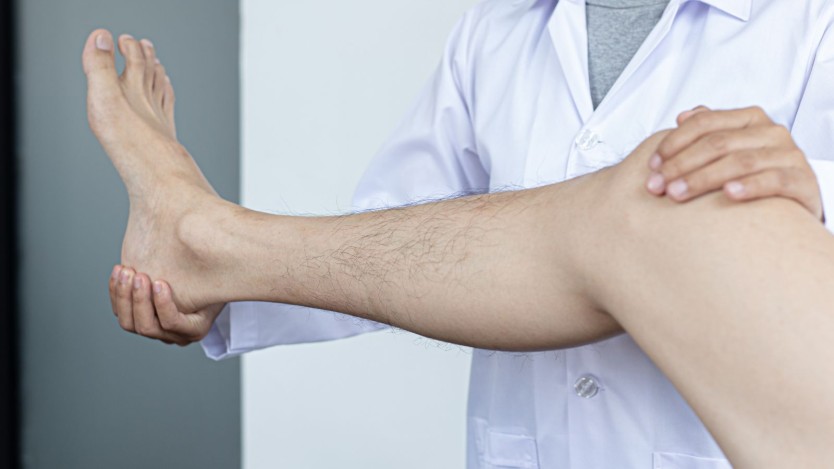
- How long does recovery take?
- Post-operative care
- Post-operative exercises
- Recommendations when performing the exercises
- Source information
- Frequent Questions

Come to Spain for your surgery or treatment
We manage everything from start to finish
How long does recovery take?
After the knee prosthesis operation, the good result depends not only on the surgical technique used, but also on the postoperative care and rehabilitation of the knee. For this reason, you should follow the instructions of the orthopaedic surgeon who carried out the operation.
In addition to taking certain precautions, it is important to perform a series of rehabilitation exercises that will help you recover and get the most out of your prosthesis.
The rehabilitation of the knee prosthesis lasts between 3 and 4 months.
Although it must be prescribed by a specialist, below you will find the most common care and exercises to be performed after knee replacement.
Post-operative care
As we mentioned, it is important that you take into account a series of practical tips during the first few days after knee replacement surgery:
Care during hospital stay
- When getting out of bed, approach the edge of the bed and turn your hips.
- When standing up on crutches, always use your good leg.
- Lie down following the same procedure as for getting up, but in reverse. In any case, do not leave your weight on the leg that has been operated on.
- Early mobilisation is essential to avoid thrombosis, so it is important to start rehabilitation exercises as soon as possible.
- It is preferable to sit on stable, fixed high chairs (without wheels) and with armrests.
The guidelines indicated are necessary both in the first stage of recovery, before discharge from hospital, and in later stages, continuing recovery from home.

Determining factors for hospital discharge
Among the factors that will determine discharge from hospital, we point out:
- Correct wound healing
- Active knee flexion of at least 80º.
- Ability to walk independently (with the assistance of 2 crutches) on all types of terrain.
- To be independent for activities of daily living.
Care after discharge from hospital
- Although you will be able to look after yourself 3 - 7 days after the operation, it may be useful to have help from family members.
- Use the shower and not the bath to wash yourself. It is important to have points of support when getting in and out of the hospital. In addition, it is recommended that you use a chair in the shower and a non-slip mat to make it more comfortable and safer. As for the surgical wound, it is important to follow the surgeon's instructions.
- Wear closed-toed shoes that grip the foot well and have non-slip soles. It is also recommended to wear shoes with Velcro or a shoe, to avoid having to bend down to tie the laces. Of course, high heels are strongly discouraged.
Post-operative exercises
Rehabilitation is started as soon as the patient is able. In fact, the recommendation of specialists is to start walking 24 hours after surgery and to begin exercises 48 hours after surgery.
It is normal to feel discomfort at first, but the exercises will help in the recovery and will progressively reduce the pain.
All the exercises you will see below should be performed until the leg feels tired and never force when pain is present.
Isometric quadriceps (contraction)
Tighten your thigh muscles and try to straighten your knee. Hold in this position for 5 - 10 seconds. Do this exercise 10 times for 2 periods of one minute. Then rest for 1 minute and repeat. Continue until your thigh feels tired.
Straight leg raise
With your knee fully extended on the bed and squeezing your thigh, lift your leg several inches. Hold this position for 5 - 10 seconds and slowly lower your leg. Repeat the exercise until your leg feels tired.
You can also do the exercise sitting down. In the same way, squeeze your thigh and keep your knee fully extended without resting your leg.
Ankle pump
Move your foot up and down rhythmically by contracting the muscles of the fibula and tibia. Perform this exercise periodically for 2 to 3 minutes, two or three times per hour.
Perform the exercise until the swelling in the ankle and lower leg subsides.
Knee extended
Place a small rolled towel on top of your heel or a cushion in the shape of a cylinder, so that your heel does not touch the bed. Squeeze your thigh and try to extend your knee and touch the back of your knee to the bed. Keep the knee fully extended for 5 to 10 seconds.
Bed-supported push-up
Bend your knee as far as you can and slide your foot on the bed. Keep the knee bent for 10 seconds, then extend it onto the bed.

Repeat the exercise several times until you feel that your leg is tired or until you can bend your knee completely.
Seated push-up
Sit on the edge of a bed or chair with your thigh supported and place one foot behind the heel of the operated knee for support (cross-legged). Slowly bend the knee as far as you can and hold the knee in this position for 5 to 10 seconds.
Repeat several times until you feel your leg is exhausted or until you can bend your knee completely.
Seated unsupported push-up
While sitting on the edge of a bed or chair with your thigh supported, bend your knee as far as it will go until your foot is flat on the floor.
With your foot lightly resting on the floor, slide your upper body forward in the chair to increase the bend in your knee. Hold this position for 5-10 seconds and extend the knee fully.
Repeat the exercise several times until your leg feels exhausted or until you can bend your knee fully.
Recommendations when performing the exercises
- It is very important to work on knee extension from the very beginning. Initially in a passive way and, as the days go by, do it in an active and resisted way.
- NO pain rule. As we mentioned earlier, do not force the joint if pain is present.
- The patella must be mobilised in all directions to avoid adhesions and future complications.
- The ankle joint and ankle musculature should not be forgotten. The muscles involved must also be mobilised (passively or actively) and subsequently strengthened.
- During the first weeks, walking should always be worked on using crutches. On the recommendation of the physiotherapist or doctor, one crutch can be removed and then the other.

5 sessions of Knee rehabilitation
Purchase your 5-pack sessions easily with Operarme and start recovering now with our specialists in Physiotherapy.
Come to Spain for your surgery or treatment
We manage everything from start to finish
Dr. Antonio Rebollo Marina
Médico Asistencial en Centro Médico Caser
Nº colegiado: 282834715

Medical disclaimer: All the published content in Operarme is intended to disseminate reliable medical information to the general public, and is reviewed by healthcare professionals. In any case should this information be used to perform a diagnosis, indicate a treatment, or replace the medical assessment of a professional in a face to face consultation. Find more information in the links below:
Frequent Questions
-
As soon as possible. In fact, walking is recommended 24 hours after surgery. After 48 hours, it will be ideal to begin rehabilitation exercises.
-
Rehabilitation lasts between 3 and 4 months.
-
Move the foot up and down rhythmically, contracting the muscles of the fibula and tibia. Perform this exercise periodically for 2 to 3 minutes, two or three times per hour.
-
It is normal to feel uncomfortable at the beginning when performing rehabilitation exercises. However, the degrees of the joint should not be exceeded.