Postoperative period after carpal tunnel syndrome surgery
- What is carpal tunnel syndrome?
- What is carpal tunnel release surgery?
- Postoperative care of carpal tunnel release
- Exercises for carpal tunnel recovery
- Do you need more information?

Come to Spain for your surgery or treatment
We manage everything from start to finish
- To solve carpal tunnel syndrome, specialists resort to carpal tunnel release surgery, an outpatient procedure with a high success rate among patients.
- With surgical treatment and rehabilitation, patients recover in little more than two months, managing to return to wrist and finger movements without discomfort or pain.
- One of the most important points to ensure the success of the procedure is the performance of exercises to strengthen the hands and give them the greatest possible mobility.
What is carpal tunnel syndrome?
You are probably reading this article because you are concerned about what happens after carpal tunnel surgery, either because you are thinking about having the procedure, have already had it done, or have someone close to you in either of these two situations.

Do you need carpal tunnel syndrome surgery?
Request a free and immediate appointment with our specialists in Traumatology
Here we will explain what the surgery consists of, as well as what you should bear in mind in order to get through the post-operative period as smoothly as possible.
When you are diagnosed with carpal tunnel syndrome, it is because the median nerve is compressed as it passes through the carpal tunnel, often due to inflammation and thickening of the tissues surrounding the tendons. This syndrome can cause pain, tingling and loss of strength in one or both hands, mainly in the fingers.
The onset of carpal tunnel syndrome may be due to multiple causes, the most frequent being the following:
- Genetic predisposition. It is possible that your carpal tunnel is narrower than normal, which favours the appearance of the syndrome.
- Repetitive and mechanised movements of the hands and forearms. Especially in some jobs or sports.
You should also know that, in addition to conservative treatments based on physiotherapy, exercises and medication, in the most serious cases in which non-invasive treatment does not improve the symptoms, the best option is to opt for carpal tunnel decompression surgery.
Below, we explain in brief what the intervention consists of and what guidelines you should follow to ensure a return to normality.
What is carpal tunnel release surgery?
During the surgery, the specialist cuts the transverse carpal ligament, which is pressing on the median nerve, leaving more space for the nerve and tendons, thus reducing the pressure.
Carpal tunnel release surgery can be performed in two different ways, the mini-incision technique and the Agee endoscopic technique.
- Mini-incision technique: A small incision is made in the palm, at the base of the hand, to access the carpal tunnel. Through it, while protecting the median nerve, the transverse carpal ligament is cut, relieving the pressure.
- Agee endoscopic technique: A tiny incision is made over the folds of the wrist. Dilators are then placed in the wrist, which open the incision through which an endoscope is inserted together with a retractable blade, which cuts the ligament and relieves the pressure on the nerve.
In the following section, we explain what happens after surgery and the guidelines you should follow to be able to return to your life as normal, guaranteeing the success of the surgery.

Postoperative care of carpal tunnel release
Here are the general guidelines for all patients who, like you, have undergone carpal tunnel release surgery.
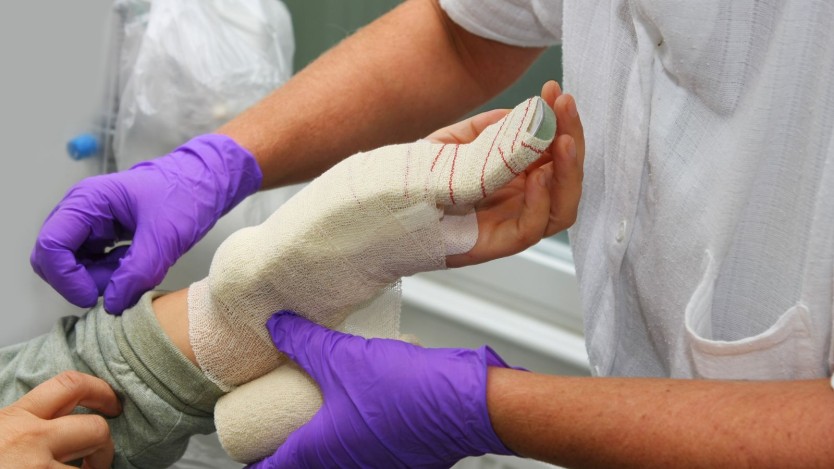
- Wound care: As soon as the operation is over, a compressive bandage will be applied to the operated area. In the following days, you will need to visit the doctor for the necessary wound care, if and when indicated, and so that the doctor can see the progress of the healing and the condition of the hand.
- Position of the hand: After surgery, you should keep your hand raised to chest level to limit swelling, especially during the first few days.
- Exercises: From the first day you should move your fingers and, gradually, your wrist, as instructed by your doctor. This favours a quicker recovery, allowing the tendons and nerves not to remain in a single position.
- Lifting: You should avoid lifting heavy objects for the first few weeks (usually 4-6), as this can cause pain and delay healing.
- Pain: It is usually more intense during the first few days and gradually decreases, although discomfort in the palm may last a few weeks. To control the discomfort and reduce pain, the doctor will prescribe drugs, usually painkillers.
- Stitch removal: Within the first two weeks after surgery, you will need to visit the doctor. Your stitches will be removed and your activity level will be re-evaluated, and, if necessary, the area will be bandaged again.
If you would like more information about recovery after carpal tunnel release surgery you can read the following article: Recovery time after carpal tunnel surgery
Postoperative care is usually completed 8 weeks after surgery, as long as you follow the guidelines set by your doctor and do not overexert your hands.
Remember that these indications are general and may vary depending on each particular case, adapting to your needs and the complexity of your case.

Exercises for carpal tunnel recovery
In addition to post-operative care, your specialist will recommend rehabilitation to re-educate your hands and wrists, as they will be weak and their mobility will be reduced. The most common exercises are:
- Thumb opposition: This consists of touching the tip of the thumb to the tips of the other fingers. This exercise helps to restore strength and mobility.
- Opening and closing the hand as much as possible: This action should be performed slowly and without forcing, and it is best to repeat the exercise several times a day.
- Finger mobility: Move your fingers one by one, bending, straightening and spreading them. Do several repetitions, as this helps restore mobility and reduce swelling.
- Squeezing an object with your hand: Get a sponge or other object with little resistance for the first few weeks and then move on to something more resistant such as a soft ball, you should make very slow movements and gradually increase the speed.
- Extension of the hand: You should rest your arm on a table and gradually raise your hand and hold the position for a few seconds. Later on, and only when your specialist or physiotherapist advises it, you can rest the operated hand on the table and lean forward, keeping the wrist extended. This type of exercise helps to improve and restore wrist strength.
You should know that these exercises help you to recover and are intended to reduce the pain you may feel, as well as to reduce recovery time. They also help to fully regain muscle strength and ensure wrist mobility.
Do you need more information?
We hope we have helped you by clearing up some doubts about the postoperative period after carpal tunnel surgery. If you need more information about the carpal tunnel release operation or to find out how Operarme works, you can contact our patient service team or call at +34 91 141 33 56.
On the other hand, if you are looking for options for carpal tunnel syndrome surgery, you can meet one of our specialists in traumatology by clicking below:

Do you need carpal tunnel syndrome surgery?
Request a free and immediate appointment with our specialists in Traumatology
Come to Spain for your surgery or treatment
We manage everything from start to finish
Medical disclaimer: All the published content in Operarme is intended to disseminate reliable medical information to the general public, and is reviewed by healthcare professionals. In any case should this information be used to perform a diagnosis, indicate a treatment, or replace the medical assessment of a professional in a face to face consultation. Find more information in the links below: