Possible complications following laparoscopic cholecystectomy
- What is a laparoscopic cholecystectomy?
- What are the advantages of laparoscopic cholecystectomy?
- What are the complications of laparoscopic cholecystectomy?

Come to Spain for your surgery or treatment
We manage everything from start to finish
- Laparoscopic cholecystectomy is the most commonly used surgical technique for the removal of the gallbladder.
- Complications of laparoscopic cholecystectomy are rare, although they are possible.
- One of the most common complications is the side effects of anaesthesia, which disappear a few hours after surgery.
What is a laparoscopic cholecystectomy?
Gallbladder surgery is called laparoscopic when it is performed through small incisions using a tiny camera that is inserted through one of them and allows the doctor to see inside the patient's abdominal cavity without the need for a large incision. It is a minimally invasive surgical procedure and is the most commonly used procedure for cholecystectomies today.
The procedure is performed under general anaesthesia.

Do you need laparoscopic gallbladder surgery?
Request a free and immediate appointment with our specialists in General Surgery
Gallbladder removal is the preferred treatment for most people who have gallstones causing symptoms and laparoscopy is the most commonly used technique.
During laparoscopic cholecystectomy, several small incisions are made in the abdomen to allow for the insertion of various surgical instruments and a small video camera, as mentioned above.
After the initial incisions, the surgeon uses carbon dioxide to inflate the abdominal cavity to improve the visibility and accessibility of the abdominal organs.
The camera inserted into the abdominal cavity sends magnified images of the inside of the body to a video monitor, giving the surgeon a close-up view of the organs and tissues. The surgeon observes the monitor and performs the operation by manipulating surgical instruments through separate small incisions in the abdomen.

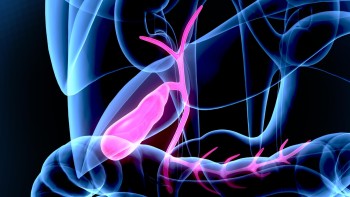
The gallbladder is identified and carefully dissected free of its attachments to the liver. One of the most important parts of the procedure is the identification of Calot's triangle, an anatomical area bounded by the liver, the cystic duct and the common hepatic duct.
The cystic duct and cystic artery are identified, clamped with titanium clips and cut. The gallbladder is then separated from the liver bed and removed through one of the small incisions.
What are the advantages of laparoscopic cholecystectomy?
With laparoscopic cholecystectomy the patient can return to work much sooner, have less pain after surgery, a shorter hospital stay and need less recovery time. Most patients after open gallbladder surgery need 2 weeks of recovery, whereas after laparoscopy the patient can go homewithin 24 hours.
Although more than one incision is made in the abdominal wall during laparoscopy, each cut is much smaller than the typical open incision, which can be up to 10 to 15 cm long, making recovery much quicker.

Laparoscopic cholecystectomy procedures are performed as outpatient surgery rather than major surgery, which means that the patient goes home the same day as the operation and can recover in the comfort of their own home, although it is common to stay a night or two in hospital.
In summary, laparoscopic cholecystectomy has the following advantages:
- It is a minimally invasive procedure.
- It has a very fast recovery, with a hospital stay of 1 to 2 days and a very comfortable postoperative period with minimal pain.
- All this makes a quick return to work possible.
What are the complications of laparoscopic cholecystectomy?
Like any surgery, this surgical procedure can also cause certain complications, although it is a fairly common procedure that rarely presents serious complications. Complications include:
Injury to the bile duct
Damage to the bile duct may occur, with a slightly higher incidence than in open surgery (around 0.5% versus 0.3% in open surgery). This can cause bile leakage and abdominal pain shortly after the surgery.
Intraperitoneal collection or abscess
This is one of the most frequent complications of laparoscopic cholecystectomy, although complications are rare when the surgery is performed by an experienced surgeon. This is a small collection of pus located in the gallbladder bed. It may originate from a lesion of the bile duct, a fistula of the cystic stump or a minor duct in the hepatic bed.

Infection
Wound infections are rare and of little clinical relevance, and can be easily resolved with appropriate treatment.
Bleeding
Haemorrhage can originate in:
- At the puncture site of the trocars (surgical tool that allows the introduction of the instruments necessary for the laparoscopic procedure).
- In the omentum, which is a kind of fatty tissue membrane that covers the organs of the lower abdomen and connects the stomach and intestines to the liver, among other functions.
- In the vesicular pedicle (cystic artery or one of its branches).
- In the hepatic bed, referring to the area of the liver where the gallbladder is located.
Side effects of anaesthesia
After surgery, the patient may experience problems such as nausea and vomiting, changes in blood pressure, dizziness or headache. These are all side effects of anaesthesia that will resolve in the hours following surgery.

Do you need laparoscopic gallbladder surgery?
Request a free and immediate appointment with our specialists in General Surgery
Come to Spain for your surgery or treatment
We manage everything from start to finish
Medical disclaimer: All the published content in Operarme is intended to disseminate reliable medical information to the general public, and is reviewed by healthcare professionals. In any case should this information be used to perform a diagnosis, indicate a treatment, or replace the medical assessment of a professional in a face to face consultation. Find more information in the links below: