Myopia: what it is, causes, symptoms and treatments
- What is myopia?
- Causes of myopia
- Symptoms of myopia
- Treatments for myopia
- Laser myopia surgery: step-by-step

Come to Spain for your surgery or treatment
We manage everything from start to finish
- Myopia is a visual impairment that causes difficulty in focusing on objects that are far away from the patient.
- Myopia can be solved by conservative treatments, such as glasses or contact lenses, or by surgical treatment.
- The only definitive solution for myopia is surgery, with laser myopia surgery being the most commonly performed today.
What is myopia?
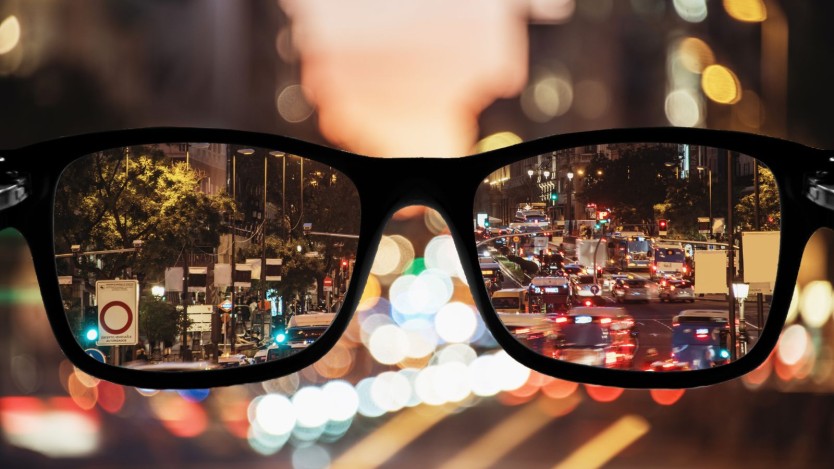
Myopia is an eye defect that causes blurred vision when we try to focus on distant objects. This occurs because the images perceived by the eye are projected in front of the retina, which prevents the brain from capturing reality as it is.

Do you need lasik surgery for myopia?
Request an appointment with no waiting time with one of our laser eye surgery specialists
To fully understand myopia, it is important to understand how the eye works.
To explain the function of the eye, a comparison with a camera is often used. In this case, the iris (the part of the eye that is brown, blue, green, etc.) acts as the camera's diaphragm (the mechanism that allows more or less light into the camera) by opening or closing the pupil depending on the light it receives.
On the other hand, the cornea (part of the eye that covers the iris and the pupil in the outermost part of the eye) and the crystalline lens (a lens made of water and proteins found inside the eye) act as lenses, allowing the light that enters the eye to be focused directly onto the retina.
The information-laden light that is focused on the retina will be transmitted by the optic nerve to the brain, which will interpret it and give us the perception of what we understand as reality.

Myopia occurs when, because the cornea is too curved or the eye is longer than normal, the light entering the eye is focused in front of the retina, whereas if it occurs behind it, it is known as hyperopia.
This is why it is vitally important for correct vision that the light beam is focused correctly on the retina.
Types of myopia
The different types of myopia are established based on the number of dioptres they have. This can be:
- Simple myopia: This is low or moderate myopia, up to about 6 dioptres. It usually appears in childhood or adolescence and stops increasing around the age of 20-21. It is normal to wear glasses at this age.
- High (magna) myopia: This is high myopia, from about 6 dioptres (especially above 8), sometimes associated with problems of degeneration of the retina, choroid or vitreous humour. These cases are also those with the highest risk of retinal detachment, glaucoma or cataracts.
Causes of myopia
As we have explained, myopia consists of the projection of the image in front of the retina. The further away from the retina the projection area of the light beam is, the more dioptres and difficulty in perceiving images there will be.
The main reasons that may favour the appearance of myopia are:
- Genetic inheritance: The children of fathers or mothers who suffer from myopia have a greater chance of becoming myopic, due to the physiological inheritance they receive from their parents.
- Ocular physiology: This is mainly based on the cornea being too curved or the eyeball being longer than it should be in relation to the rest of the eye's components.
- Associated diseases: Some pathologies can favour the appearance of myopia, such as some cataracts, keratoconus (the cornea is thinner and more outwards, altering the refraction process) or poorly controlled diabetes, which can cause temporary myopia, to give some examples.
- Environmental factors: Spending many hours on close-up tasks (reading, screens) and little time outdoors is associated with a higher risk of myopia, especially in childhood. The number of people with myopia has risen sharply worldwide in recent decades.
Regardless of the reasons that cause myopia, its appearance and continuous increase in incidence is real, so it is necessary to be aware of the symptoms and visit the ophthalmologist on a regular basis and take measures as soon as possible to prevent it from worsening.
Symptoms of myopia
The symptoms of myopia are the typical ones that we have all heard at some time, or have suffered from if we are short-sighted:
- Problems focusing on distant objects and a tendency to squint to see them more clearly.
- Headache, although this is usually due to the effort of continually squinting.
- Tiredness in the eyes and even reddening of the eyes.
Diagnosis of myopia
If you think you may have a vision problem, either because of the symptoms mentioned above or for any other reason, your ophthalmologist or optometrist will carry out the following test:
The patient is placed at a distance of 6 metres from an optotype, which is a panel with several rows of similar signs, letters or numbers, which decrease in size as the rows are lowered. The letter E or Snellen test is also often used, placed in 4 positions so that the patient observing it can indicate whether it is open at the top, bottom, left or right and thus detect the patient's visual acuity. Nowadays, however, refractometers and/or autorefractometers are used to facilitate the detection of the problem.

When the decrease in visual acuity has been detected, the optometrist or ophthalmologist will cover one eye and ask the patient to read the letters on the chart. Based on the patient's responses, the specialist will fit one type of lens or another until the correct prescription is found.
The measurement is carried out independently in each eye in order to determine the dioptres of each eye, as they differ, as well as to rule out other possible pathologies such as lazy eye.
Once the results of the study have been obtained, the myopia treatment will be carried out, which in most cases, especially in the case of patients under 21 years of age, involves the use of glasses or contact lenses.
The ophthalmologist will indicate when the surgery can be carried out, as it is necessary for the myopia to be stable.
Treatments for myopia
Myopia is corrected with diverging lenses, which allows the light beam to reach the retina correctly. This correction can be carried out using conservative methods, the usual glasses or contact lenses, or using surgical methods to correct it definitively.
These are listed below:
Conservative treatment of myopia
- Glasses: The use of glasses to treat myopia is not a corrective treatment but a palliative treatment, i.e. the symptoms are corrected as long as the glasses are worn. The prescription of the glasses lenses will be determined by the optician or ophthalmologist who diagnoses the dioptres.
- Contact lenses: Contact lenses are a palliative treatment, just like glasses, although they have the advantage that they are less bulky, are not noticeable and provide better side vision than glasses. As a disadvantage, they can only be worn for a maximum of 12 hours, you should not sleep in them and they must be changed from time to time, although this will depend on the type of contact lens.

This type of treatment is the most common and is quite affordable for everyone. On the other hand, there are surgical treatments that are definitive and completely eliminate myopia. In this case, the most common procedure today is laser myopia surgery (Lasik surgery).
We explain what it consists of below:
Surgical treatment for myopia
In order to carry out laser surgery for myopia, although it is a simple operation, it is necessary to carry out a preoperative ocular study. It should be mentioned that this surgery is only recommended for people with a stable prescription (usually from 18-21 years of age, when the eye has finished developing) and, in general, no more than 8 dioptres.
The preoperative tests for the laser myopia surgery are as follows:
- Full eye examination, including the fundus, pupillometry and measurement of intraocular pressure.
- Refraction with and without dilation
- Orbscan topography
- Schirmer test
- Biometry
In addition to these tests, the ophthalmologist will usually give you some instructions to avoid problems during surgery.
Among them, you should avoid wearing contact lenses for the two weeks prior to surgery, not wearing make-up the days before, as this can cause infection, as well as telling the doctor about any medication or supplements you are taking, as they can change the physiology of the eye, such as pupil dilation.
There are some cases in which surgery is not recommended, such as in the case of patients with cataracts, uveitis or corneal problems, as well as in patients who are pregnant, as their prescription may change during pregnancy.
Laser myopia surgery: step-by-step
This is an outpatient procedure. The anaesthesia is administered into the eye with drops and the patient remains awake throughout the surgery:
- In the operating theatre, topical anaesthesia (drops) will be administered to the patient's eye to be operated on, and it is recommended that the eye remains closed until the operation begins to avoid dryness due to lack of sensitivity.
- The patient is placed on a surgical table and the entire face is covered except for the eye to be operated on. Using an eyelid speculum, the patient's eye is kept open at all times so that it can be operated on.
- The doctor will clean the eye and the area with saline solution. During this process, the patient may feel pressure but will not feel pain.
- Next, the surgeon will lift the surface layer covering the cornea with an instrument called a microkeratome so that the laser acts directly on the corneal bed. This layer will remain attached to the eye at one end throughout the surgery.
- The surgeon will instruct the patient to focus their gaze on the bright spot of the laser. This point is quite important as part of the effectiveness of the procedure depends on it. When the doctor activates the laser, the patient will not see it and the process will take less than a minute.
- Finally, the ophthalmologist will wash the cornea and place the previously lifted corneal layer back in position, making suturing unnecessary due to its high adhesion capacity.

Laser myopia surgery (lasik surgery) takes between 15 and 20 minutes.
The patient can return home immediately after the surgery.
If you are thinking of having laser myopia surgery, remember that you can request a free and immediate surgical assessment consultation with one of our ophthalmologists by clicking on the button below:

Do you need lasik surgery for myopia?
Request an appointment with no waiting time with one of our laser eye surgery specialists
Come to Spain for your surgery or treatment
We manage everything from start to finish
Medical disclaimer: All the published content in Operarme is intended to disseminate reliable medical information to the general public, and is reviewed by healthcare professionals. In any case should this information be used to perform a diagnosis, indicate a treatment, or replace the medical assessment of a professional in a face to face consultation. Find more information in the links below: