Laser Varicose Vein surgery: duration, cost and step by step
- What are varicose veins?
- What is the reason for its appearance?
- Why is varicose vein removal surgery necessary?
- What is endovenous laser varicose vein surgery?
- Duration of laser varicose vein surgery
- What is the cost of endovenous laser varicose vein surgery?
- Would you like to request a surgical assessment consultation with our specialists?

Come to Spain for your surgery or treatment
We manage everything from start to finish
- Varicose vein surgery with endovenous laser is aimed at eliminating the symptoms caused by dilated veins and circulatory problems.
- Although varicose veins can be solved with different treatments depending on their degree, the only definitive remedy is the surgical procedure.
- The duration of the surgical intervention for varicose veins with endovenous laser is approximately 60 to 90 minutes, making it a simple and outpatient procedure.
What are varicose veins?
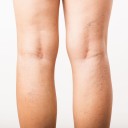
Varicose veins appear due to circulatory problems, causing swelling and dilation of the veins.
It is generally a problem that worsens with the passage of time, increasing in size and, consequently, the appearance of complications such as phlebitis, abnormal appearance of the skin in the area of the affected veins, thrombosis or bleeding.
You should know that the longer you let it go on, the more complex and problematic the condition can become, the only solution being surgical treatment.

Do you need varicose vein surgery?
Request an appointment with no waiting time with one of our vascular surgery specialists
What is the reason for its appearance?
The appearance of varicose veins may be due to various causes, among which the following stand out:
- Genetic inheritance: It is usually very common for varicose veins to form in people with a family history, i.e. a family member has suffered from them in the past, so you are more likely to suffer from them too.
- Age: Generally, ageing leads to a reduction in the elasticity of the blood vessels, causing a decrease in blood flow and, therefore, the stagnation of blood that is characteristic of varicose veins.
- Overweight: Being overweight or obese means that the excess weight generates pressure on the veins, causing them to dilate, leading to the formation of varicose veins.
- Pregnancy: Generally, the appearance of varicose veins during pregnancy is related to hormonal changes, however, it is also due to the pressure exerted by the uterus on the veins, to which is added the pressure also exerted by weight gain.
- Standing for long periods of time: Standing for long periods of time increases the pressure on the veins, causing difficulties during the return of blood to the heart and dilating the veins.
- Sedentary lifestyle: Staying too long without exercise or long periods of inactivity can cause the muscles to deteriorate and therefore not help the blood to circulate properly, causing stagnation of circulation and dilation of the veins.
- Wearing tight clothing: Wearing excessively tight clothing hinders proper blood circulation, causing, as mentioned above, dilation of the veins and favouring the slow reflux typical of varicose veins.

Keep in mind that the above factors are of a general nature and, therefore, may vary or change depending on each particular case. In any case, you should be aware of them and avoid lifestyle habits that favour their development.
Why is varicose vein removal surgery necessary?
As you can already guess, the main reason for resorting to varicose vein surgery is to eliminate the problem, both for aesthetic and medical reasons. The treatment avoids aggravation of the varicose veins and other complications.
In this way we can highlight the following reasons:
- Improve the appearance of the legs: With the treatment and after the postoperative period, the swelling of the veins will diminish and the appearance of your legs will improve, restoring normality in the area.
- Prevent complications: By opting for varicose vein surgery you can prevent major complications of the condition, avoiding the risk of suffering haemorrhages, phlebitis, venous ulcers, etc.
- Restore quality of life: After the surgical procedure, the discomfort and pain disappear, ensuring that you can return to your daily activities without limitations.

Do you need varicose vein surgery?
Request an appointment with no waiting time with one of our vascular surgery specialists
What is endovenous laser varicose vein surgery?
To start this process, the first step you should take is to contact our patient service team or request a free assessment consultation. Our advisors will arrange and confirm the time and dates that best suit your preferences and will answer any questions you may have about the process.
Below, we explain the entire procedure, from the consultation to complete recovery after varicose vein surgery.
Surgical assessment consultation
On the day of the appointment and at the consultation with our specialist, you will be asked about any discomfort caused by varicose veins. If there are any, you will also need information about other symptoms or problems caused by the condition.
At the end of the interview, the doctor will also perform a physical examination, which will be used to determine whether or not surgical treatment is necessary and will conclude the diagnosis.
After the surgical assessment consultation, our patient service advisor will contact you again and inform you about what you need to do to go ahead with the procedure, providing you with the necessary documentation and confirming the date of the procedure.
Endovenous laser varicose vein surgery: step by step
On the day of your surgery, when you arrive at the hospital, you will be asked to hand in the necessary documentation at the admissions desk. The medical staff will then accompany you to a room where you will wait briefly until you are taken to a pre-op room where you will be given your operating clothes. After dressing, you will be taken to the operating theatre where you will meet the specialist with whom you had the assessment consultation and a member of the nursing team, who will assist you during the operation.

Once inside, the specialist will tell you how to position yourself on the stretcher in a specific way and then proceed to apply the anaesthesia, which in the case of varicose vein surgery with endovenous laser is local anaesthesia.
- After the anaesthesia has taken effect, the surgeon will begin the procedure.
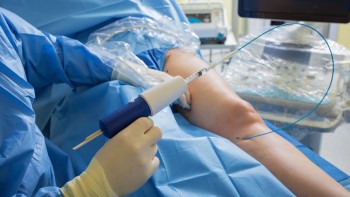
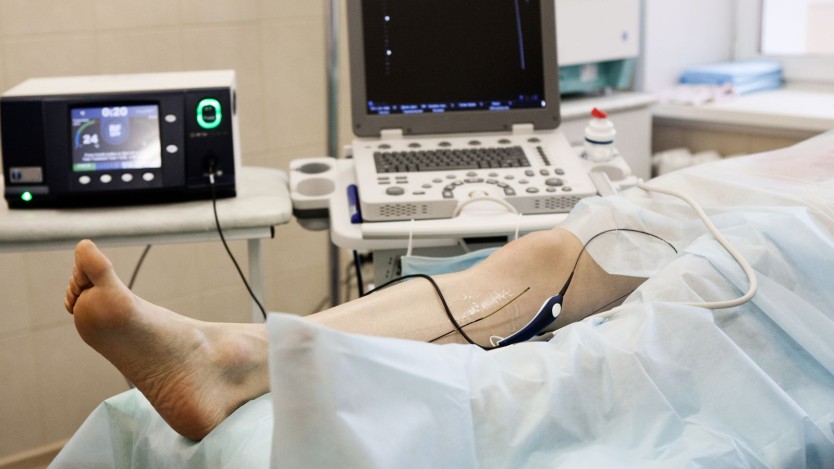
- First, the specialist will make a small puncture in the leg, usually at knee or calf level and guided by ultrasound, to gain access to the affected vein. This puncture is minimal, only a few millimetres, just large enough to insert a fine laser fibre that will allow the surgeon to solve the problem.
- Through this puncture, the laser fibre is passed inside the vein up to the diseased section, near the groin.
- Once in the area to be treated, the doctor will activate the laser and slowly withdraw the fibre: the heat makes the vein contract and close completely, and over time the body reabsorbs it.
- Once the vein is closed, don't worry, the body will send the blood back to the heart via the other healthy veins in the area, thus eliminating the build-up in the varicose vein and, consequently, the symptoms.
- Once the problem is solved, the fibre is removed through the entry point and, if necessary, a stitch will be placed in the incision, although this is not usual.
If the surgery is performed on both legs, after the surgery is performed on one leg, it will be performed on the other.
Once the surgery is over, it is important that you walk for a while to reactivate your circulation, something you should continue to do for the next few days to promote a faster recovery.
Duration of laser varicose vein surgery
Time you will spend in the operating theatre
After going to the medical centre and getting ready for the operating theatre, varicose vein surgery takes approximately 60 to 90 minutes, or even a little longer. This time will depend on the severity of the problem and, above all, whether the operation is performed on one or both legs.
Hospital stay
This is an outpatient surgery, i.e. after the surgery you will not have to stay in hospital, you will be able to leave the centre the same day on your own.
Recovery period
Recovery time, as mentioned above, is very short as it is not necessary to remove the vein. The postoperative period is much shorter and you will hardly feel any discomfort, although it is advisable to rest for 24-48 hours before returning to your daily activities.
What is the cost of endovenous laser varicose vein surgery?
Endovenous laser varicose vein surgery (two legs)
Contracting the surgery through Operarme to carry out the operation for varicose veins with endovenous laser on both legs with everything included, by this we mean that our price includes all the necessary elements to be able to carry out the surgery under normal conditions, has a closed price of 4.190 €.
What is included in the cost of endovenous laser varicose vein surgery?
In this way, the patient knows the final cost of the operation from the outset. Below you will find a breakdown of what is included in the price of varicose vein surgery at Operarme:
- Booking and use of the operating theatre.
- Post-operative visit.
- Medical fees.
- Anaesthesiologist fees.
- Nursing team fees.
- Surgical material necessary for the operation.
Would you like to request a surgical assessment consultation with our specialists?
If you have varicose veins and you are thinking of having surgery with us, you can request a free surgical assessment consultation with our specialist in vascular surgery to get to know the doctor, and you can decide on the best option to eliminate once and for all the problems caused by varicose veins.
You can request a free surgical assessment consultation by clicking below:
Do you need varicose vein surgery?
Request an appointment with no waiting time with one of our vascular surgery specialists
Come to Spain for your surgery or treatment
We manage everything from start to finish
Medical disclaimer: All the published content in Operarme is intended to disseminate reliable medical information to the general public, and is reviewed by healthcare professionals. In any case should this information be used to perform a diagnosis, indicate a treatment, or replace the medical assessment of a professional in a face to face consultation. Find more information in the links below: