How to relieve bunion pain in the feet?
- Why do bunions occur?
- Symptoms of bunions
- How to relieve bunion pain
- Exercises to relieve bunion pain in the feet
- Surgery as a definitive relief of bunion pain

Come to Spain for your surgery or treatment
We manage everything from start to finish
- Bunions on the feet arise due to a foot deformity caused by the type of footwear worn or due to genetic factors.
- The symptoms of bunions or hallux valgus can be reduced when the patient wears appropriate footwear and takes certain measures.
- When the treatment recommended by the specialist is not effective, the best solution to the problem of hallux valgus is surgery.
Why do bunions occur?
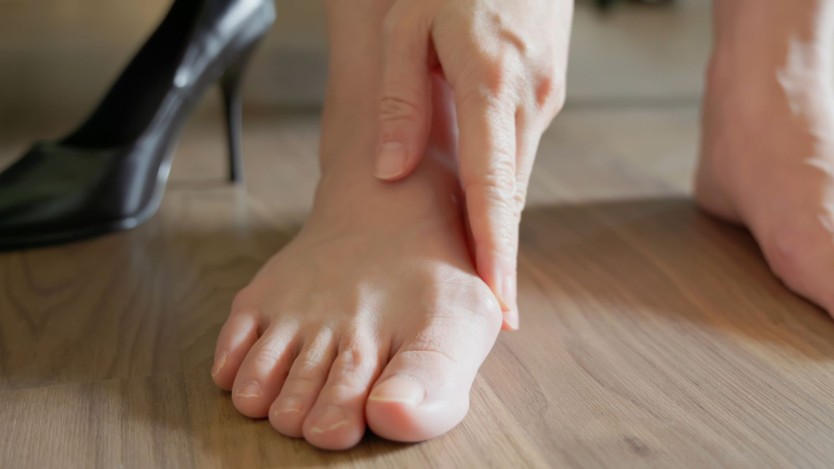
Bunions manifest themselves as a lump or a kind of bump that appears on the inner side of the foot, at the base of the big toe. This bump is mainly due to a deformity called hallux valgus, in which the first metatarsal deviates inwards and the big toe towards the second toe, becoming crooked instead of straight.
If the deviation is not treated correctly at first, the big toe will become increasingly bent, causing a progressive change in the angle of the bones of the foot and the continued appearance of what we call bunions. This deviation will also cause the bunion bump to become larger and larger and more severe.

Do you need bunion surgery?
Request a free and immediate appointment with our specialists in Traumatology
If the hallux valgus that causes the bunion is not treated properly, it can cause more serious problems in the rest of the foot, such as claw toes, which will require more complicated surgery.
Hereditary factors play the most important role in the development of bunions. This hereditary factor is mainly a defect in the mechanical structure of the foot.

One factor that increases the chances of suffering from a bunion is the type of footwear that each person wears, since wearing footwear that squeezes the toes, i.e. narrow-toed shoes or wearing high heels, can increase the deviation.
It should be noted that bunions are more common in women than in men.
Symptoms of bunions
The symptoms that are caused by bunions are:
- Pain, which can become intense and chronic.
- Swelling and redness of the bump.
- Calloused and hardened skin in the affected area.
- Over time, osteoarthritis of the big toe joint.
- Deviation of the big toe towards the other toes, and it may even ride on top of them.

People with bunions have difficulty finding suitable footwear that does not cause them discomfort. It is essential to try to find good footwear when the patient is young and the problem begins to appear so that the symptoms and severity of the deviation do not increase, otherwise hallux valgus surgery will be required to solve the problem.
How to relieve bunion pain
Once the bunion has started to develop, the patient must take a series of measures to alleviate the pain or simply to prevent it from occurring. Some of these measures are:
- Wear shoes with a wide rather than narrow toe box, i.e. shoes that do not squeeze the toes. It is also important to avoid wearing high heels as much as possible. This simple fact can greatly reduce bunion pain.
- Use foam pads on the foot to protect the bunion, which will minimise pain.
- Use interdigital spacers, which separate the first toe from the second toe and help correct the direction of the toes.
- Avoid activities that require standing for long periods of time, as well as activities that cause pain in the bunion.
- To reduce swelling and pain in the area, the patient can apply ice to the bunion two or three times a day.
- Wearing orthotics can also help relieve symptoms, but should always be recommended by a specialist.
- Soaking the feet in warm water with coarse salt can help to reduce the swelling of the bunion.
- Medication also helps to relieve the pain and bring down the swelling of the bunion. The patient is usually advised to take oral anti-inflammatory medications, such as ibuprofen.
As for the footwear to be used to alleviate bunion pain in the feet, it is advisable to use a certain type of footwear, as discussed below:
- Leather footwear, as it is the material that best moulds the foot and allows the foot to breathe the most.
- Footwear with strong, flexible soles.
- If possible, footwear should be padded on the inside, as this will absorb the vibration of footsteps.
- Do not wear high heels, especially if you are going to walk for a long time.
- Comfortable shoes, wide at the toe so as not to put pressure on the toes.
All these indications for the relief of pain in bunions in the feet should be recommended by the specialist in traumatology so that the patient follows those that best suit his or her case.
Exercises to relieve bunion pain in the feet

In addition to the measures discussed above to relieve bunion pain in the feet, you can also do a series of massages or exercises that will prevent the bunion from getting worse or temporarily relieve the symptoms:
Corrective posture
With this technique we avoid the abduction posture of the toe, that is to say, we prevent the toe from bending towards the rest of the toes.
By resting the foot on the floor, a chair or a flat surface, the patient should hold the toe and separate it from the rest of the toes towards the outside. For maximum effectiveness, this position should be maintained for as long as possible.
To perform this corrective posture without tiring, the patient can also use a rubber band or rope and place it around the big toes of both feet, keeping the big toe separated for longer.
Muscle massage
To relax the muscle and improve the toe deformity, the patient can perform a massage. This massage is performed by applying pressure and sliding both thumbs of the hand from the top of the foot towards the toes.
Another massage that can be performed is on the extensor hallucis tendon. To locate this tendon, the patient will flex the toes upwards. Once located, the same is done as in the previous exercise, applying pressure and sliding both thumbs of the hand from the top of the foot to the end of the big toe.
It is recommended to perform up to nine deep presses.
Surgery as a definitive relief of bunion pain
When the non-surgical treatments discussed above have no effect or when the bunion is too developed and inflamed, the patient should consider surgery to improve their quality of life. This surgery consists of correcting the deviation of the bone that causes the annoying bunions.
There are two main surgical techniques to correct hallux valgus and relieve pain: with osteotomy and without osteotomy (the latter only for mild cases). The most common is the first:

Operation for bunions or hallux valgus with osteotomy
This is an operation that corrects the deformity of the metatarsal of the foot and gets the toe back into place, thus recovering the normal shape of the foot. The surgeon cuts the first metatarsal (osteotomy) to move it into the correct position, removes the protruding bone and fixes the bone with screws.
The operation takes about 30 to 90 minutes, depending on the severity of the bunion.

Do you need bunion surgery?
Request a free and immediate appointment with our specialists in Traumatology
Come to Spain for your surgery or treatment
We manage everything from start to finish
Medical disclaimer: All the published content in Operarme is intended to disseminate reliable medical information to the general public, and is reviewed by healthcare professionals. In any case should this information be used to perform a diagnosis, indicate a treatment, or replace the medical assessment of a professional in a face to face consultation. Find more information in the links below: