How is a cruciate ligament repaired by arthroscopy?

Come to Spain for your surgery or treatment
We manage everything from start to finish
ACL repair by arthroscopy
Arthroscopy is a minimally invasive surgical technique that, although invented in the 1930s, became increasingly popular in the 1990s due to technological improvements.
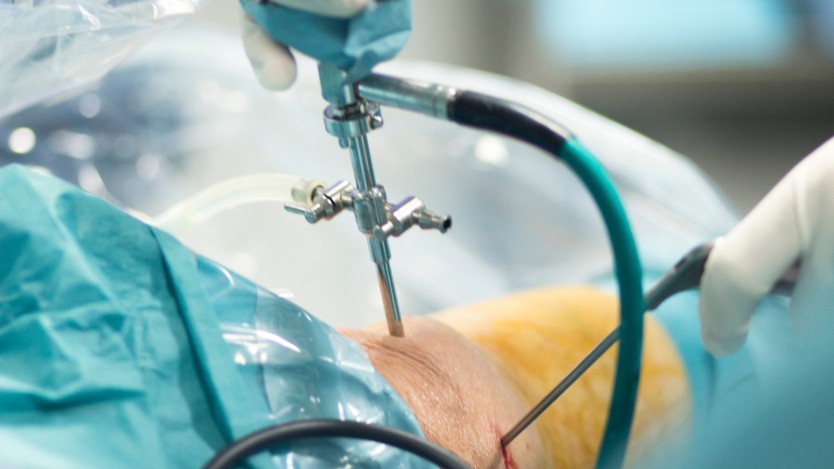
An arthroscope consists of a tiny camera connected via fibre optics to a monitor where the surgeon can see inside the joint without the need for open surgery. This technique can also be used in meniscal repair.
The operation for cruciate ligament repair by arthroscopy is performed under general or spinal anaesthesia.
To repair a cruciate ligament arthroscopically, 2 or 3 small incisions are made around the joint. Saline solution is introduced through one of these incisions to improve the surgeon's visibility through the arthroscope.
The arthroscope is used to determine the severity of the injury and the treatment to be followed. To repair a torn cruciate ligament, it can be done with an autograft, tissue donated by the patient himself; or by allograft, tissue from a donor bank.

Once inside the knee, the cruciate ligament reconstruction surgery by arthroscopy is performed in the following steps:
- The remains of the torn ligament are removed using the necessary surgical tools.
- If an autograft is used, the incision will be larger in order to remove it.
- Tunnels are drilled into the bones to place the new tissue exactly where the other tissue was.
- The ligament is attached to the bone with screws and other materials to hold it in place. Over time, the graft integrates into the bone tunnels, which strengthens its fixation.
- Once the process is complete, the surgical material is removed, the wounds are sutured and the area is carefully bandaged.
- Photographs are usually taken of the process so that the patient can see it afterwards.
Cruciate ligament reconstruction surgery is a complex intervention but has advantages in terms of recovery, as it is much less than open surgical procedures. It is recommended that the surgery is performed as soon as possible as otherwise it could aggravate and even cause damage to other structures in the knee.
If you want to know more about this surgery, visit this link:
Knee Ligament Surgery (cruciate ligaments)

Do you need knee ligaments surgery?
Request a free and immediate appointment with our specialists in Traumatology
Come to Spain for your surgery or treatment
We manage everything from start to finish
Medical disclaimer: All the published content in Operarme is intended to disseminate reliable medical information to the general public, and is reviewed by healthcare professionals. In any case should this information be used to perform a diagnosis, indicate a treatment, or replace the medical assessment of a professional in a face to face consultation. Find more information in the links below: