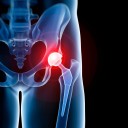
Hip rehabilitation with a prosthesis
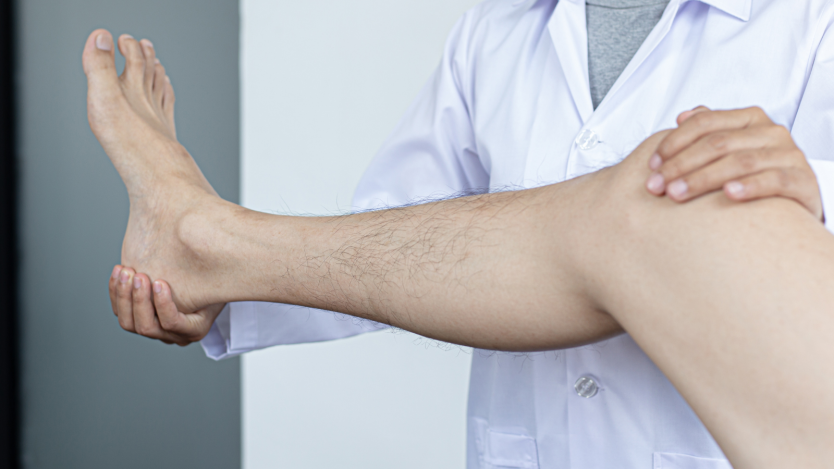
- Hip rehabilitation objectives
- Exercises before hip replacement surgery
- Recommendations and exercises immediately after hip surgery
- Rehabilitation exercises after hip replacement surgery
- Bibliography
- Source information
- Frequent Questions

Come to Spain for your surgery or treatment
We manage everything from start to finish
Hip rehabilitation objectives
After hip replacement surgery, rehabilitation is crucial in the recovery process. This is when the muscle strength in the area is lost and weakens easily.
Rehabilitation after hip replacement with a prosthesis aims to keep the muscles active in order to prevent possible atrophy and not lose partial or complete mobility in the area. This also helps to maintain balance and/or coordination of hip movements.
The goals of rehabilitation after hip arthroplasty are:
- Eliminate pain and inflammation.
- To recover the strength and mobility necessary to carry out daily activities.
- Prevent circulatory problems.
- To prevent the prosthesis from slipping out of place while the tissues heal.
It is advisable to start moving as soon as possible, as long as the movements you make do not cause pain. Therefore, it is important to do it progressively, first with the help of walkers, later with canes and/or crutches and, finally, without support.
In addition to the exercises you can do on your own, it is vitally important to have the expertise of physiotherapists and functional rehabilitation specialists to know which exercises to do until full recovery is complete.
If you are looking for the right specialist near you, here you can consult our physiotherapists who are experts in hip rehabilitation and have 5 or 10 sessions:
Exercises before hip replacement surgery
It goes without saying that if you have reached this point of needing a hip replacement operation, you will probably not be able to walk without difficulty or pain.
However, preoperative exercises before a hip replacement are very important to ensure proper recovery.
These exercises are indicated from the moment the need to operate on the joint is diagnosed until the operation is performed. The purpose of this is to prevent the loss of muscle mass, as follows:
Lateral leg extension (4 sets of 10 repetitions)
Leaning on a chair, on your side, and putting your weight on the leg NOT affected, separate the other (affected) leg outwards and bring it back, without bringing them together completely. Do the exercise with your knees straight and try to keep your leg up for 2 seconds.
Hip extension with gluteal contraction (4 sets of 10 repetitions)
In the same way as in the previous exercise, lean on a chair, but this time facing it. To exercise the hip muscle, separate the (affected) leg backwards, contracting the buttock and keeping your back straight. Slowly bring your leg back to its original position, until the tip of your foot touches the floor.
Lunging exercise (4 sets of 10 repetitions)
In the same position, leaning forward on a chair, stand on your tiptoes and contract your calf muscles. Hold for 2 seconds and lower slowly.
Recommendations and exercises immediately after hip surgery
During the immediate postoperative period following hip replacement surgery, it is important to follow the instructions below.
- During the first few hours, before you can begin to stand upright, when you lie down in the hospital bed, you can place a cushion or pillow between your legs so that you can limit sudden movements as much as possible.
- After the first 24 hours, it is possible to get up with the support of the lower limb of the operated hip, always supported by a walker to minimise the impact and direct support of the prosthesis of the repaired joint.
- Until the 5th day, you should not make the movement of sitting down, so support with a walker with the help of the physiotherapist is essential. This ambulation must be progressive with progressive support of the operated hip prosthesis.
Recovery from hip replacement surgery can be done at home or in a rehabilitation centre.

Do you need sessions for hip rehabilitation?
Purchase your 5-pack sessions easily with Operarme and start recovering now with our specialists in Physiotherapy.
During the period when you are lying in the hospital bed, it is important to do exercises to strengthen the muscles around the hip joint, for example:
- Isometric exercises: contraction of the abdominal muscles and the quadriceps of the affected leg.
- Exercises to move the leg outwards, seeking abduction of the lower limb with the aim of starting to achieve more degrees of movement.
- Exercises to strengthen the ankles with flexion and extension movements.
When standing upright becomes possible with the passage of time, rehabilitation exercises that could previously be done in bed can be done while standing, provided that there is a raised support point so as not to support the hip that was operated on during the fitting of the prosthesis.
At the time of discharge from hospital, the following objectives should have been achieved:
- Pain control with the prescribed painkillers.
- To be able to move around with a walker.
- Being able to sit in an armchair or chair.
- Correct radiological controls that position the prosthesis appropriately.
Rehabilitation exercises after hip replacement surgery
Recovery after hip surgery varies according to each person's profile (age, degree of joint deterioration, weight, etc.). However, rehabilitation of the joint is of vital importance, as the muscles tend to weaken after the operation.
It is therefore important to keep the musculature active to prevent atrophy and complications that may arise after surgery.
Here are the exercises you can do as the weeks progress after your total hip replacement surgery.
Week 1 - 2 after hip surgery
At this early stage of recovery, the following exercises are recommended, as long as they do not involve extra effort:
Quadriceps contractions (3 sets of 10 repetitions).
Lie on your back in bed with your knees extended. Put a pillow or rolled up towel under your knees and press down, contracting the leg muscle for four seconds, then relax. Do this with both legs, alternating legs.

Calf strengthening (4 sets of 10 repetitions)
For this exercise you will need a low resistance elastic band.
Lying down with your knee extended, hold the elastic band with the toe of your foot and contract your calves for 10 seconds. Rest for 3 seconds between repetitions.
If you are feeling strong, try the same exercise, but instead of contracting your calves, slowly raise your leg with your knees extended and lower.
Avoid hip flexion of more than 85°.
Strengthening of the arms
For this exercise you will need a pair of dumbbells, or something similar, weighing 0.5 kg (500 g).
Sit down with a dumbbell in each hand, drop your arms palms up and slowly bend your elbows.
Hip adductors (4 sets of 10 repetitions)
For this exercise you will need a small ball.
Lie on your back on the bed and with your hips bent, squeeze the ball with your knees for 3 seconds.
Week 3 - 5 after hip surgery
Gradually your muscles will get stronger and you will be able to do more complex exercises. At this point, you can begin to take gentle walks (with walkers) around the house for 5 to 10 minutes, in addition to the following exercises:
Hip flexion, without bands
Lift the leg and hold for 5 seconds.
Leg lifts forward (4 sets of 10 repetitions)
Stand with the help of a chair and lift your leg forward. Do short, sustained repetitions
Gluteal strengthening (4 sets of 10 repetitions)
Lying on your back with your knees bent, lift your pelvis and contract your gluteus. Hold this position for 3 seconds and lower slowly. Take the opportunity to inhale as you raise your pelvis and exhale as you lower it.
When you feel up to it, do the exercise standing up against the wall. In this case, bring your foot backwards, contracting your gluteus. In the same way, take the opportunity to inhale as you hold the posture and exhale as you lower it.
Week 6 onwards, after hip prosthesis
At this point in your recovery, you will usually be walking without support, painkillers or anti-inflammatory drugs. Therefore, you can probably do the following exercises:
Hip and knee flexion (4 sets of 10 repetitions)
Lying down, bend your knee and try to bring your heel towards your buttocks, sliding it on the bed.
You can do this while standing. Try to bend your knee, trying to bring it to hip height.

Ladder lifts
Face a flight of stairs and place one foot on a step. Move your hip back with your knee extended, step down and do the same with the other leg.
You can also walk on tiptoe or leave your weight on your heels. Either way, you will be working your calf muscles.
Squats
Do them leaning on a chair or some stable surface. Keep your knees apart and aligned and your back straight. Slowly lower and raise yourself slowly, not extending your knees all the way up.
You can also use a chair and try to sit down without sitting all the way up. Sit up and repeat again.
Single-foot support
Lean on one foot only, bend your knee for 5 - 10 seconds and change the position to the other leg.
It is important that after each exercise you apply a cold compress or gel for ten minutes to decongest the area.
If you are in a similar situation, we inform you that Operarme has a wide variety of services of different types of physiotherapy and rehabilitation that you may need.

5 sessions of Hip rehabilitation
Purchase your 5-pack sessions easily with Operarme and start recovering now with our specialists in Physiotherapy.
If you prefer, you can also contact our patient service team who will help you to resolve any doubts or questions you may have. If so, you can call us on +34 91 141 33 56 or fill in the contact form and we will call you back.
Bibliography
- Gilbert, J. L., Buckley, C. A., & Jacobs, J. J. (2010, 27 diciembre). In vivo corrosion of modular hip prosthesis components in mixed and similar metal combinations. The effect of crevice, stress, motion, and alloy coupling. PubMed. https://pubmed.ncbi.nlm.nih.gov/8113241/
- Pagès, E., Iborra, J., & Cuxart, A. (2007, 1 diciembre). Artroplastia de cadera | Rehabilitación. Elsevier. https://www.elsevier.es/es-revista-rehabilitacion-120-articulo-artroplastia-cadera-S0048712007755317
- Servicio de Medicina Física y Rehabilitación del Hospital General Universitari València. (2019). PROTOCOLO DE REHABILITACIÓN PARA PACIENTES OPERADOS CON PRÓTESIS DE CADERA. Hospital General Universitari València. https://cutt.ly/5bjlIvF
- Storer, J. A., Field, R. E., & Rushton, N. (2000, 27 marzo). Femoral hip prosthesis. Google Patentes. https://patents.google.com/patent/US6626948B2/en
Come to Spain for your surgery or treatment
We manage everything from start to finish
Dr. Antonio Rebollo Marina
Médico Asistencial en Centro Médico Caser
Nº colegiado: 282834715

Medical disclaimer: All the published content in Operarme is intended to disseminate reliable medical information to the general public, and is reviewed by healthcare professionals. In any case should this information be used to perform a diagnosis, indicate a treatment, or replace the medical assessment of a professional in a face to face consultation. Find more information in the links below:
Frequent Questions
-
The importance of hip rehabilitation after joint replacement surgery lies in the goals of rehabilitation:
- Eliminate pain and swelling.
- To recover the strength and mobility necessary to carry out daily activities.
- Prevent circulatory problems.
- To prevent the prosthesis from slipping out of place while the tissues heal.
-
Yes, it is a recommended option, although it is not compulsory. If you need hip surgery, you will probably not be able to perform certain movements without difficulty.
However, preoperative exercises help in the correct recovery and the maintenance of muscle mass.
-
Immediately after surgery, lying in the hospital bed. The medical recommendation is to begin a series of exercises that strengthen the muscles adjacent to the hip joint:
- Isometric exercises of the abdominal and quadriceps muscle contraction of the affected leg.
- Exercises of displacement of the leg towards the outside looking for abduction of the lower limb with the aim of starting to achieve more degrees of movement.
- Exercises to strengthen the ankles with flexion and extension movements.