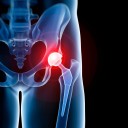
Hip joint anatomy


Come to Spain for your surgery or treatment
We manage everything from start to finish
Learn about hip anatomy
There are a total of 360 joints in the human body, which are divided into several blocks. These can be hinge joints, pivot joints, sliding joints or, finally, mobile joints.
In this last group, the mobile joints, we can include the shoulder and the hip, which, to be more precise, are mobile joints of the sphere and socket type, which allow free movements to be carried out.
This joint anatomy of the hip allows the bones to move without causing friction or discomfort to the individual, carrying out all kinds of movements, backwards, forwards, sideways and rotational movements.

Regarding the anatomy of the hip, which is what concerns us in this article, the ball of the joint is formed by the head of the femur, which would be the thigh bone, while the acetabulum or socket is formed by the cup-shaped hollow of the pelvis, also called the socket.
The bone contact in the hip joint is greater than in any other joint in the human body, and it is also more stable than other joints such as the shoulder joint.
The elements that make up the anatomy of the hip joint are as follows:
- Cartilage: Cartilage covers the surface of the bone in the joints, which helps reduce bone friction during joint movement.
- Synovial membrane: This membrane lines the bones of the entire joint, enclosing it in a capsule. Its function is to secrete synovial fluid to lubricate the joint.
- Ligament: This is a tough, elastic, connective tissue that surrounds the joint and provides stability by limiting its movements.
- Tendon: This is a connective tissue whose function is to connect the muscles to the bones, thus helping to control the movement of the joint.
- Bursa: A fluid-filled sac that lies between the bones, ligaments and other adjacent structures to cushion the joint.
- Femur: The upper leg bone.
- Acetabulum: This is the acetabular cavity of the pelvis, which supports the head of the femur.
When the wear and tear of the soft elements of the joint becomes very accentuated, a phenomenon called osteoarthritis occurs, which leads to excessive friction between the bones of the joint and ultimately causes pain, discomfort and even deformity. It is in these cases that hip replacement surgery is necessary.
To find out more about hip replacement surgery, click on the link.
If you would like to request a free consultation with our specialists in Traumatology and Orthopaedic surgery, please click in the following image:

Are you looking for a hip replacement in Spain?
Request a free and immediate appointment with our specialists in Traumatology and get a surgery date
Come to Spain for your surgery or treatment
We manage everything from start to finish
Medical disclaimer: All the published content in Operarme is intended to disseminate reliable medical information to the general public, and is reviewed by healthcare professionals. In any case should this information be used to perform a diagnosis, indicate a treatment, or replace the medical assessment of a professional in a face to face consultation. Find more information in the links below: