Hip implants, types, causes and surgery
- What is a hip implant?
- Types of hip implants
- Why do you get a hip implant?
- How is the surgery to implant a hip prosthesis performed?
- Bibliography
- Source information
- Frequent Questions

Come to Spain for your surgery or treatment
We manage everything from start to finish
What is a hip implant?
- Hip implants are one of the most important medical advances, improving the quality of life of patients.
- Depending on the characteristics of the hip implants and those of the patient, we can differentiate between several types.
- The main causes of hip implant surgery are osteoarthritis and other degenerative diseases.
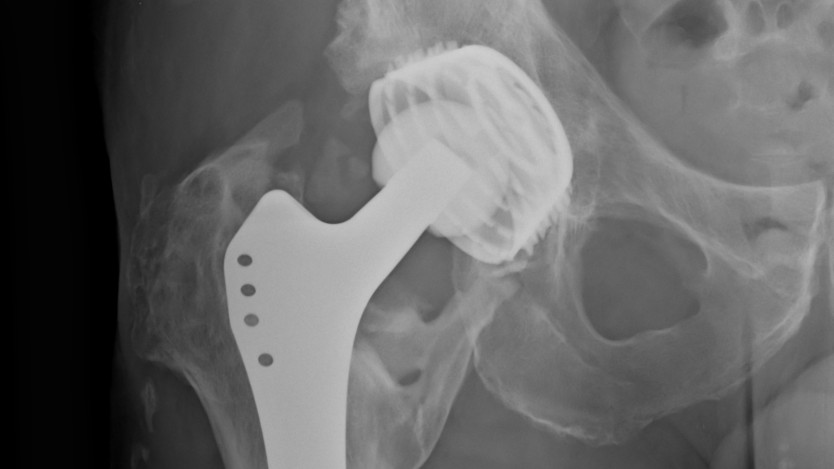
Hip implants consist of an artificial part, created from different materials and alloys of chromium, cobalt or titanium, as well as high-density polyethylene (plastics), which will perform the function of the soft parts of the joint.
Osteoarthritis is one of the reasons for which hip replacement is often performed. However, there are other causes such as rheumatoid arthritis, a bone fracture, etc.
Depending on the characteristics of the patient and the indication of the traumatologist, a total or partial arthroplasty will be performed, depending on the amount of bone affected and, therefore, the amount of joint that needs to be replaced.
A prosthesis is an object made of synthetic material that replaces the absence of an organ to restore the function of the affected organ.
A hip prosthesis is an artificial medical device that replaces the natural structure when it has been damaged.

A hip prosthesis is the replacement of all the components that form part of the hip joint with others made of synthetic material that will take the place of the dysfunctional or broken organic part.
In the specific case of the hip and when we talk about a total hip prosthesis, the 2 fundamental elements involved in the hip joint are usually exchanged: the femoral head and the pelvic cup.
Types of hip implants
Hip replacement surgery can be carried out with different hip implants, which are distinguished according to:
Depending on the type of surgery performed, there are two types of hip prostheses:
- Primary prosthesis: those in which the joint or some of its original components are replaced with an artificial implant.
- Revision prosthesis: surgery in which a worn or old prosthesis is replaced by a new one.
Depending on the size of the components being replaced, hip implant surgery will be:
- Conventional implant: the size of the components is the usual size and the replacement will consist of a femoral condyle, a stem that joins the femoral head and is inserted inside the femur and a pelvic component or artificial cup.
- Short stem implant: in this case the rest of the components are the usual size, except for the stem, which is shorter. This means that there is less pressure damage to the femur and the bone can be preserved for longer so that the implant can be re-intervened if necessary.
This type of implant is performed in young adults, who are more likely to have to undergo reoperation.
- Surface implant: this is a variant of the previous one. This type of prosthesis has a smaller stem. It is usually implanted in young people with a high integrity of the femur bone.
Depending on the anchorage to the bone, the hip implant can be fixed in the following way:
- Cemented: a bone cement is used to attach the implant to the bone. It provides an immediate fixation that allows the patient to move as soon as he or she can tolerate it. The femoral condyle and pelvic cup are glued and bonded to their bony parts with a cement mixture.
- Uncemented: The components are coated with porous materials that mimic the texture of bone and allow them to intermix and attach to the bone.
- Hybrid: In these cases, the pelvic cup is cemented to the pelvis and the femoral condyle and its stem are not.
Depending on the amount of prosthesis implanted, we can classify the types of hip prostheses into two basic procedures:
- Total hip replacement: the two components of the joint are replaced: the femoral cup and the femoral condyle with the stem. Total hip replacements are usually implanted in patients with osteoarthritis or joint wear.
- Partial hip implant: the femur is fixed with the stem, but the femoral head (larger than the total prosthesis) articulates directly into the pelvis.
This type of implant is used in fractures of the femur, where the acetabulum is not, or usually not, worn out.
Why do you get a hip implant?
The main reason for a hip implant is osteoarthritis: this is a chronic disease in which the cartilage covering the bones of the joints degenerates.
Due to this wear and tear, the bones come into contact with each other and start to become damaged. This often leads to episodes of pain, joint stiffness, joint deformity, etc.

All of this means that the patient gradually stops moving. The pain can become so unbearable that the patient is unable to sleep or even wake up because of the pain.
Osteoarthritis causes a progressive loss of quality of life.
In addition to osteoarthritis, there are several types of arthritic diseases that can lead to the need for hip replacement surgery:
- Rheumatoid arthritis. Rheumatoid arthritis is a chronic disease that causes inflammation in the joint tissues. Symptoms include severe pain, stiffness and even deformity.
The onset of this condition can occur at any age, but is more common in middle-aged women.
- Traumatic arthritis. This occurs as a result of injuries to the joint that have caused damage to the cartilage, resulting in inflammation, pain and limited mobility.
This medical condition is much more common in athletes due to the pressure placed on the joint.
If you have the diagnosis and medical approval indicated and you would like to know the specialist's surgical assessment in order to undergo surgery, you can request a private consultation through Operarme by clicking in the following image:

Do you need a diagnosis for your hip problem?
Purchase a private consultation with one of our specialists in hip replacement and find a solution for your hip.
How is the surgery to implant a hip prosthesis performed?
Surgery to implant a hip prosthesis, also known as total hip arthroplasty, lasts between 1 and 3 hours.
As in all surgeries, it is essential to carry out a preoperative examination to verify that there is no risk that could delay or rule out the intervention. Once this has been checked, the surgery will be carried out as follows:
- Once in the operating theatre, you will be given an intravenous line to administer the medicines necessary to carry out the operation and through which the anaesthetic will be injected.
- During the process, the anaesthetist will monitor your heart rate, blood pressure, breathing and the concentration of oxygen in your blood to regulate the anaesthesia and avoid any complications.
- Once you are under anaesthesia, a catheter will be inserted through the urethra.
- The surgical area will be cleaned with an antiseptic solution to prevent possible infections.
- Next, the specialist will make an incision in the hip area of approximately 20 centimetres until reaching the joint.
- Once in the joint, a cut is made in the femoral neck area and the femoral head, that is, the upper part that will be placed in the pelvis, is removed.
- Next, using special surgical instruments for this type of surgery, you will prepare the femoral canal (the inside of the bone). The prosthesis stem will be placed inside the bone.
- Depending on the type of prosthesis to be fitted (total, partial or revision) and the technique used, the specialist will place bone cement, or not, to fix the prosthesis.
- After placing the stem with the femoral head, the specialist will prepare the pelvic cavity where the femoral head will fit.
- The surgeon will remove the damaged cartilage, giving the pelvic cavity the necessary shape to be able to place the prosthesis cup (an element that is added to the acetabulum of the pelvis), which will allow all types of movements to be carried out.
- Once the joint has been replaced in its entirety, the surgical incision is closed and a drain is placed in the area to extract the liquid that has remained lodged in the joint during the operation.
- Finally, a sterile dressing is applied to the area.

After hip arthroplasty, you will stay in hospital for 4 to 5 days. During your stay, you will probably feel pain, but you will have the support and medical service that will provide you with medication to make your recovery and stay as painless as possible.
As for the post-operative stage, recovery after hip replacement surgery is usually quick, although it will vary depending on the characteristics of each patient: age, bone quality, associated pathologies, type of prosthesis implanted, etc.
However, recovery will be progressive. Three days after surgery, you will be able to walk with some support and, after 6 months, you will have fully recovered.
If you would like more information or to request a free surgical assessment consultation, we remind you that you can do so by calling at +34 91 141 33 56, or by filling in the contact form.

Do you need hip replacement surgery in Spain?
Request a free and immediate appointment with our specialists in Traumatology
Bibliography
- Agencia de Evaluación de Tecnologías Sanitarias de Andalucía (AETSA). (2016, diciembre). Artroplastia de cadera en pacientes con artrosis. Recuperado de https://www.aetsa.org/download/publicaciones/AETSA_2017_Artroplastia_cadera_DEF.pdf
- Orthoinfo. (2012, octubre). Reemplazo total de cadera (Total Hip Replacement). Recuperado de https://orthoinfo.aaos.org/es/treatment/reemplazo-total-de-cadera-total-hip-replacement/
Come to Spain for your surgery or treatment
We manage everything from start to finish
Dr. Antonio Rebollo Marina
Médico Asistencial en Centro Médico Caser
Nº colegiado: 282834715

Medical disclaimer: All the published content in Operarme is intended to disseminate reliable medical information to the general public, and is reviewed by healthcare professionals. In any case should this information be used to perform a diagnosis, indicate a treatment, or replace the medical assessment of a professional in a face to face consultation. Find more information in the links below:
Frequent Questions
-
Hip implants may vary according to the type of surgery performed (primary or revision), the type of anchorage (cemented, cementless or hybrid), the amount of bone to be replaced, etc. Read more
-
Osteoarthritis or osteoarthritis is the main cause of hip replacement.
This disease entails a progressive loss of quality of life, so it can lead to the need for surgery.
-
- The hip implant begins with the removal of the femoral head.
- Next, the femoral canal is prepared (inside the bone), where the stem of the prosthesis will be placed and can be fixed with bone cement or not.
- Next, the pelvic cavity where the artificial femoral head will fit is prepared.
- The damaged cartilage is removed and the prosthesis cup is placed, which will allow movement of the joint.
-
Recovery will be progressive. Although you will be able to walk 3 days after surgery, it will not be until 6 months after surgery that you will be 100% recovered.
-
The fitting of a hip prosthesis takes 1 to 3 hours, depending on the patient's characteristics.