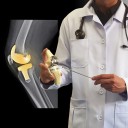
Gonarthrosis of the knee, what it is, causes, symptoms and treatment
- Knee and its degeneration (Gonarthrosis)
- What types of knee gonarthrosis can be found?
- What are the causes of knee gonarthrosis?
- Symptoms of knee gonarthrosis
- Diagnosis of knee gonarthrosis
- Conservative treatment of knee gonarthrosis
- Surgery to correct gonarthrosis of the knee (Arthroplasty)

Come to Spain for your surgery or treatment
We manage everything from start to finish
Knee and its degeneration (Gonarthrosis)
- Osteoarthritis is a degenerative joint disease. Gonarthrosis of the knee is one of the names for osteoarthritis of the knee.
- There are no clear causes for the development of gonarthrosis, however, there are factors that can lead to its development.
- Gonarthrosis is the most common cause of disability among the elderly in Spain. Its definitive treatment is the implantation of a total knee prosthesis.
The knee is made up of three interrelated joints: the patellofemoral joint (femur with the patella), the internal femorotibial joint and the external femorotibial joint (femur and tibia). These three joints can be affected by knee gonarthrosis to a greater or lesser extent, leading to wear and tear that impairs the quality of life of individuals.
With regard to the term "knee gonarthrosis", it must be said that, although many people, including medical professionals, use the expression knee gonarthrosis, this is redundant, as gonarthrosis means knee arthrosis, in the same way that coxarthrosis means hip arthrosis. In any case, for the sake of understanding, we will continue to speak of knee gonarthrosis, although we thought it appropriate to explain this curiosity.
Knee gonarthrosis, like the other types of osteoarthritis, consists of the wear and tear and ageing of the cartilage, which covers the bones that make up the three joints inside the knee.
This problem is caused by various factors that we will explain in the section on the causes of gonarthrosis, but it is mainly due to the ageing and continued use of the knee.
Regarding the incidence of gonarthrosis of the knee in the population, it affects more women from the age of 40 onwards, with progressive aggravation. Furthermore, gonarthrosis is the most common type of osteoarthritis, the next most common being coxarthrosis of the hip.
Knee gonarthrosis is the most common type of osteoarthritis.
In the most severe cases of gonarthrosis, those that prevent the patient from leading a normal life due to the pain and deformity caused by this degenerative disease, a total knee replacement operation is usually chosen, an operation that replaces the joint damaged by osteoarthritis with an artificial one, eliminating the symptoms of gonarthrosis and restoring the patient's quality of life.
If you are looking for a diagnosis of your knee problem, you can request a private consultation with one of our specialists in traumatology and orthopaedic surgery, by clicking on the image below:

Do you need a diagnosis for your knee problem?
Purchase a private consultation with one of our specialists in knee replacement and find a solution for your pain.
What types of knee gonarthrosis can be found?
When classifying knee gonarthrosis, one of the ways of doing so is according to the area of the joint in which it occurs, since, as we indicated in the previous section, the knee is made up of three minor joints:
- Gonarthrosis between the femur and the tibia: femoro-tibial arthrosis is the arthrosis formed between the femur and the tibia, which can be external or internal.
- Between the femur and the patella (or patella): this type is called patellofemoral gonarthrosis.
- Between the femur, tibia and patella: in this case it would be a generalised gonarthrosis in the whole joint.
On the other hand, if we classify gonarthrosis according to the causes that trigger it, we can speak of primary and secondary gonarthrosis of the knee:
- Primary knee gonarthrosis: we speak of primary gonarthrosis when there is no single specific reason for the onset of osteoarthritis, with various factors that may have been part of the onset of the problem. This is the most common type of gonarthrosis.
- Secondary knee gonarthrosis: unlike primary gonarthrosis, in this case there is a direct cause that has led to the onset of knee arthrosis, although this does not mean that the primary causes have had no influence on its appearance.
Talking about primary and secondary gonarthrosis according to its causes necessarily implies that there are reasons why the knee cartilage wears down, causing gonarthrosis.
What are the causes of knee gonarthrosis?
The causes of knee gonarthrosis can be very diverse, depending on whether it is primary or secondary knee gonarthrosis.

When gonarthrosis of the knee is primary, although there are no specific causes for the development of gonarthrosis, we can find some risk factors that may favour its appearance:
- Ageing: this is the main cause of knee gonarthrosis, with 30% of the Spanish population over 60 years of age suffering from it (to a greater or lesser extent, not all of them require prosthetic replacement).
- Obesity: the knee is the joint that suffers most throughout life due to its use and the pressure it bears as it supports almost the entire weight of the body. Therefore, people who suffer from obesity tend to suffer more pain and a more rapid progression of knee gonarthrosis (as in hip coxarthrosis).
- Continuous practice of a specific sport: playing sports such as football, athletics or other sports that require repeated use of the knee can lead to premature wear of the cartilage, causing gonarthrosis.
- Work that requires the use of physical force: such as construction workers, warehouse workers or transporters who carry furniture into homes, which, due to the pressure and effort involved, can lead to gonarthrosis of the knee, as well as many other hip and back problems.
- Hereditary factors: people with a family history of osteoarthritis are very likely to suffer from gonarthrosis or another variety of osteoarthritis during their lifetime.
Being overweight promotes the onset and worsens the symptoms of knee gonarthrosis.
We say that gonarthrosis of the knee is secondary when it is a direct consequence of a specific cause, such as:
- Disorders of foetal development in the mother's womb during pregnancy, such as knee dysplasia (abnormal development of the knee before birth).
- Previous fractures or joint breaks that have not been properly positioned: if the bones are displaced or do not fit together correctly, there may be the possibility of cartilage wear and tear causing gonarthrosis of the knee.
- Incorrect formation of the knees: varus deviations (when the knees are bowed and apart from each other) and valgus deviations (when the knees are together and/or collide with each other) can cause knee gonarthrosis.
Whatever the cause of knee gonarthrosis, you don't realise you may have it until the first symptoms appear. The following section explains the main symptoms of knee gonarthrosis.
Symptoms of knee gonarthrosis
The symptoms of any type of osteoarthritis are directly related to pain and loss of mobility, so knee gonarthrosis is no different:
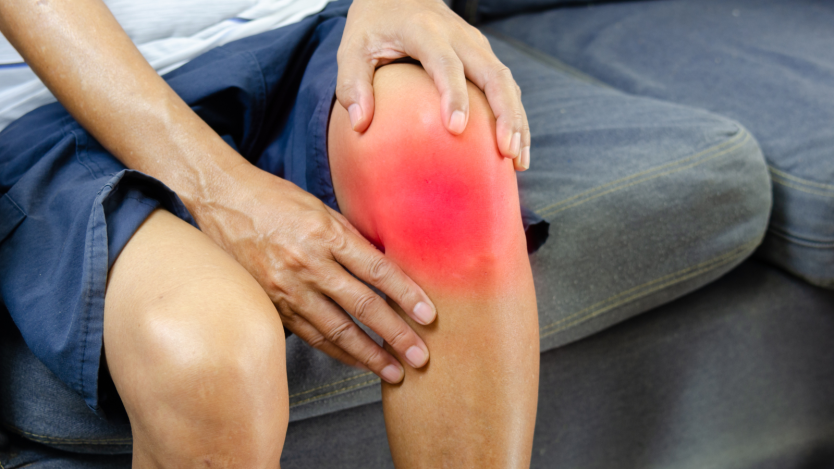
- Pain in the joint: patients suffering from knee gonarthrosis experience pain in the joint, which may increase when walking or moving. If the disease is not advanced, this pain subsides with rest, although if not treated properly it may increase over months or years. However, when gonarthrosis is at an advanced stage, and therefore the cartilage is worn away, there is a direct collision between the bones that can cause pain and inflammation even at rest.
- Swelling and crunching in the knee: swelling of the knee or even a slight crunching when moving the joint can accompany the pain in the early stages of gonarthrosis.
Knee gonarthrosis mainly affects women over the age of 40.
- Localised pain in different areas of the knee: depending on the type of osteoarthritis, the patient will experience pain in one area of the knee or another, i.e. if the patient has patellofemoral gonarthrosis, he or she will usually feel pain in the front of the knee and sometimes in the back. If the patient has patellofemoral osteoarthritis, the pain will be experienced in the front, the back or even both at the same time.
- Loss of autonomy: the normal functioning of the joint may also be affected, preventing the patient from carrying out normal daily activities.
- Joint stiffness: this is another of the most common symptoms. It usually appears when the patient does not move the joint for a long time. However, when the patient starts to move, the pain gradually subsides.
- Joint deformation: it is also very characteristic of gonarthrosis of the knee that the patient suffers deformations, due to the fact that the cells that form the cartilage (chondrocytes) suffer dysfunctions. As these cells are responsible for forming and regenerating the cartilage, when they stop functioning and manufacturing proteins (due to the passage of time, repetitive movements, etc.), the knees begin to wear out and may even become deformed.

Undoubtedly, all these symptoms are familiar to people suffering from knee gonarthrosis. In order to remedy it, it is vital that a specialist in traumatology diagnoses the situation and proposes the treatment that best suits the characteristics of each patient.
Diagnosis of knee gonarthrosis
A patient's medical history is essential for the specialist to diagnose gonarthrosis of the knee, in addition to an anamnesis, i.e. an interview with the doctor to determine the patient's symptoms and their causes.
In addition to this, other tests and examinations may be performed on the patient to confirm the diagnosis:
- Examination and palpation: to detect if the patient suffers from joint deformity or misalignment of the knees, if the patient suffers from pain or crunching on palpation, or even if the patient suffers from joint locking.
- X-ray: complements the examination and palpation of the joint. An X-ray of both knees is always necessary, regardless of where the pain is coming from. This x-ray should be recent, to see the current wear and tear on the joint.
In principle, a physical examination and X-ray should be sufficient to diagnose knee gonarthrosis; however, the specialist may perform other tests to determine the possible causes or to better decide on a possible treatment, although this is not very common. These tests can be a CAT scan or a Magnetic Resonance Imaging (MRI), although to determine the severity or to decide whether or not to proceed with the knee prosthesis operation, an X-ray is usually sufficient.
Conservative treatment of knee gonarthrosis
Conservative treatment for gonarthrosis of the knee is indicated above all in the early stages of the disease or as a preventive measure:
- Avoid being overweight: first of all, if it exists, it is essential to lose weight, since the more the patient weighs, the more pressure he or she will have on the knees and, therefore, the more wear and tear on the cartilage, causing gonarthrosis to progress.
- Modify activity: it is also often recommended to modify activity, such as stopping contact sports or running and switching to aerobic sports such as cycling or swimming to maintain mobility and strength in the muscles of the joints.
- Medication and supplements: other treatments that the specialist may recommend are the intake of nutritional supplements, with which there may be a slower progression of the disease, and the intake of analgesic and/or anti-inflammatory drugs to control pain and inflammation, always with the indication of the specialist.
- Rehabilitation and physiotherapy: rehabilitation in a specialised centre is also very important, as the patient must tone the muscles and stretch the joint. The physiotherapist can vary the exercises, such as decontracting massages, electrotherapy, ultrasound therapy, among others.
In severe cases of gonarthrosis of the knee, knee replacement surgery is the most advisable option.
Although there are conservative treatments that delay the progression of the disease or palliate the symptoms, in cases where gonarthrosis of the knee is very advanced, the most advisable option is the knee prosthesis operation, which we will talk about in the following section.
Surgery to correct gonarthrosis of the knee (Arthroplasty)
Surgery to correct gonarthrosis of the knee is called arthroplasty and is the most effective method for the patient to be able to return to a normal life and recover the mobility of the joint.
Depending on the state of the disease, the implantation of one type of prosthesis or another will be more advisable, i.e. a partial prosthesis or a total prosthesis, depending on each case.
If you know that you need a knee prosthesis operation and you are looking for the best specialist to eliminate the symptoms of gonarthrosis once and for all, remember that you can request a free surgical assessment consultation with one of our Specialists in Traumatology and Orthopaedic Surgery to assess your case and decide together if surgery is the best option for your case.
You can request a free consultation by clicking below:

Knee replacement surgery in Spain
Request a free and immediate appointment with our specialists in Traumatology
Come to Spain for your surgery or treatment
We manage everything from start to finish
Medical disclaimer: All the published content in Operarme is intended to disseminate reliable medical information to the general public, and is reviewed by healthcare professionals. In any case should this information be used to perform a diagnosis, indicate a treatment, or replace the medical assessment of a professional in a face to face consultation. Find more information in the links below: