Anterior cruciate ligament (ACL): injury, diagnosis and treatment
- What is the anterior cruciate ligament (ACL) used for?
- Main causes of anterior cruciate ligament (ACL) injury
- Symptoms of anterior cruciate ligament injury
- Diagnosis of anterior cruciate ligament (ACL) injuries
- Treatment of anterior cruciate ligament (ACL) injury
- Anterior cruciate ligament (ACL) reconstruction surgery
- How can I have anterior cruciate ligament surgery at Operarme?

Come to Spain for your surgery or treatment
We manage everything from start to finish
- Anterior cruciate ligament (ACL) injury is one of the most common injuries in the world of sport.
- In most cases, anterior cruciate ligament (ACL) reconstruction surgery will be necessary, although there are some cases where it is not.
- In this article you will find everything you need to know about anterior cruciate ligament (ACL) injury.
What is the anterior cruciate ligament (ACL) used for?
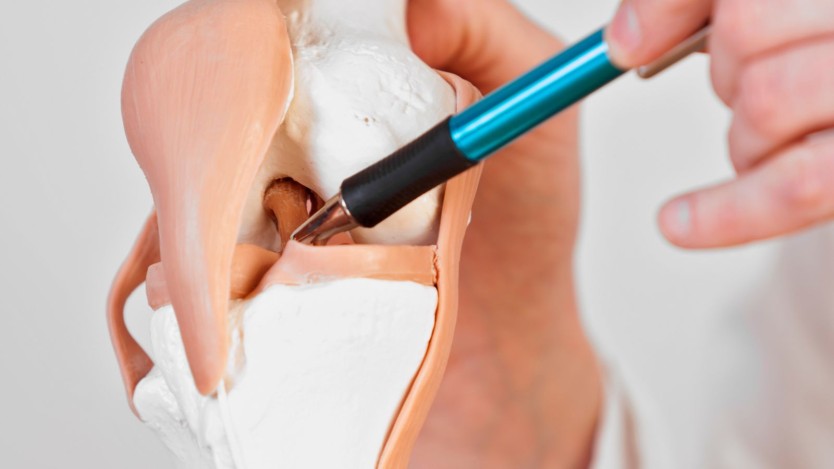
The main function of the cruciate ligaments, the anterior cruciate ligament and the posterior cruciate ligament together, is to control the movement of the tibia relative to the femur, forwards and backwards, and during rotation. Specifically, the anterior cruciate ligament prevents the tibia from sliding forwards relative to the femur and stabilises the knee during rotation.

Do you need knee ligaments surgery?
Request a free and immediate appointment with our specialists in Traumatology
The anterior cruciate ligament is so named because of its position in the knee, as it lies in front of the posterior cruciate ligament and, when viewed from the front, the two are seen in an X shape.
The anterior cruciate ligament (ACL) is vital in sport and is the knee ligament most frequently injured during sport. For this reason, reconstruction is usually recommended when the patient who suffers the tear does regular physical activity.
A curious fact about the anterior cruciate ligament (ACL) is that its injury is more common in women than in men, mainly due to anatomical issues such as the width of the pelvis. Furthermore, according to data from the Spanish Arthroscopy Association, around 17,000 ACL reconstructions are performed every year.
In the following section we will explain the mechanisms of injury to the anterior cruciate ligament (ACL), mainly occurring during sport, although injury is also possible during other activities.
Main causes of anterior cruciate ligament (ACL) injury
Anterior cruciate ligament (ACL) injury occurs mainly during sport. Although it is possible that this injury is accompanied by physical contact with another athlete, such as a football tackle, it is very common for self-injury to occur, i.e. the patient injures the anterior cruciate ligament (ACL) without any contact. Below we explain the different ways to injure the anterior cruciate ligament:
- Self-injury of the anterior cruciate ligament: As we mentioned, it is common for a patient to injure the ligament, for example, when braking suddenly in a race, turning sharply in motion, falling after a jump and even when kicking a ball, missing and hitting the air. This is why sports such as football, basketball, rugby, etc., have a higher incidence of injury than other less explosive sports.
- Due to trauma: Another of the most common causes of injury is trauma to the knee when the foot is resting on the ground. The clearest example is when in a football match an opponent tackles another player and when the supporting leg is hit, it bends both inwards and outwards. This same mechanism of injury can also occur in minor collisions (obviously serious collisions have other, more important problems) such as those involving bicycles or low-speed vehicles.

In a large number of cases, an ACL injury is associated with other injuries, such as a meniscus tear or bone damage. All of these will be assessed by the doctor when carrying out the examination and complementary tests to determine the extent of the injury.
Below we briefly discuss the symptoms of an ACL injury.
Symptoms of anterior cruciate ligament injury
When an anterior cruciate ligament (ACL) rupture occurs, the main symptom is pain, preventing the patient from resuming the activity they were doing, although there are other symptoms that allow us to perceive that it is a rupture of the anterior cruciate ligament:
- At the time of the rupture, the patient feels a popping sound in the knee, which can sometimes be heard by the people around them.
- Intense pain in the affected area, i.e. the knee.
- Problems in supporting the leg, even making it impossible to move around.
- Joint instability. The affected person perceives that the knee is not as supported as it used to be.
- Swelling of the knee, usually within the first hours after the injury, due to bleeding inside the joint.
It is important to perform the examination of the knee at the time of the injury or shortly thereafter, as this is when the medical professional will be able to perceive more easily whether it is a ligament injury or not, since if several days go by the inflammation and immobility of the knee limit the extension necessary to perform the physical examination.
In any case, below we briefly explain some of the tests, both physical and complementary, to determine if there really is an anterior cruciate ligament (ACL) injury.

Diagnosis of anterior cruciate ligament (ACL) injuries
To determine that the cause of the aforementioned symptoms is a ruptured anterior cruciate ligament, a series of diagnostic tests must be carried out. These can be divided into two groups: the physical examination, in which the doctor checks the joint by means of mobility tests; and imaging tests, with which the specialist will be able to see if there are more associated injuries:
Diagnosis by clinical examination
This examination is the most valuable of all, as in many cases, especially if several months have passed since the injury, imaging tests can be false negative.
- Anterior drawer test: This test consists of placing the patient lying upwards with the knee and hip flexed and the foot resting on the table with neutral rotation. To perform the examination, the specialist will place both thumbs on the anterior surface of the tibia at the top and the rest of the fingers in the popliteal fossa (the part behind the knee). The physician should pull the tibia forward, observing if it slides under the femur. If there is a hard stop at the end of the manoeuvre, there is no ligament injury, whereas if the stop is soft and there is no resistance, there is ligament injury.
- In addition to the drawer test, there are other tests, such as the Lachman, Jerk, Pivot Shift, External Rotation Recurvatum Test, or the Slocum Manoeuvre, which you can learn more about in this article: Diagnosis of anterior cruciate ligament (ACL).
Diagnosis by imaging tests
The main purpose of imaging tests is to determine the extent of the anterior cruciate ligament injury or to determine if there is any associated injury such as a meniscus tear or bone damage, which is quite common, especially if it is associated with trauma.
The most common diagnostic imaging tests are:
- MRI: The aim is to confirm the type of cruciate ligament tear and also to see if there is injury to any of the menisci or the cartilage.
- Diagnostic arthroscopy: In addition to reconstructive surgery, diagnostic arthroscopy allows a direct view of the inside of the knee through a small high-definition camera connected to a monitor in real time. Nowadays it is rarely used for diagnosis alone, as an MRI is usually enough.
Once the extent of the injury has been determined, the patient, together with the orthopaedic surgeon, will decide whether he or she wants to undergo anterior cruciate ligament reconstruction surgery. If the patient is physically active or plays sports, surgery is recommended. In any case, there is the possibility of not undergoing surgery and carrying out conservative treatment, mainly for patients with low physical activity.

Treatment of anterior cruciate ligament (ACL) injury
As previously mentioned, the treatment of an ACL injury can be conservative or surgical, depending on the patient and the type of tear, which can be differentiated into:
- Grade 1 sprain: this is a mild injury. In this case, although the ligament is affected, it can maintain its function of stabilising the knee.
- Grade 2 sprain: in this case, the ligament is partially torn. This type of tear is very rare.
- Grade 3 sprain: In this case, the ligament is torn completely, which causes destabilisation of the knee. This is the most common ligament tear.

Do you need knee ligaments surgery?
Request a free and immediate appointment with our specialists in Traumatology
Conservative treatment
In cases of grade 1 and 2 sprains, conservative treatment is possible and sporting activity can be resumed in the following months. Although it is more likely to eventually break if the knee is overly punished, it does not need to be operated on unless indicated by a specialist.
In the case of a complete rupture of the cruciate ligament, conservative treatment is also possible, although in this case the patient should avoid sports that require significant strain on the knee.
It should be understood that the indication for conservative treatment will depend on the physical activity and the profession that the patient carries out on a day-to-day basis, with the doctor always deciding whether it is viable or not at his or her discretion.
If conservative treatment is chosen, it consists of the following:
- Relative rest for the first few days
- Application of ice for the first 3 days (between 10 and 15 minutes every two hours).
- Placement of a bandage to compress the knee.
- Keeping the leg elevated above the heart.
- Use walking aids as much as possible (crutch or cane) during the first week.
- Perform rehabilitation exercises to strengthen the muscles around the knee.
However, it is common for patients under 40 years of age or people who are physically active or involved in sports to undergo ACL reconstruction so that they can return to exercise without fear.

What is used to reconstruct the anterior cruciate ligament (ACL)?
The most common and most successful method is to use the patient's own tendon to replace the affected ligament. This allows the tissue, being the patient's own, not to be rejected.
The tendon used is usually taken from the patellar tendon (front of the knee), the hamstrings (inner and back of the thigh) or the quadriceps tendon (above the kneecap), which is why there is usually pain in these areas after surgery, as it is regenerating.
To give you a better understanding of how anterior cruciate ligament (ACL) surgery is performed, we explain it below.
Anterior cruciate ligament (ACL) reconstruction surgery
Once the patient, together with the specialist, decides to undergo anterior cruciate ligament surgery, the entire surgical process begins.
Preoperative
In order to carry out the operation with maximum safety, a series of preoperative tests must be carried out, including the following:
- Complete blood test: This test allows us to know if there are any infections or coagulation problems.
- Electrocardiogram: This test assesses the condition of the patient's heart.
- Chest X-ray: This test assesses the lungs and rules out problems that could affect the anaesthesia. It is not always necessary.
Consultation with the anaesthesiologist
This visit may or may not take place depending on each case and the results of the preoperative tests. During this consultation, the anaesthesiologist will ask for information related to the patient's lifestyle habits, such as smoking, in addition to reviewing the patient's medical history. In this way, he/she will be able to choose the most suitable anaesthesia during the surgery.

Admission and surgery of the anterior cruciate ligament (ACL)
On the day of surgery, the patient will come to the hospital with the relevant documentation and hand it in at the admission desk. Afterwards, you will be taken directly to your room or to a waiting room where you will wait until you are called for surgery.
Before entering the operating theatre, you will be taken to a pre-surgical room where you will be given your operating clothes and the anaesthetic medication line will be placed. After that, you will be accompanied to the operating theatre, where the orthopaedic surgeon who will perform the surgery, the anaesthetist and one or two members of the nursing team will be waiting for you.
Once in the operating theatre, the patient should be positioned as the surgeon instructs, which is normally lying on the back with the leg held in a support that allows the knee to bend, as this makes the knee more accessible.
- First of all, the hair in the area will be removed, if necessary, to facilitate the surgical approach.
- The anaesthesia will be administered to the patient, which in this case will be spinal (from the waist down) and sedation, which will allow the patient to be relaxed and even asleep during the intervention, which will pass very quickly. Regarding the anaesthesia, the anaesthetist will keep control of the patient's vital signs at all times, making sure that everything goes well.
- Once the anaesthesia has taken effect, the incisions are made to allow the surgeon to access the area using the arthroscope.
- The specialist makes 2 small incisions on the sides of the knee, which are the places where the arthroscope and other surgical tools will be inserted. Through them, the arthroscope is inserted and the torn ligament is located.
- After this, the tendon that will be used as a graft to replace the ligament is harvested (for example, from the hamstrings or the patellar tendon).
- The next step is to remove the torn ligament and prepare the tibia and femur for the placement of the tendon. To do this, tunnels are drilled in the femur and tibia, the graft is inserted and fixed to the bone with screws or other fixation devices.
- Once the tendon is in place and the knee has adequate mobility, the screw is placed in the tibial tunnel, the incisions are sutured and the surgery is completed.
At the end of the ACL reconstruction surgery, the patient will be woken up in the operating theatre and taken to the recovery room where he or she will recover from the anaesthesia and can go home or in some cases spend a night in hospital.
The duration of anterior cruciate ligament (ACL) surgery is between 30 and 90 minutes, depending on the case.
Regarding recovery after surgery, you can learn more by visiting our article on cruciate ligament surgery rehabilitation.
How can I have anterior cruciate ligament surgery at Operarme?
The first thing to do is to have an immediate and free consultation with one of our trauma surgeons, so that you can get to know them and they can review your case.
To find out more about the whole process of anterior cruciate ligament surgery at Operarme, just click on request a free appointment below:
Do you need knee ligaments surgery?
Request a free and immediate appointment with our specialists in Traumatology
Come to Spain for your surgery or treatment
We manage everything from start to finish
Medical disclaimer: All the published content in Operarme is intended to disseminate reliable medical information to the general public, and is reviewed by healthcare professionals. In any case should this information be used to perform a diagnosis, indicate a treatment, or replace the medical assessment of a professional in a face to face consultation. Find more information in the links below: