5 jobs that may cause carpal tunnel syndrome
- What is carpal tunnel syndrome?
- Tailor
- Cleaning staff
- Cooks
- Pianists
- Professional Gamer
- How to solve carpal tunnel syndrome once it has appeared?

Come to Spain for your surgery or treatment
We manage everything from start to finish
- Carpal tunnel syndrome (CTS) is, along with back problems, one of the most common work-related physical problems today.
- The most common symptoms of carpal tunnel are pain, tingling and numbness in the hand, causing problems in the correct use of the hand.
- When carpal tunnel syndrome is severe and has not improved with other treatments, surgery is the recommended option.
What is carpal tunnel syndrome?
Carpal tunnel syndrome is a condition in which the median nerve is compressed on the inside of the wrist, often because the tissues surrounding the tendons become inflamed or thickened. The pressure on the median nerve causes pain, tingling and numbness and can cause many problems using the whole hand.

Do you need carpal tunnel syndrome surgery?
Request a free and immediate appointment with our specialists in Traumatology
Carpal Tunnel Syndrome is usually caused mainly by repetitive activities using the wrist, or by excessive strain that may be exerted on the wrist when performing certain types of activities, often professional activities.
Tailor
Tailors and seamstresses have traditionally been one of the groups most affected by Carpal Tunnel Syndrome (CTS), developing it for years, as a result of carrying out sewing work either by hand or by machine, as this work requires the use of the hands at all times. The wrist movements that are made are very repetitive, and this over time can end up inflaming the tissues around the tendons and lead to CTS.

A good way to prevent it is to take frequent breaks and shake the wrists to relieve the tension that builds up.
Physiotherapy sessions can also be very beneficial once the pain is already manifesting itself in the inner wrist area.
Cleaning staff
Facility cleaners, who perform tasks such as sweeping or polishing floors, are also very prone to Carpal Tunnel Syndrome (CTS). The overexertion of the wrists that often has to be carried out to perform these tasks is a factor that leads to inflammation of the elements inside the carpal tunnel. The repetition of this type of movement often ends up causing ailments associated with this pathology.
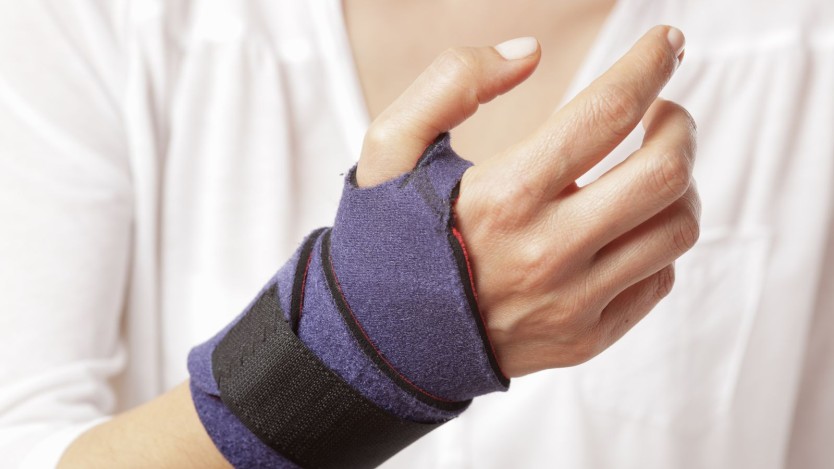
The use of a splint, or other type of wrist protector, to keep the wrist straight, can be very beneficial in preventing the wrist from adopting inappropriate postures when performing these tasks and eventually developing Carpal Tunnel Syndrome.
Breaks when performing these tasks are also very positive, as the wrists cease their activity for a while and the ligaments and tendons stop working continuously to rest for a while.
Cooks
Carpal Tunnel Syndrome (CTS) is also very likely to appear in people with professions such as cooks, butchers or fishmongers. In this case, the pathology is frequently associated with the use of knives. Cutting repeatedly and continuously over a long period of time also causes pressure on the median nerve.

Anti-inflammatory medication may relieve discomfort occasionally, although its benefit in carpal tunnel syndrome is usually limited; a night splint or a corticosteroid injection is often more effective.
It is also very beneficial in reducing inflammation to apply ice to the wrist area occasionally. This technique is often used when the inflammation is quite severe and the resulting discomfort hinders the activities of those affected.
Pianists
Musicians in general are also very prone to develop Carpal Tunnel Syndrome (CTS). The most affected are usually violinists, guitarists and especially pianists.
The series of actions that pianists have to perform with their hands in order to play the piano mean that they have to exert a lot of effort with their wrists. The main problem is to make these efforts over and over again in a continuous way, this can end up inflaming the tissues around the tendons and compressing the median nerve inside the carpal tunnel.
Stretching and shaking the wrists when playing the piano for long periods of time can be very beneficial in relieving the discomfort, although the effect is only temporary.
Professional Gamer
With the use of computers, the incidence of Carpal Tunnel Syndrome (CTS) has greatly increased, as the use of mice and keyboards involves repetitive and prolonged wrist movements. For this reason, IT professionals and people who have to spend a lot of time in front of a computer are at risk of suffering from this pathology.

One of the profiles most exposed to Carpal Tunnel Syndrome (CTS) is gamers, both amateurs and professionals, although especially the latter, as the number of hours they spend training with the mouse and keyboard is very high.
The incidence of back problems is also very high due to the long period of time spent sitting, so posture and rest is important.
The use of tools specifically designed to reduce injuries of this type is very effective in preventing Carpal Tunnel Syndrome (CTS).
However, it is advisable to add to these elements a correct wrist position on a regular basis, so as not to strain the muscles and tendons too much and to allow these special tools to do their job.
For this purpose, there are mousepads, keyboards and even ergonomic wristbands specially designed to prevent this health problem, as well as warm-up exercises beforehand to avoid it.
How to solve carpal tunnel syndrome once it has appeared?
There are many ways to try to prevent Carpal Tunnel Syndrome (CTS) and to lessen its symptoms once the condition is already present. But if Carpal Tunnel Syndrome (CTS) is very advanced, the most effective and lasting solution is surgery.
Carpal Tunnel Syndrome (CTS) surgery is usually performed as an outpatient procedure under local anaesthesia.
The surgical intervention consists of making the carpal tunnel more spacious to free the median nerve so that it is no longer under pressure. To make more space in the carpal tunnel, the transverse carpal ligament, which presses on the median nerve, is cut.

Do you need carpal tunnel syndrome surgery?
Request a free and immediate appointment with our specialists in Traumatology
Come to Spain for your surgery or treatment
We manage everything from start to finish
Medical disclaimer: All the published content in Operarme is intended to disseminate reliable medical information to the general public, and is reviewed by healthcare professionals. In any case should this information be used to perform a diagnosis, indicate a treatment, or replace the medical assessment of a professional in a face to face consultation. Find more information in the links below: