10 things you didn't know about the Da Vinci Robot and robotic surgery
- What you need to know about the Da Vinci Robot and its application in surgery
- Make an appointment for prostate cancer surgery with the Da Vinci Robot

Come to Spain for your surgery or treatment
We manage everything from start to finish
- The use of the Da Vinci Robot has meant a great advance mainly in the treatment of prostate cancer, as well as being used for other types of surgery such as endometrial carcinoma, morbid obesity surgery or coronary bypass.
- In recent years, the Da Vinci has also been adapted for paediatric urological surgical procedures. Obtaining better results compared to open surgery and a faster postoperative recovery.
- With respect to laparoscopic surgeries, the robot has a great advantage, which is that it allows the surgeon to see the area being operated on in 3D, in addition to the greater manoeuvrability of the robotic arms compared to that of the human hand.
The possibilities of enhancing the surgeon's skills and capabilities are possible thanks to advances in robotic surgery and the use of technology such as the Da Vinci Robot.
This robot makes it possible to perform highly complex surgery in a minimally invasive manner, facilitating rapid recovery and improving the quality of life of patients. Below we will talk about the benefits and most interesting aspects that we have considered about the Da Vinci Robot.
What you need to know about the Da Vinci Robot and its application in surgery
- The Da Vinci Robot stands out above open surgery in reducing the recovery time for urinary continence and sexual potency, allowing the patient's quality of life to be improved in the shortest possible time.
- The use of the Da Vinci allows for a minimally invasive procedure, which means that the patient has less pain, less blood loss, a short hospital stay and therefore a faster recovery.
- Surgeries with the Da Vinci Robot are approved for both adult and paediatric urological surgical procedures. Other procedures for which it is also suitable are laparoscopic surgical procedures, laparoscopic gynaecological surgery, non-cardiovascular thoracoscopic surgery and thoracoscopically assisted cardiac operations.
- Interventions that can be performed by laparoscopy or thoracoscopy are also suitable for use with the Da Vinci Surgical System. Robotic surgery is especially recommended for more complex cases.
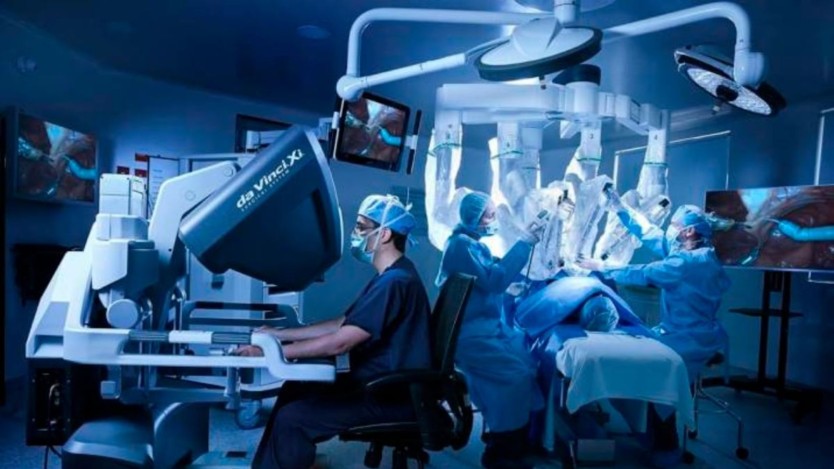
- The Da Vinci Robot is not autonomous; in order for it to perform the necessary actions during the procedure, a surgeon is required to make the decisions and carry out the movements during the intervention.
- During the intervention, the robotic system receives orders in real time, reproducing the surgeon's hand, wrist and finger movements throughout the procedure.
- Although surgeries with the Da Vinci Robot have the same duration as an open surgery, during the robotic procedure the incisions are minimal, so the possible risks of infection and postoperative period are lower, as large scars, skin lesions and bleeding are avoided.
- In general, patients are discharged 72 hours after surgery with the Da Vinci Robot. If a catheter is required, it is removed within the first 4-7 days.
- The design of this surgical robot consists of an ergonomic viewing console through which the surgeon can observe the inside of the body, a trolley with four robotic arms, a high-quality visualisation system and the instruments adapted to the arms and allowing the specialist to perform the movements in a natural way.
- The success and precision of the Da Vinci Robot is largely due to the four robotic arms that can rotate up to 520º (greater degree of rotation than the human wrist), whose movements are precise and specific. And the instruments in the arms allow seven degrees of movement, making the actions more precise and delicate, enabling the highest level of success of the intervention and facilitating a comfortable recovery for the patient.

Make an appointment for prostate cancer surgery with the Da Vinci Robot
If you are thinking of undergoing surgery with this technique, you can request a free surgical assessment consultation with our specialists by clicking below:

Do you need prostate cancer surgery with Da Vinci robot?
Request a free, no waiting time consultation with one of our specialists
Come to Spain for your surgery or treatment
We manage everything from start to finish
Medical disclaimer: All the published content in Operarme is intended to disseminate reliable medical information to the general public, and is reviewed by healthcare professionals. In any case should this information be used to perform a diagnosis, indicate a treatment, or replace the medical assessment of a professional in a face to face consultation. Find more information in the links below: